
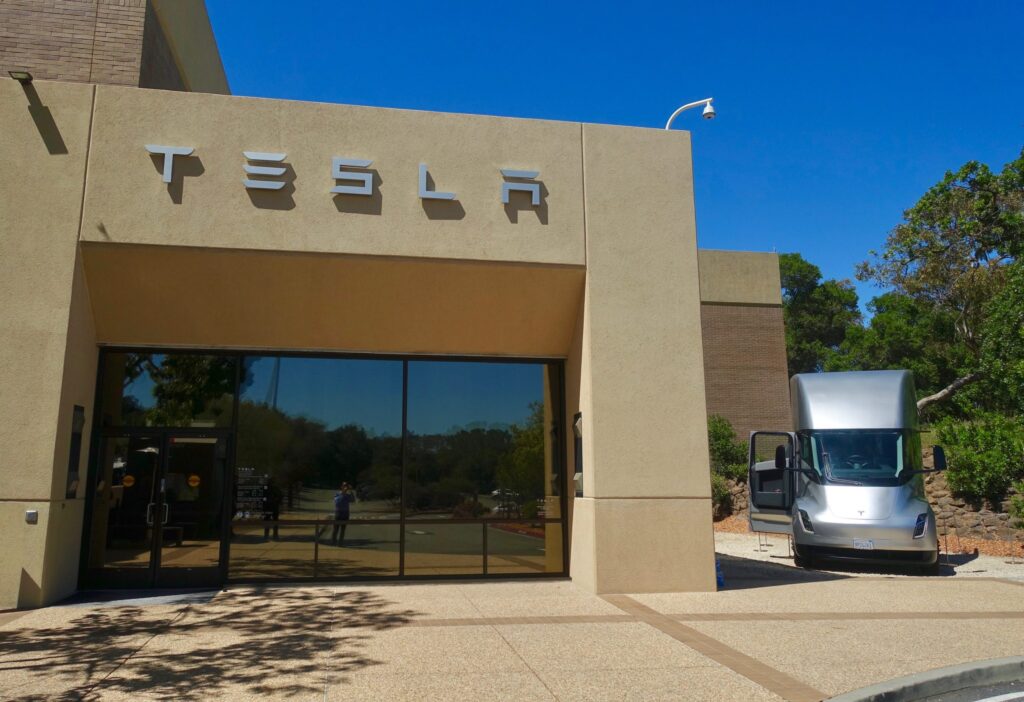
On 29 April 2026 Tesla will move its electric semi‑trailer truck into full‑scale manufacturing, marking a pivotal step for the company’s freight‑vehicle ambitions. The vehicle, known simply as the Tesla Semi, was first shown to the public as two concept models in November 2017.
Although CEO Elon Musk originally projected a 2019 start‑up, the program experienced several schedule shifts before limited production commenced in October 2022 and the first deliveries were made to PepsiCo in December of that year. The production line for the Semi is situated beside Tesla’s existing Giga Nevada complex, where the plant is slated to output up to 50,000 units each year. This capacity is intended to satisfy rising demand and to position the Semi as a serious contender against conventional diesel rigs.
Technical specifications underline the truck’s competitive edge. Three electric motors deliver roughly three times the power of a typical diesel semi, while energy consumption stays below two kilowatt‑hours per mile.
Two range options are available: a 325‑mile version and a longer‑range 500‑mile model, each capable of hauling loads of up to 45,000 pounds. Despite the added battery packs, the fully‑loaded Semi is expected to weigh similarly to comparable diesel‑powered trucks, reflecting Tesla’s engineering focus on weight efficiency. From an environmental standpoint, the Semi’s lower energy use translates into reduced greenhouse‑gas emissions per mile, offering fleets a pathway to cut both carbon footprints and operating expenses. Companies that adopt the vehicle can anticipate lower fuel costs and fewer routine maintenance requirements, thanks to the electric drivetrain’s inherent simplicity.
The launch of volume production signals Tesla’s broader strategy to electrify the freight sector. Industry observers note that the Semi’s entry could reshape logistics planning, prompting trucking firms and shippers to reevaluate route design, depot infrastructure, and charging networks.
As more units take to the road, data on real‑world performance, total cost of ownership, and reliability will become clearer, influencing future adoption rates. While the Semi’s specifications and manufacturing plans are now public, the market’s reaction will ultimately determine its impact. Analysts expect that the truck’s combination of high power, long range, and competitive payload capacity will attract early adopters seeking to meet sustainability goals and regulatory pressures.
In summary, Tesla’s commencement of high‑volume Semi production on 29 April 2026 represents a major milestone for the company and for the freight industry at large. With a dedicated plant capable of delivering up to 50,000 electric trucks annually, Tesla is poised to challenge the dominance of diesel powerhouses and advance the transition toward cleaner, more efficient transportation.




