Belgium said it was chasing about €540m in unpaid tax after looking into 829 accounts at HSBC’s private bank in Geneva. The finance minister, Johan Van Overtveldt, gave the estimate. The accounts belonged to diamond merchants, lawyers, aristocrats, company heads and sports personalities, local media reported.
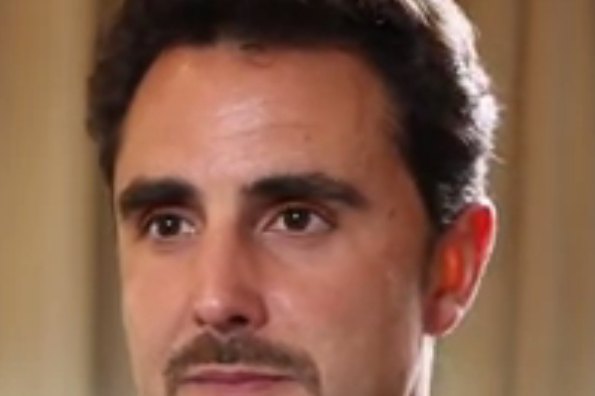
Every euro of that traces back to one man and one evening in December 2008. Swiss federal police handcuffed Hervé Falciani, then 36, at HSBC Private Bank (Suisse), where he worked as a systems specialist. They suspected him of stealing client data and trying to sell it to banks in Lebanon. They searched his Geneva home, questioned him for hours and let him go on condition that he come back the next day. He did not. Falciani rented a car, collected his wife and daughter, and drove to France.
A leak that crossed borders
In France he began downloading the data he had stored on remote servers: client names, account holdings, and notes on what the bank had discussed with its customers. French authorities ended up with nearly 600 files and more than 100 gigabytes, which took time to put in usable form. They later indicted HSBC for illegal direct marketing to French nationals, money laundering and facilitating tax fraud, and passed shorter lists to Britain, Italy, Spain, Belgium and Greece. Le Monde got the data as well and shared it with the International Consortium of Investigative Journalists, and a group of outlets including the Guardian and BBC Panorama reported in 2015 that the bank’s Swiss arm had helped wealthy clients dodge tax.
Who Falciani really was is disputed. He presents himself as a whistleblower who wanted better oversight at the Geneva bank. HSBC told ICIJ it had no record of him raising concerns with his managers or using the whistleblowing hotline. Swiss officials and the bank say he stole the data hoping to profit. In December 2014 the Swiss attorney general charged him with data theft, and said his aim was “cashing in.” A Spanish court refused to extradite him on 8 May 2013, ruling that breaching bank secrecy was not a punishable crime in Spain. A French tax inspector who met him in late 2008 had a simpler verdict: “He helped us massively.”
The Belgian case
In November 2014 Belgian authorities charged the Swiss subsidiary with serious and organised fiscal fraud, money laundering, criminal organisation and acting as an illegal financial intermediary. Prosecutors said HSBC Private Bank (Suisse) cheated the state by courting very wealthy clients, particularly in the Antwerp diamond trade, and offering them offshore companies in Panama and the Virgin Islands for the sole purpose of hiding assets. More than a thousand Belgian taxpayers could be affected, they said, “for amounts that would cover billions of dollars” moved between 2003 and the date of the charges.
Belgium was not alone. France, Argentina and Switzerland also indicted the bank. By the time of the Belgian estimate, Britain had recovered £135m from HSBC clients and France £188m.
Sources
- Whistleblower? Thief? Hero? Introducing the Source of the Data that Shook HSBC (ICIJ)
- HSBC's Swiss arm charged with serious fiscal fraud (Hindustan Times)
- HSBC Swiss leaks: Belgium to recover EUR 540m in unpaid tax from account holders under probe (IBTimes UK) [headline figure: €540m]