
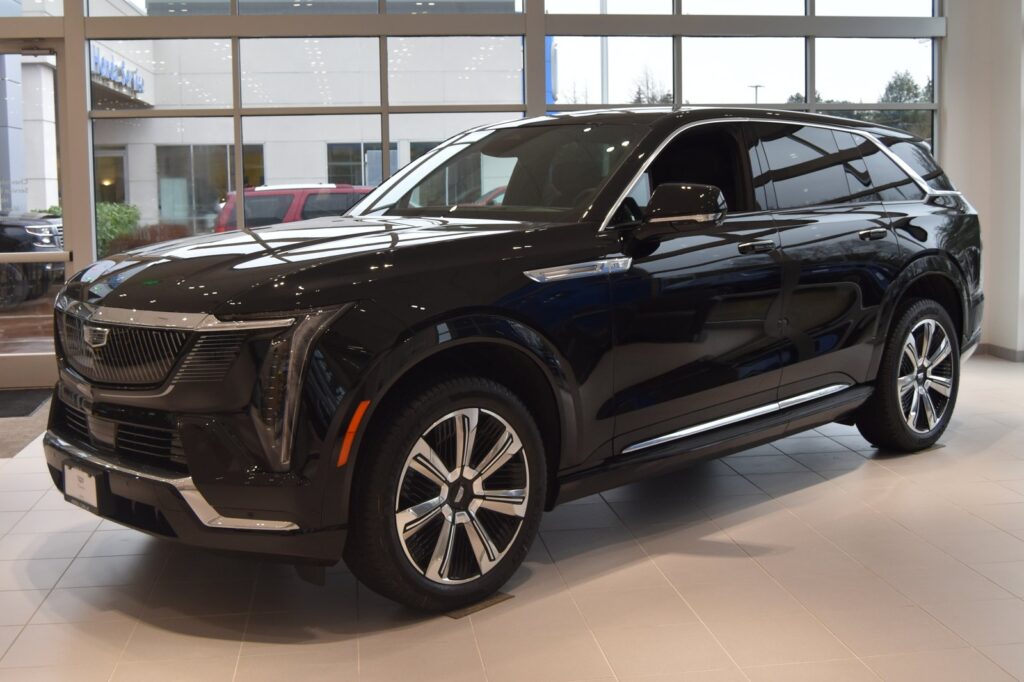
FORT WORTH, October 19, 2026 — A fire at the Frank Kent Cadillac dealership in Fort Worth, Texas, destroyed six electric SUVs and damaged two others, requiring firefighters to work for nearly 18 hours to extinguish the blaze. The incident, which began late Friday afternoon, involved multiple electric vehicles and has prompted renewed discussion regarding the thermal management and safety architecture of high-capacity battery systems.
The Cadillac Escalade IQ, which launched for the 2025 model year, represents a significant shift in General Motors’ luxury portfolio. Built on the company’s Ultium electric vehicle platform at the Factory Zero assembly plant in Detroit, the vehicle is designed to serve as the electric successor to the traditional internal combustion-powered Escalade. According to General Motors, the Escalade IQ utilizes a 24-module battery unit that provides a usable capacity of 205 kilowatt-hours. This massive energy storage system is intended to deliver a driving range of approximately 450 to 465 miles.
The technical reality of the Ultium platform centers on its modularity, sharing batteries and motor components with other high-output vehicles such as the GMC Hummer EV and the Chevrolet Silverado EV. The 24-module pack is designed to support high-speed charging, with a peak rate of 350 kilowatts using an 800-volt DC source. While the vehicle offers impressive performance metrics, including up to 750 horsepower and 785 pound-feet of torque in its Velocity Max mode, the sheer scale of the 205-kWh battery presents a distinct set of challenges for emergency response personnel when thermal runaway occurs.
According to the Fort Worth Fire Department, the blaze at the Frank Kent dealership was intense, necessitating the use of specialized fire blankets to contain the flames and prevent the fire from spreading to additional vehicles. Firefighters rotated crews every two hours throughout the night to manage the situation. The department noted that because electric vehicle batteries are engineered to be sealed against the elements, they are notoriously difficult for water to penetrate. This design, while beneficial for protecting the battery from road debris and weather, complicates traditional firefighting tactics.
Furthermore, the chemical composition of these lithium-ion battery cells can create fires that burn at temperatures significantly higher than those fueled by gasoline. These fires may also release poisonous gases, which adds a layer of danger for first responders. In the Fort Worth incident, the fire is believed to have started in a single vehicle, likely an Escalade IQ, before spreading to others in the vicinity. While no injuries were reported, the duration of the response highlights the logistical burden of managing large-scale battery fires.
The question of safety and potential defects remains a focal point for owners and regulators alike. In July 2026, General Motors issued a recall for certain 2026 model year Escalade IQ and long-wheelbase Escalade IQL vehicles. According to the company, the recall was initiated due to a potential battery fire risk caused by an improperly secured internal component. The concern was that this component could shift during vehicle operation and cause physical damage to the battery assembly. As part of the remedy, General Motors planned to replace the affected batteries in the recalled units.
As the investigation into the Frank Kent dealership fire continues, it remains unclear whether the incident was connected to the specific internal component issue identified in the July recall. The technical complexity of the Escalade IQ extends beyond its battery, as the vehicle features a sophisticated suite of convenience technologies, such as four-door power operation. While these features have been praised for their utility in tight parking scenarios, such as the crowded pickup areas at Los Angeles International Airport, the primary focus for safety authorities remains the integrity of the high-voltage battery architecture.
The Escalade IQ is the first electric Cadillac intended to replace an existing internal combustion model, and as such, it carries the weight of GM’s transition to an electric-first lineup. The 205-kWh battery is among the largest fitted to any production vehicle, providing the energy density required for a vehicle of the Escalade’s size and weight. However, the incident in Fort Worth serves as a reminder that the shift to high-capacity electric propulsion requires a corresponding evolution in fire safety equipment and training for municipal departments.
As ever, the detail that matters in these incidents is the interaction between the battery’s thermal management system and the surrounding structure. While electric vehicles are designed with multiple layers of protection to prevent short circuits and thermal runaway, the high energy content of a 205-kWh pack means that once a fire breaches the protective casing, the energy release is substantial. The Fort Worth Fire Department’s ability to prevent the fire from consuming the entire dealership inventory suggests that while these fires are difficult to extinguish, the use of modern containment tools can mitigate the spread.
For the public, the incident highlights the necessity of staying informed regarding manufacturer recalls. The July recall for the Escalade IQ and IQL models underscores the importance of addressing potential mechanical or electrical vulnerabilities before they manifest as critical failures. Owners of these vehicles should consult their local dealership or the manufacturer’s service portal to determine if their specific vehicle is subject to any outstanding safety actions.
The Escalade IQ continues to be a notable entry in the luxury electric market, offering features like four-wheel steering and a 19.2-kW onboard AC charger. Its design, characterized by the integration of the Ultium platform, reflects a broader trend in the automotive industry toward modular, high-capacity electric systems. Whether this incident leads to further refinements in battery casing or additional safety protocols for dealers remains a subject for future assessment. For now, the focus of the Fort Worth authorities is on completing the investigation into the origin of the fire, while the automotive industry observes the implications for future battery design and emergency response procedures.
Sources
- Several Cadillac Escalade IQs Destroyed In EV-Fueled Fire That Lasted 18 Hours
- Cadillac Escalade IQ
- Our Hallmark Movie Relationship With the Cadillac Escalade IQ’s Power Doors
Photo: Wlb5V (CC BY-SA 4.0)




