
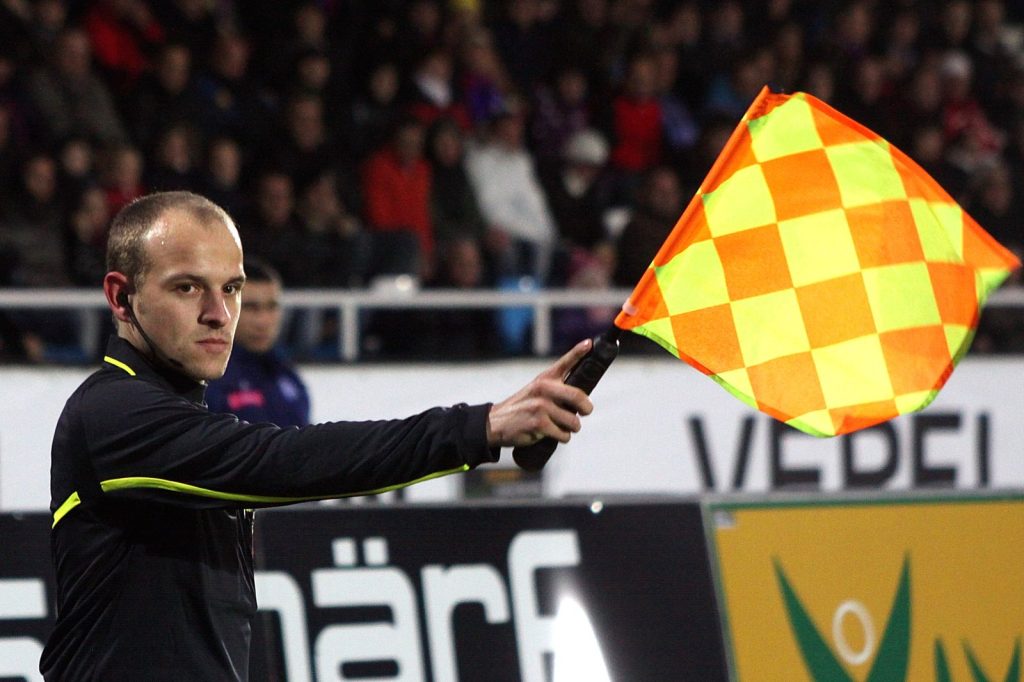
ROME, October 7 — The offside rule in soccer, first codified in 1863 by England’s Football Association, remains a cornerstone of the sport’s identity, evolving from rugby’s strict three-player requirement to today’s precision-driven enforcement aided by technology. Against this backdrop, the rule’s origins lie in an early interpretation that demanded three opposing players be between the attacker and the goal line when the ball was played — a direct carryover from rugby’s offside principle.
This version, known as the ‘three-player rule,’ persisted until 1866, when it was relaxed to the ‘two-player rule’ to encourage more attacking play and goal-scoring, a change credited to representatives of Sheffield FC and other clubs seeking to open up the game. In the corridors of football’s tactical evolution, the rule underwent further refinement in 1873 when the focus shifted to the attacker’s position relative to the second-last defender — typically the last outfield player and the goalkeeper — establishing the foundational concept still recognized today.
A significant shift came in 1925, when the requirement was reduced from three defenders to only two between the attacker and the goal, a modification that dramatically increased scoring and is often cited as a key factor in the evolution of modern attacking football.
What is at stake extends beyond mere positioning: the offside trap, a tactical maneuver where defenders step up in unison to catch attackers offside, became prominent in the mid-20th century, particularly associated with Italian teams in the 1950s and 1960s under coaches like Giuseppe Viani and later Nereo Rocco, whose AC Milan side utilized the tactic effectively in domestic and European competitions.
The introduction of substitute players in 1958 and later changes to the interpretation of ‘involvement in active play’ in the 1990s added layers of complexity, with FIFA issuing clarifications in 1990 and 1997 to define what constituted interfering with play, interfering with an opponent, or gaining an advantage from being in an offside position.
The wider picture transformed with the introduction of Video Assistant Referee (VAR) technology, approved by the International Football Association Board (IFAB) in 2018 following trials in major leagues including the Bundesliga and Serie A, and debuted at the 2018 FIFA World Cup in Russia.
VAR uses multiple camera angles and computerized offside lines to determine positional infringements with millimeter precision, leading to high-profile disallowed goals in tournaments such as the 2019 FIFA Women’s World Cup and the 2020 UEFA Champions League, sparking debate over the balance between accuracy and the flow of the game. Looking ahead, IFAB continues to review the offside rule’s application annually, most recently in 2023, to ensure consistency across global competitions while preserving its original intent of preventing ‘goal-hanging’ and promoting fair competition.
Despite ongoing criticism regarding subjective interpretations and delays, the rule remains central to football’s identity, its evolution reflecting broader efforts to balance tradition with innovation in the sport.




