
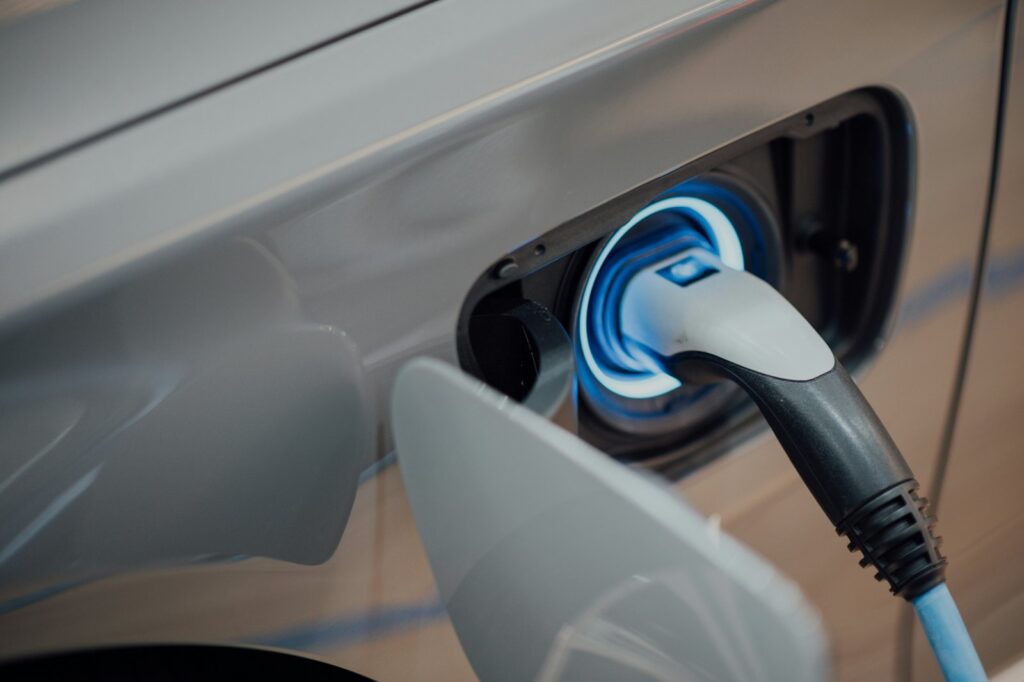
DETROIT, October 19, 2026 — Toyota’s hybrid-first strategy is narrowing General Motors’ long-held U.S. sales lead, with the RAV4 Hybrid gaining ground against GM’s all-electric push as buyers weigh upfront cost and charging flexibility.
The divergence reflects a broader shift in consumer preference, where hybrids are outperforming pure electric vehicles in the current market due to concerns over charging infrastructure and higher sticker prices for EVs. GM committed early and heavily to an all-electric lineup, including the Chevrolet Equinox EV, Blazer EV, and Silverado EV, betting that battery costs would fall and charging networks would expand rapidly enough to make EVs mainstream. Toyota, by contrast, doubled down on hybrid versions of its best-sellers, particularly the RAV4 Hybrid, avoiding the two main barriers to EV adoption: range anxiety and price sensitivity.
According to Automotive News, as reported by TopSpeed on October 18, 2026, the RAV4 Hybrid starts well under $30,000 before incentives, while the Equinox EV begins in the mid-$30,000s. The RAV4 Hybrid does not require home charging or route planning around fast-charging stations, offering refueling flexibility that appeals to buyers without garage access or those who frequently take long road trips. The Equinox EV, meanwhile, offers roughly 300 miles of all-electric range on its top trims and zero tailpipe emissions, but only delivers lower running costs if a buyer has reliable home charging.
GM maintains that its EV strategy is a long-term play, anticipating that battery costs will continue to fall and charging infrastructure will expand before hybrids can claim permanent market share. The company previously announced plans to end internal combustion engine production by 2035 as part of its goal to achieve carbon neutrality by 2040, though these plans were mostly scaled back in 2025. Despite the near-term shift in sales momentum, GM remains the largest automaker in the United States by total sales, a position it has held continuously in the U.S. market.
GM’s history of experimental vehicle development dates back to the 1966 Electrovair II, a Chevrolet Corvair-based sedan powered by silver-zinc batteries, which was an early attempt to study electric propulsion. That legacy of innovation informs its current work on more affordable and efficient EVs, as well as advanced driver assistance systems like Super Cruise and upcoming autonomous features in the Cadillac ESCALADE IQ slated for 2028.
For now, the technical reality is that Toyota’s hybrid bet is winning in showrooms where charging access is uneven and price sensitivity is high. As ever, the detail that matters is not which powertrain will dominate in 2032, but which one buyers are choosing today — and in 2026, that is increasingly the RAV4 Hybrid.
GM’s Early Electric Vehicle Experiments
General Motors’ exploration of electric propulsion dates back to the 1960s, when engineers began studying battery-powered vehicles as alternatives to internal combustion engines. The Electrovair II, introduced in 1966, was a Chevrolet Corvair-based sedan modified to run on silver-zinc batteries instead of a gasoline engine. This experimental vehicle was designed specifically to study electric propulsion systems and gather data on performance, efficiency, and real-world usability.
The Electrovair II represented one of GM’s earliest formal efforts to understand the potential and limitations of electric vehicle technology. Though it never reached production, the insights gained from testing this prototype contributed to the company’s long-term knowledge base on electric drivetrains. This historical work laid foundational groundwork that continues to inform GM’s current development of more affordable and efficient EVs, including models like the Chevrolet Equinox EV and Blazer EV.
GM’s tradition of using concept vehicles and engineering experiments to test future technologies is evident in other innovations as well. The company’s work on autonomous driving, for example, traces back to the 1939 Futurama exhibit at the World’s Fair and evolved through concepts like the 1956 Firebird II and 1959 Cadillac Cyclone. These efforts demonstrate how early research, such as that conducted with the Electrovair II, has helped shape GM’s approach to emerging technologies over decades.
Hybrid Technology Advantages
Toyota’s hybrid strategy is gaining traction due to the advantages of hybrid technology, which combines the benefits of electric and gasoline power. According to Automotive News, the RAV4 Hybrid offers a lower entry price and refueling flexibility, making it a more attractive option for buyers who do not have access to reliable home charging or take regular long road trips.
The RAV4 Hybrid’s EPA-rated range does not require planning around charging stops, as it can run on gasoline supplemented by electric assist. This flexibility is a key factor in the hybrid’s popularity, as it addresses concerns over charging infrastructure and range anxiety. Additionally, Toyota’s reputation for long-term reliability and the lower upfront cost of the RAV4 Hybrid are contributing to its success in the market.
In contrast, the Equinox EV offers roughly 300 miles of all-electric range on its top trims and zero tailpipe emissions, but its higher starting price and requirement for reliable home charging may be deterring some buyers. As the market continues to evolve, it will be interesting to see how GM’s EV strategy and Toyota’s hybrid approach play out in terms of sales and consumer preference.
The Comparative Economics of the Equinox EV and RAV4 Hybrid
For consumers cross-shopping the Chevrolet Equinox EV and the Toyota RAV4 Hybrid, the decision often centers on immediate financial and practical considerations. According to Automotive News, the RAV4 Hybrid starts well under $30,000 before incentives, providing a lower entry price compared to the Equinox EV, which begins in the mid-$30,000s. This price gap is a significant factor for buyers who prioritize lower upfront costs.
Beyond the sticker price, the two vehicles offer distinct value propositions based on usage patterns. The Equinox EV delivers roughly 300 miles of all-electric range on its top trims and zero tailpipe emissions, making it an efficient choice for those with reliable home charging. However, the RAV4 Hybrid offers refueling flexibility that appeals to drivers without garage access or those who frequently take long road trips. Because the RAV4 Hybrid uses gasoline supplemented by electric assist, it avoids the need for route planning around fast-charging stations, a convenience that continues to influence current market preferences.
Sources
- Toyota's Hybrid Gamble Is Beating GM's EV Bet, And Fast
- General Motors
- Engineering the future, yesterday and today: GMâs spirit of innovation
Photo: CHUTTERSNAP / Unsplash (Unsplash License)




