
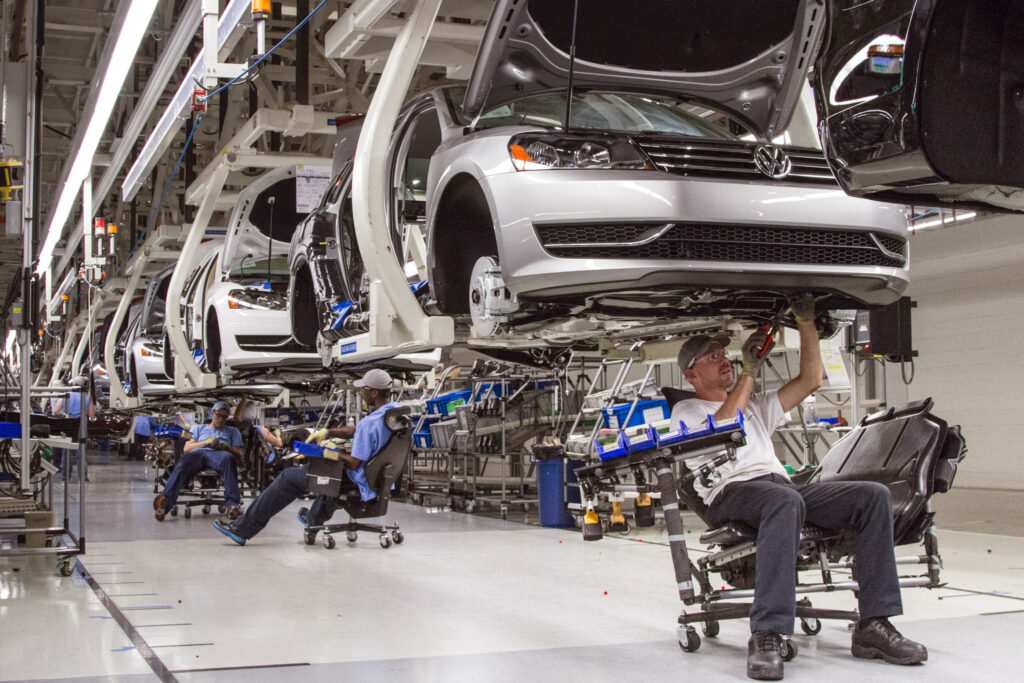
SÃO PAULO, September 16 — Volkswagen’s Latin American operations could move from the margins to the center of the automaker’s global strategy as it cuts costs and capacity elsewhere, according to an analysis published Tuesday by Raul Moreno, President Founder & CEO. The bottom line: while Volkswagen’s Future Plan 2030 targets a 9% operating margin by 2030, the company is also preparing to eliminate another 50,000 positions on top of previously announced reductions — bringing the potential global workforce reduction to approximately 100,000 jobs.
It intends to cut its model portfolio by around 50% and simplify product complexity by 75% by 2035. The pressure driving those cuts is structural.
High European production costs, excess capacity, weaker demand in some markets, US tariffs and increasingly competitive Chinese automakers have forced a rethink. Europe currently has more production capacity than Volkswagen needs, with estimated excess capacity of more than 500,000 vehicles, and the future of several German plants remains uncertain.
A different industrial equation
Latin America is not Europe. Volkswagen is one of the few global automakers with a genuinely broad industrial presence across the region, and that footprint spans vehicles, engines, transmissions and exports rather than a handful of local assembly plants. In Mexico, the company runs two strategically important facilities.
The Puebla plant is one of Volkswagen’s largest production locations globally, building vehicles for both domestic and international markets. In Silao, Guanajuato, Volkswagen operates an engine plant supplying its North American vehicle operations.
Brazil represents an even broader ecosystem — four plants in all. Anchieta in São Bernardo do Campo, Taubaté, São José dos Pinhais and an engine plant in São Carlos manufacture a combination of passenger vehicles, SUVs, pickups and engines, giving Volkswagen considerable flexibility to adapt production to regional demand. Argentina adds production facilities in General Pacheco and Córdoba.
Pacheco has historically been associated with the Amarok pickup, while Córdoba specializes in transmissions and components with a significant export orientation.
Brazil stands out
Brazil may be the biggest beneficiary of Volkswagen’s new global priorities. During the first half of 2026, Volkswagen reported vehicle sales growth of more than 10% in South America, with Brazil standing out as one of its most important global markets. That contrasts sharply with the challenges facing the company in Europe.
Volkswagen is also investing approximately R$16 billion (US$3 billion) in Brazil while expanding its product portfolio with vehicles designed around Latin American market requirements. The company does not necessarily need the region to replicate its European product strategy.
Instead, Brazil gives Volkswagen a flexible, cost-competitive base from which to serve regional demand and potentially export to other markets. Investors will note the figure that matters here is not the size of the cuts but where the remaining capacity lands. As Volkswagen restructures globally, its Latin American operations could shift from peripheral to pivotal.
What to watch next: whether the Future Plan 2030 targets translate into new investment commitments at Puebla, Silao and the Brazilian plants, and whether the region’s export role expands as European capacity comes under further review.




