
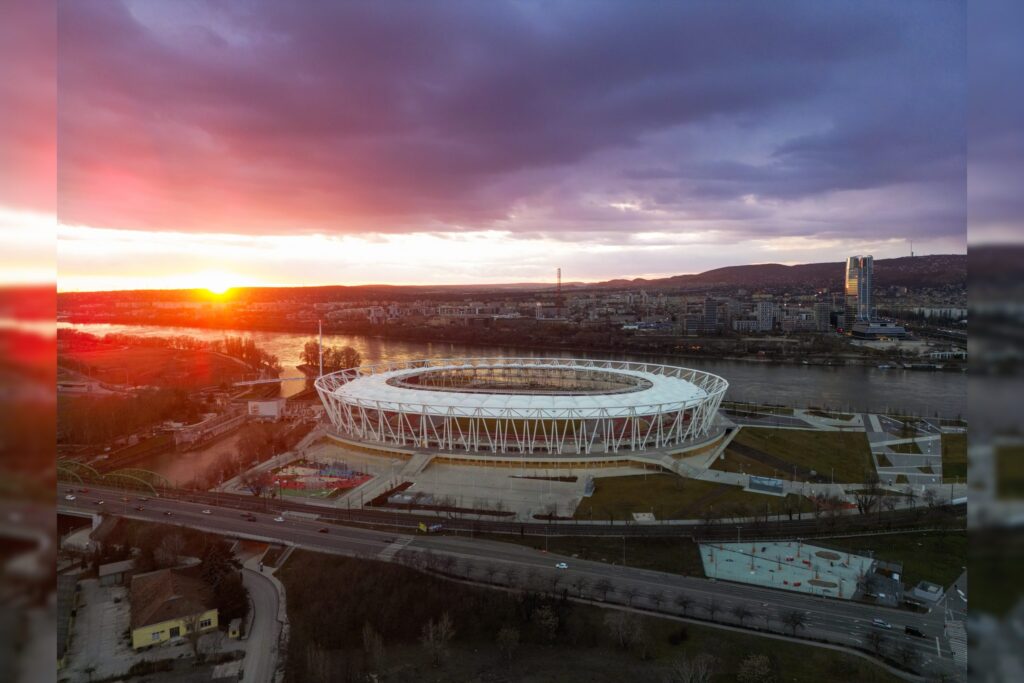
BUDAPEST, September 16 — The World Athletics Ultimate Championship has wrapped its first edition, a three-day experiment in Budapest that ended on September 13, and the sport is now left to decide whether the format worked. The story begins with a gap in the calendar. With no Olympic Games and no World Championships in the 2026 season, World Athletics devised a new biennial competition to fill the void.
The inaugural edition ran across three days in the Hungarian capital, with live coverage on the BBC.
A field of champions, by invitation and by right
The competition was reserved for reigning Olympic, world and Diamond League champions, plus athletes who qualified by world ranking. A few star names who did not qualify received exceptional invitations, including Great Britain’s Josh Kerr and Norwegian rival Jakob Ingebrigtsen into the men’s 1500m. There were 28 finals in total, including straight finals in all field events and both the 1500m and the 5,000m.
The 800m and shorter distances had semi-finals. Not every discipline made the cut.
World Athletics said the decisions were based on event popularity and data on viewer behaviour, leaving out long distance events such as the 3,000m steeplechase and 10,000m, and field events such as the shot put and discus. World Athletics bankrolled the event, and president Sebastian Coe described it as an attempt to “start experimenting a bit and innovating, with an event that will determine who really is the best of the best.”
Money, and a trophy instead of medals
World Athletics provided what it called “the richest prize pot in the history of the sport,” with a total of $10m (£7.4m) to be won. Each individual event winner pocketed $150,000 (£110,000) — more than double the offering at last year’s World Championships — with $75,000 (£55,000) for the runner-up and $40,000 (£29,500) for third. No medals were awarded.
Only the Ultimate champions received a trophy, waiting for them to collect on a plinth at the end of their event. Several innovations were introduced for the inaugural edition.
On the eve of the championship there was a red carpet entrance for athletes, with a designated media day featuring press conferences and photoshoots. Athletes contesting the 200m took part in a lane draft, selecting their preferred semi-final heat and lane in world rankings order. The broadcast used augmented reality, athlete headshots, win probabilities and projected finishing positions to develop the viewer experience.
Pole vault star Armand Duplantis performed the official song of the championship among the live acts, while American sprinter Noah Lyles — ruled out by injury — acted as MC. Quadruple European champion Amy Hunt competed in the 100m and 200m.
An experiment that may not be repeated as it stands
Coe was candid about the risk. He said there is “no guarantee we’re going get everything right,” and that the format could change in two years, with elements potentially fed into the established World Championships format. “I also want to be able to put some of the things we’re doing into the World Championship format,” Coe said.
“We have a responsibility to try and engage new young audiences.” The event arrived after last year’s inaugural Grand Slam Track league, founded by Michael Johnson, attempted to maintain focus on the sport following Paris 2024 while offering lucrative prize money, but ended after encountering serious financial issues. The sport has long grappled with retaining the attention and excitement it generates at the Olympics throughout four-year cycles.
Because of the disruption caused by the pandemic and the subsequent postponement of the Tokyo 2020 Games, each of the past five years provided a pinnacle event gathering the biggest stars in front of a global audience. For many top British athletes, a 2026 season centred around a Commonwealth Games and European Championship on home soil would probably have finished at the Diamond League Final. Coe and World Athletics have planned for three years to fill that perceived void.
What to watch next is whether the Budapest format survives intact. Coe has already signalled it may not, and the coming months will show which of its innovations — the lane draft, the trophy plinth, the broadcast graphics — earn a permanent place in the sport’s established championships.




