
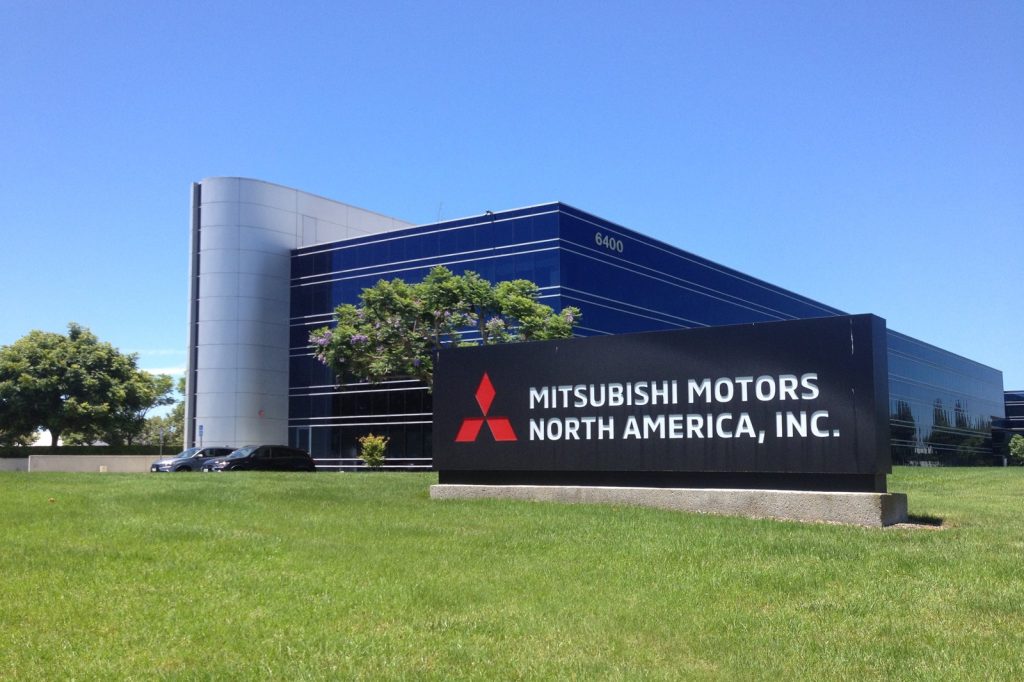
On 31 January 2020, the Frankfurt Public Prosecutor’s Office announced a criminal fraud probe targeting Mitsubishi Motors. Prosecutors allege that the Japanese manufacturer installed illegal “shutdown or defeat devices” in its 1.6‑litre and 2.2‑litre diesel engines, allowing the vehicles to pass laboratory emissions tests while emitting far higher levels of nitrogen oxides on real‑world driving. The investigation covers Euro 5 and Euro 6 models sold in Germany from 2012 onward.
According to the prosecutors, the software in question is believed to limit exhaust‑gas recirculation and deactivate full emissions control when the on‑board computer detects a driving pattern typical of a dynamometer test—such as specific steering angles, speeds and acceleration rates. Outside of those patterns, the after‑treatment system would be reduced or switched off, potentially causing NOx emissions to exceed the Euro 6 limit of 80 mg/km.
Julia‑Schneider Heine, a spokesperson for the Frankfurt office, told reporters that “we have reasonable cause to assume that the engines were programmed to recognise steering angle, speed patterns and acceleration typical of a dyno run. Outside that pattern the after‑treatment is reduced or switched off entirely.” No arrests have been made, but prosecutors said charges could include fraud and violations of Germany’s Federal Emission Control Act. Investigators seized documents and electronic data from Mitsubishi’s German importer and from PSA Group offices in Rüsselsheim during coordinated dawn raids.
The French automaker PSA supplies the diesel powertrains used in Mitsubishi’s ASX, Outlander and L200 models, and the German authorities are also reviewing the role of the supplier.
Mitsubishi’s response and PSA’s involvement
Mitsubishi’s European legal team issued a two‑page rebuttal shortly after the raids, stating that the company found “no reason to believe that there was any fraud as suspected by the Frankfurt Public Prosecutor authorities.” The statement emphasized that the diesel engine, its control unit and the homologation paperwork were designed, validated and submitted by PSA Group, which also provides the same engines to Opel, Peugeot and Citroën. The automaker argued that it merely installed PSA’s pre‑approved package and therefore lacked both the motive and the technical means to manipulate emissions results.
Mitsubishi pledged full cooperation with German authorities and said it would implement any recommended improvements immediately.
Regulatory backdrop and broader implications
The Federal Motor Transport Authority (KBA) has been conducting its own compliance checks on PSA‑based diesels since late 2019. KBA president Richard Damm told the Bundestag transport committee on 29 January that “anomalies in thermal‑window behaviour” were observed in several PSA families, including those supplied to Mitsubishi.
The agency is now assessing whether the software constitutes an illegal defeat device under EU Regulation 715/2007. A negative ruling could trigger mandatory recalls for more than 600 000 vehicles in Germany alone. PSA has affirmed its respect for European regulations and its cooperation with investigators, but declined to comment on the specific allegations concerning Mitsubishi.
The case follows a series of post‑Dieselgate prosecutions across Europe, which have already resulted in charges or fines for Fiat Chrysler, Renault, Daimler and Porsche. German consumer group VZBV estimates that court‑backed diesel buy‑backs and retrofits have cost the industry over €32 billion, while environmental NGO DUH welcomed the investigation, asserting that manufacturers are legally responsible for every component they sell.
Market reaction and next steps
Following news of the raids, Mitsubishi’s shares fell 4.7 percent on the Tokyo exchange, erasing roughly $550 million of market value. Nomura Securities warned that a forced recall of the affected Euro 5 and Euro 6 diesels could cost up to €1.2 billion, with PSA likely sharing part of the financial burden under supply contracts. Mitsubishi must submit internal emails and source‑code logs to the Frankfurt court by 14 February.
Prosecutors indicated they will decide by Easter whether to pursue individual indictments or opt for corporate fines. Until a final determination, all Mitsubishi diesel vehicles equipped with the contested engines remain under regulatory scrutiny, and owners may face reduced resale values or possible city‑centre bans if emissions limits are not met.




