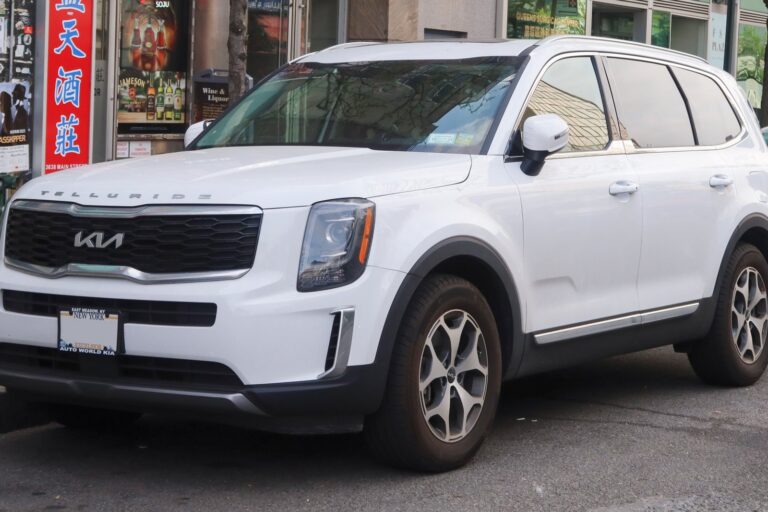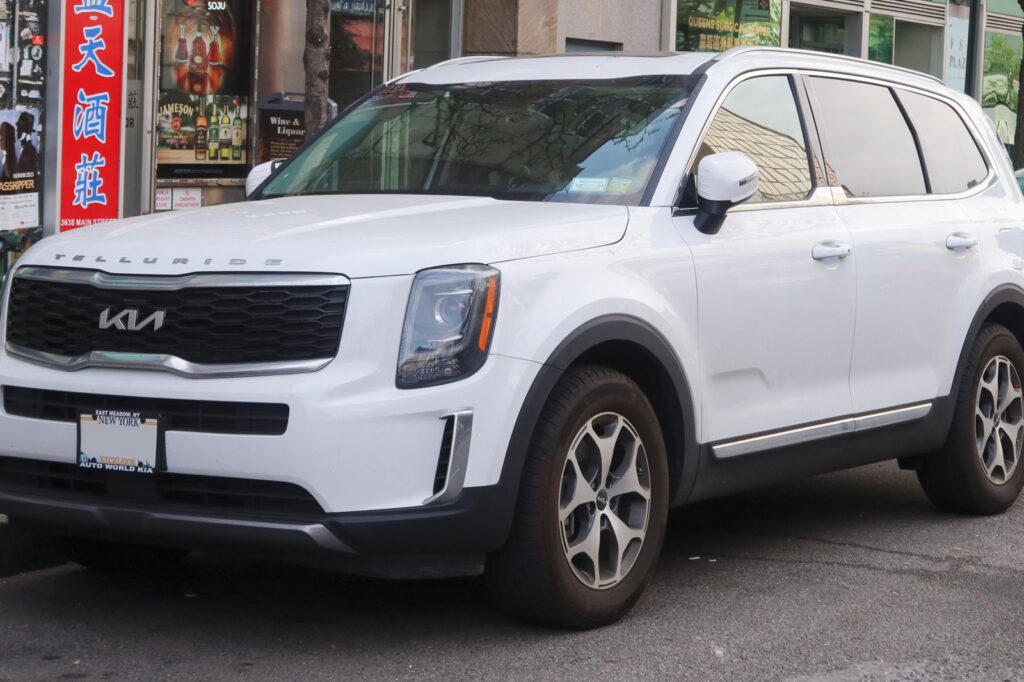
The Kia Telluride has established itself as the default answer for buyers seeking a three-row SUV since its debut in 2020, yet the data reveals that not all model years carry equal weight regarding reliability and safety history.
A Heavy Paper Trail for the Launch Year
The 2020 Telluride logged six separate recall campaigns on file, a figure that stands as the highest among any model year in the vehicle’s production run. This launch-year unit earned a five-star overall NHTSA crash rating, proving that structural integrity was never the primary concern for owners or regulators.
Despite strong crash protection, the technical reality of the 2020 model involved significant issues with build quality and electronics during its initial phase. Kia pulled in nearly 87,000 vehicles specifically to address a tow-hitch problem that affected trailer brake lights on these early units. A separate campaign issued in September 2020 addressed Smart Cruise Control issues found exclusively on the 2020 models.
The most critical engineering failure for the 2020 cohort was found under the hood: a faulty powertrain control module (PCM) that could cause the engine to stall while driving.
The Mid-Cycle Stabilization (2021–2022)
By the time the 2021 Telluride arrived, Kia had largely ironed out the most dangerous electrical gremlins. However, the technical reality for this model year introduced a new set of challenges centered on the fuel system. The 2021 model was subject to recalls regarding a high-pressure fuel pump that could fail prematurely, as well as issues with the fuel filler neck and cap that allowed gasoline vapors to escape into the cabin or environment.
The 2022 Telluride continued this trajectory of incremental fixes rather than revolutionary changes. While it retained the same powertrain architecture—the 3.8-liter Lambda II V6 paired with an eight-speed automatic transmission—it carried forward recalls related to the fuel pump and, notably, a new issue involving the driver’s side airbag inflator. This latter defect was part of a broader industry-wide investigation into Takata airbags, though Kia’s specific implementation required careful monitoring.
The Modern Standard: 2023–2025
The 2023 Telluride marked a significant shift in the vehicle’s reliability profile. With this model year, Kia began integrating updated software and refined manufacturing processes that addressed the electrical gremlins of the early years. The 2024 and subsequent models have seen fewer major safety recalls, suggesting that the design has matured into a stable platform.
However, the detail that matters for any prospective buyer is that these later models often carry higher base prices to reflect their improved build quality. For those seeking value without inheriting a legacy of electrical failures or fuel system defects, the 2023 model year represents the first truly “safe” purchase in terms of avoiding the specific, known issues plaguing the 2020 and 2021 cohorts.
The Numbers Behind the Headlines
To understand the significance of these recalls, one must look at the volume affected. In contrast, the fuel pump issues affecting the 2021 models were addressed in batches of several thousand, indicating a more isolated supply chain or manufacturing error rather than a fundamental design flaw.
The data suggests that while the Telluride remains a dominant force in the segment—often beating out rivals like the Nissan Pathfinder and Volkswagen Atlas in head-to-head tests—the 2020 model year carries a heavier burden of historical baggage. Buyers looking to avoid known issues should steer clear of early production runs from 2020 and 2021, or ensure that specific recalls regarding the PCM and fuel pump have been fully resolved.
Fire Risk And Additional Concerns
According to the recall history, an August 2022 recall of about 36,400 Tellurides from the 2020 to 2022 model years was issued for a genuine Kia four-pin tow hitch harness that posed a fire risk. This recall highlights the potential dangers associated with certain components of the vehicle.
Additionally, owners have reported other issues, such as cracked windshields and noisy self-leveling rear shocks, which, although not catastrophic, can be annoying and require repeated dealer visits. These problems were more commonly reported in the 2020 and 2021 models.
It is essential for prospective buyers to be aware of these potential issues and ensure that any recalls, including the one related to the tow hitch harness, have been addressed before making a purchase. A 2020 Telluride with a documented service history and a clean inspection can still be a good buy, but it is crucial to do thorough research and due diligence.
Windshield Cracking And Rear Shock Noise
Beyond the formal recall campaigns documented in NHTSA filings, a distinct pattern of non-mechanical complaints has emerged across the 2020 to 2022 model years. Owner reports consistently identify cracked windshields as a recurring issue, with the problem appearing more frequently in the earlier production runs. These cracks are often attributed to stress points in the glass or installation tolerances rather than impact damage, leading to multiple service visits for affected owners.
Additionally, noisy self-leveling rear shocks have been a common point of frustration, particularly on 2020 and 2021 vehicles. The electro-hydraulic system designed to automatically calibrate ride height based on load has developed audible complaints from owners, who describe clunking or humming noises during normal operation. While these issues are not classified as safety-critical, they represent the type of persistent quality-control concerns that can transform a comfortable daily driver into a repetitive dealer visit experience.
Sources
- The Kia Telluride Years Worth Buying And The Ones To Avoid
- Kia Telluride
- I drove the Nissan Pathfinder and Kia Telluride for a week — here’s the sub-$60K family SUV I recommend
Photo: Kevauto (CC BY-SA 4.0)