
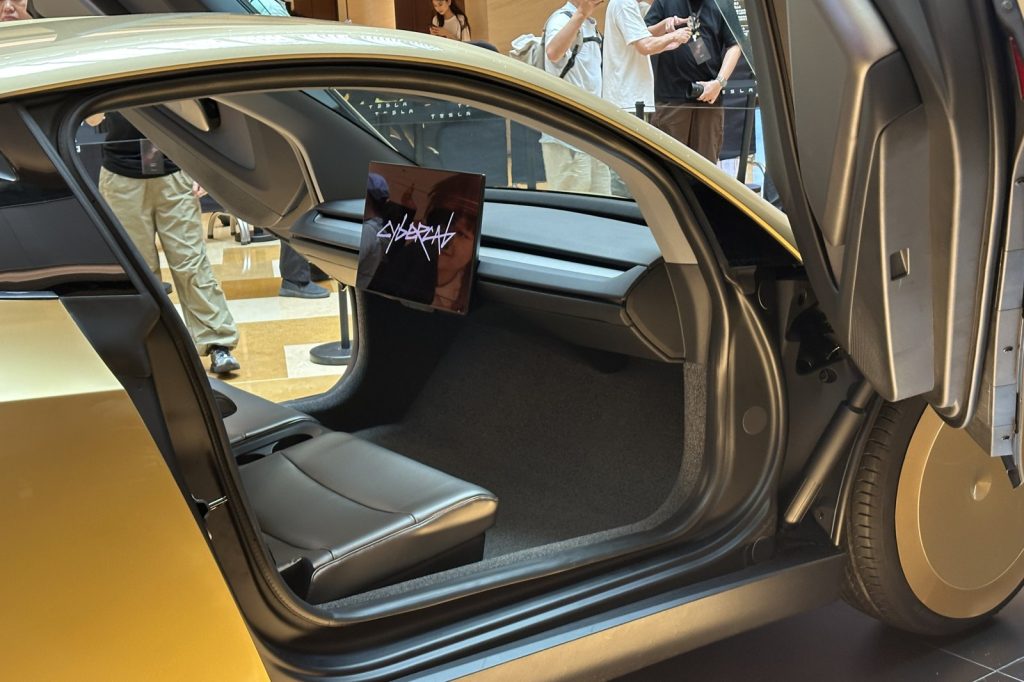
Tesla has pulled back the curtain on what it is actually like to ride in a Cybercab, releasing a new video that walks through the complete user experience of its purpose-built robotaxi — from summoning the car to stepping out at the destination. For the first time, the full journey is on display, and it looks less like a car trip and more like a glimpse of how urban travel may work a few years from now.
The Cybercab is unlike anything else in Tesla’s lineup. It is a sleek two-seater with no steering wheel and no pedals, built from the ground up for autonomy rather than retrofitted from a conventional car. The signature upward-swinging butterfly doors open as the vehicle recognises its passenger, and the cabin is stripped of the usual controls in favour of a single central display.
A ride with no driver and no friction
The experience the video showcases is built around simplicity. A rider hails the Cybercab from the Tesla app, much like calling any ride-share, and the car arrives on its own. There is no handshake with a driver, no awkward confirmation of the destination, no tipping screen at the end. The passenger climbs in, the doors close, and the journey begins with a tap.
Inside, the screen handles everything: route, estimated arrival, climate, media. Tesla has leaned into the idea that the best interface for an autonomous ride is almost no interface at all — the car does the work, and the passenger simply travels. It is a deliberate contrast with the sensory overload of a modern cockpit, and it signals how different a driverless product can feel once the steering wheel disappears.
One detail that has drawn attention is how intuitive the entry and exit are designed to be. The doors, the seating, and the pickup and drop-off flow are all choreographed so that a first-time rider needs no instructions. That matters enormously for a robotaxi: the entire business model depends on millions of people who have never used the car before being able to ride it without a second thought.
Why the Cybercab matters
Tesla is betting that the Cybercab becomes the backbone of a large-scale robotaxi network, where owners and the company alike can put vehicles to work carrying passengers around the clock. The car was engineered for that mission: a lower projected cost than a typical Tesla, wireless inductive charging so there are no cables to plug in, and a cabin optimised for turnover rather than long personal ownership.
The promise is compelling. A fleet of autonomous two-seaters running continuously could drive the cost of a ride well below today’s ride-share prices, reshape how cities think about parking and car ownership, and give people back the time they currently spend behind the wheel. The challenge, as ever, is execution — regulatory approval, proven safety at scale, and the hard final stretch of full self-driving that the entire concept rests on.
However the timeline shakes out, the new video does something important: it makes the abstract concrete. Instead of a concept car on a stage, viewers get to see the ordinary rhythm of a ride — call it, enter it, go. That is the moment a futuristic idea starts to feel like a product people will actually use.
Footage released by Tesla. Watch the full Cybercab experience above.




