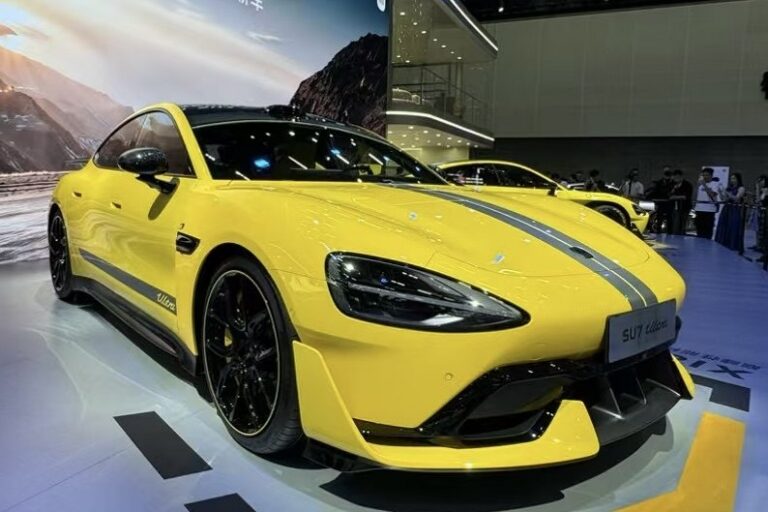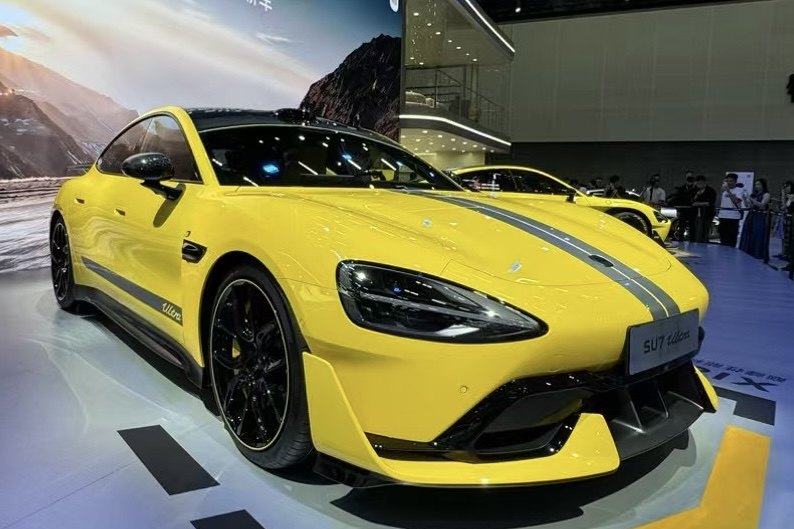
Xiaomi is selling its electric cars outside of China for the first time, starting with the United Arab Emirates in 2027. The launch puts the company’s 1,548-horsepower SU7 Ultra on a collision course with the strict safety and homologation rules that govern high-performance vehicles in Europe and the Middle East.
The Car That Starts the Conversation
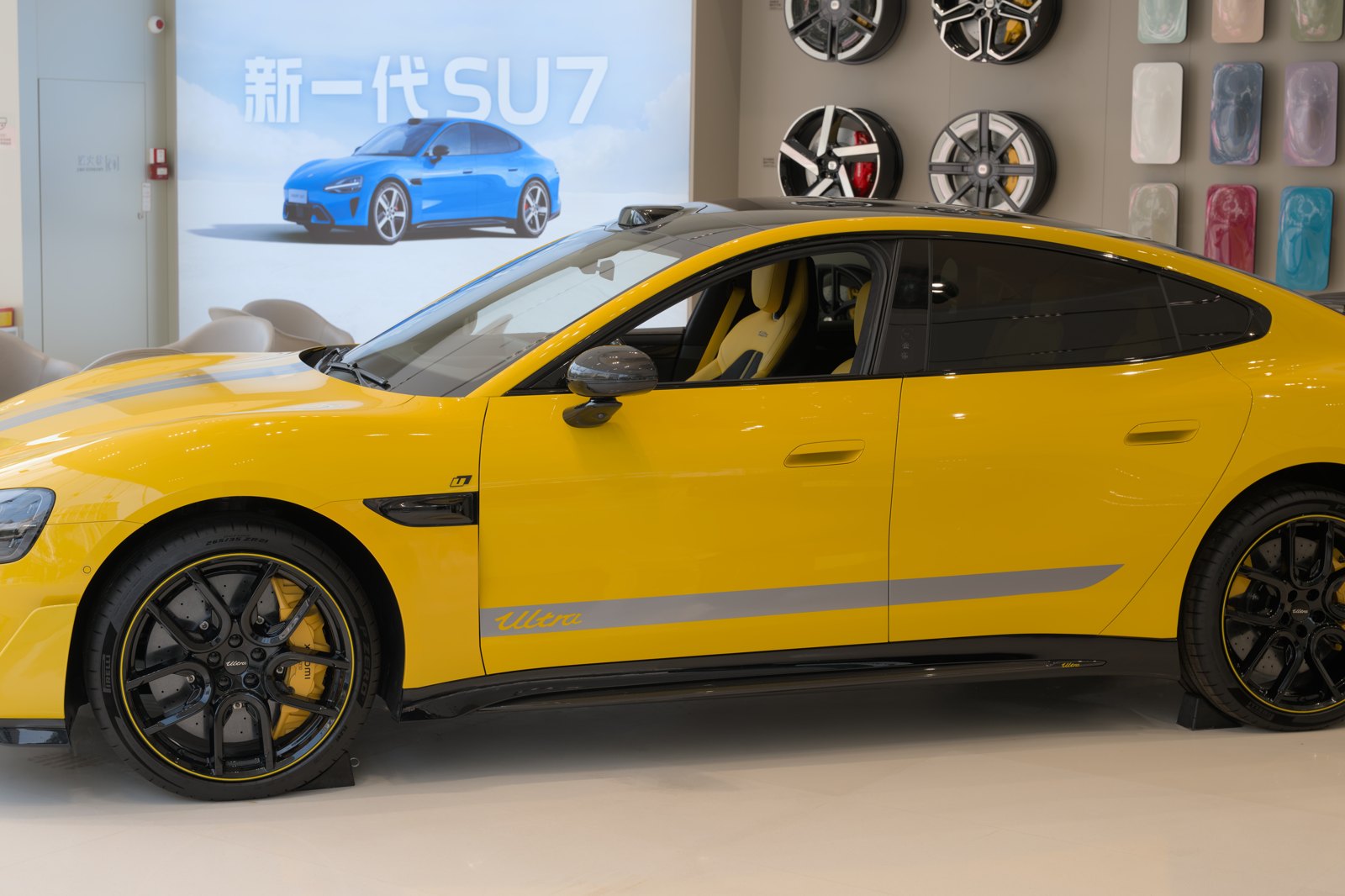
The SU7 Ultra is not a typical first export. It is a track-focused supercar built around three high-torque electric motors that combine for 1,548 hp. In plain terms, that is enough thrust to push the sedan from 0 to 100 km/h in under two seconds and on to a top speed of 217 mph. Think of it like strapping a rocket booster to a family sedan chassis — except the chassis is made of carbon fiber, the brakes are carbon-ceramic, and the rear wing is big enough to double as a dining table.
The practical upshot for buyers in the UAE is a price tag of 375,900 AED, or roughly $102,000. That figure lands in a sweet spot for a market that has a well-documented appetite for hypercars. For context, the entry-level SU7 Standard starts at 169,900 AED (about $46,200), giving the lineup a spread that covers both executive commuters and collectors.
How the UAE Launch Works
Xiaomi is not opening its own showrooms in Dubai or Abu Dhabi. Instead, the company signed a distribution agreement with Gargash Prime Automotive, a long-established local dealer group. Gargash is listing 13 variants across the SU7 sedan, the YU7 crossover, and the Skynomad extended-range SUV. First deliveries for the SU7 Standard, SU7 Ultra, YU7 Standard, and Skynomad N70 Pro are slated for December 2026, with the remaining variants following in February 2027.
This distributor model is a calculated move. It lets Xiaomi lean on Gargash’s existing knowledge of Gulf Cooperation Council (GCC) type-approval processes — the mandatory certification that a vehicle meets regional safety, emissions, and environmental standards — without building a regulatory team from scratch.
The EU Hurdle Is Higher
CEO Lei Jun confirmed at the APEC CEO Summit in Shenzhen on November 17 that Xiaomi will enter Western car markets next year. That statement points to Europe, but the regulatory climb there is steeper than in the UAE.
European Whole Vehicle Type Approval (WVTA) demands destructive crash testing at multiple offsets, pedestrian impact mitigation, cybersecurity audits, and software update governance under UN R155 and R156. For a 1,548-hp EV that hits 217 mph, the crash structures must manage kinetic energy far beyond what a standard sedan sees. The carbon-ceramic brakes and active aero that help the SU7 Ultra lap the Nürburgring also have to pass European noise and particulate standards — rules that do not exist in the same form in the Gulf.
Here’s what it means: Xiaomi cannot simply ship the UAE-spec Ultra to Munich or Paris. The car will likely need a unique homologation package — potentially different bumper beams, revised restraint logic, and a software-limited top speed for public roads — before a single European customer can take delivery.
From Smartphone Giant to Auto Maker in Five Years
The speed of this expansion traces back to a strategic pivot. Xiaomi Auto was founded in 2021 after U.S. sanctions on the parent company prompted chairman Lei Jun to diversify beyond smartphones. The board approved an initial 10 billion Chinese yuan investment, with a planned 10 billion U.S. dollars committed over the following decade. By 2025, the subsidiary carried a market capitalization of approximately US$135.2 billion.
The Beijing factory, built in two phases for a combined 300,000-unit annual capacity, delivered its first SU7 in late 2023. Moving from zero to global exports in roughly five years is a timeline that legacy automakers typically measure in decades.
What Comes Next
Lei Jun has publicly committed to Western market entry in 2027. The first European-spec vehicles — likely the volume SU7 and YU7 models rather than the Ultra — will serve as the real test of whether Xiaomi’s engineering can satisfy EU homologation without diluting the performance that makes the Ultra a headline act.
Sources
- Xiaomi's 1,548 hp electric supercar is going global, starting in the UAE
- Xiaomi Auto
- Xiaomi Robot Clocks 8 Hours on EV Line: Results [2026]
- Sichuan Fine Arts Institute and Xiaomi Explore Folk Crafts
- The Anonymous Hacker Cyberleek Releases An Xbox Build Of 'GTA VI'
- Six Products And Services Google Discontinued In 2026
Photo: Zoerides (CC0)