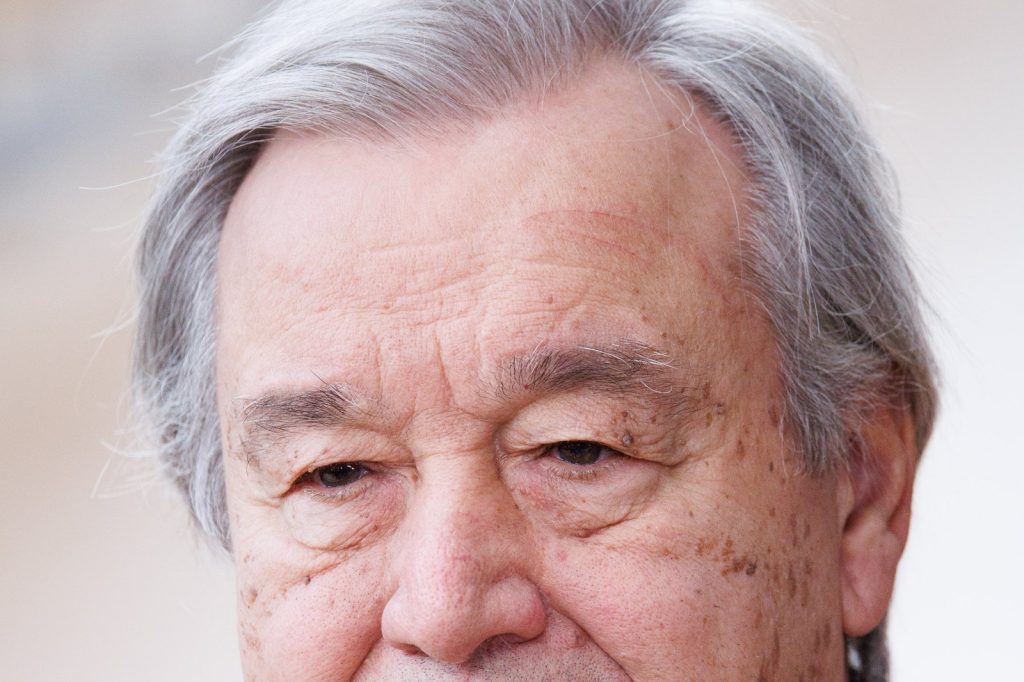
“The fault lines in our world are widening,” António Guterres told the General Assembly on September 22. Then, a beat later: “Cracks have become canyons.”
It was the opening day of the General Debate, and with about 100 days left in his term as UN Secretary-General, Guterres used it to name four “tests of power”: war or peace, inequality, climate change and artificial intelligence. How the world handles them, he said, will decide whether it moves toward a new era of cooperation or deeper division.
Power, reshaped
Presenting the UN’s annual report, Guterres described a decade of eroding norms. Civilians have been targeted in war, humanitarian workers killed, international law “cast aside.” He said power is being reworked in three ways: new state powers are emerging, authority is shifting from governments to private corporations, and AI and autonomous weapons are taking over decisions once reserved for people.
He warned against a slide into rival blocs with separate economic and security systems, a scenario he has called the Great Fracture. His answer was a global network built on interdependence. “The greatest power is not the power to dominate,” he said. “It is the power to build a future that works for everyone.”
War and the Security Council
On conflict, he pointed to the Middle East, Ukraine, Sudan and Myanmar. Supposed ceasefires, he said, have become “lesser fires,” and civilians still pay. He renewed calls for compliance with International Court of Justice orders on Gaza and warned that settlement expansion in the Israeli-occupied West Bank threatens the two-state solution. Russia’s full-scale invasion of Ukraine, he said, violates the UN Charter.
He also returned to Security Council reform. The continued lack of permanent African representation is “unjust and indefensible,” he said.
Inequality and climate
Record global wealth sits beside billions who lack enough food, clean water, education and healthcare. Guterres said the financial system leaves developing countries buried in debt while they face climate disasters they did little to cause. He asked for faster debt relief, bolder multilateral development banks and fairer access to the IMF’s Special Drawing Rights.
He had some good news from inside the building: the UN has reached full gender parity across senior leadership, headquarters staff and professional roles for the first time. “Equality is not a dream; it is a decision,” he said.
Climate, in his words, is the “most profound intergenerational power imbalance.” He called a breach of the 1.5°C threshold almost certain, urged polluters to “pay,” and asked developed nations to triple adaptation funding. Major oil companies, he noted, have posted large profits since Russia’s invasion of Ukraine.
Machines and accountability
AI is advancing faster than anyone’s ability to govern it, Guterres said, with power piling up in data, computing capacity and algorithms. “The danger is not technology,” he said. “The danger is technology without accountability.” He asked for a multilateral AI risk-management framework with independent oversight, said children must never become test subjects for unregulated systems, and put it bluntly: “Life-and-death decisions must never be surrendered to machines. Killer robots must have no place in our future.”
Other opening speakers touched the same subject. Assembly President Khalilur Rahman warned against “an arms race for control of AI,” and Brazil’s Luiz Inácio Lula da Silva pushed for tighter regulation of big technology companies. Twenty-two countries adopted a declaration on the sidelines saying AI “must remain under human direction, oversight and control.”
Guterres closed by recalling that the UN was born from the wreckage of the Second World War, an act of defiance of hope by people who refused to surrender the future to fear. He promised to keep defending the Charter after he leaves office. “The world does not need a weaker UN,” he said. “It needs a UN strong enough to face the world as it is and determined enough to build the world as it should be.”
Sources
- Guterres warns humanity faces four defining tests of power – Channel Africa
- UNGA81 – General Debate Day 1, AI and more
- Guterres Defines Four Issues That Make Or Break Global Security