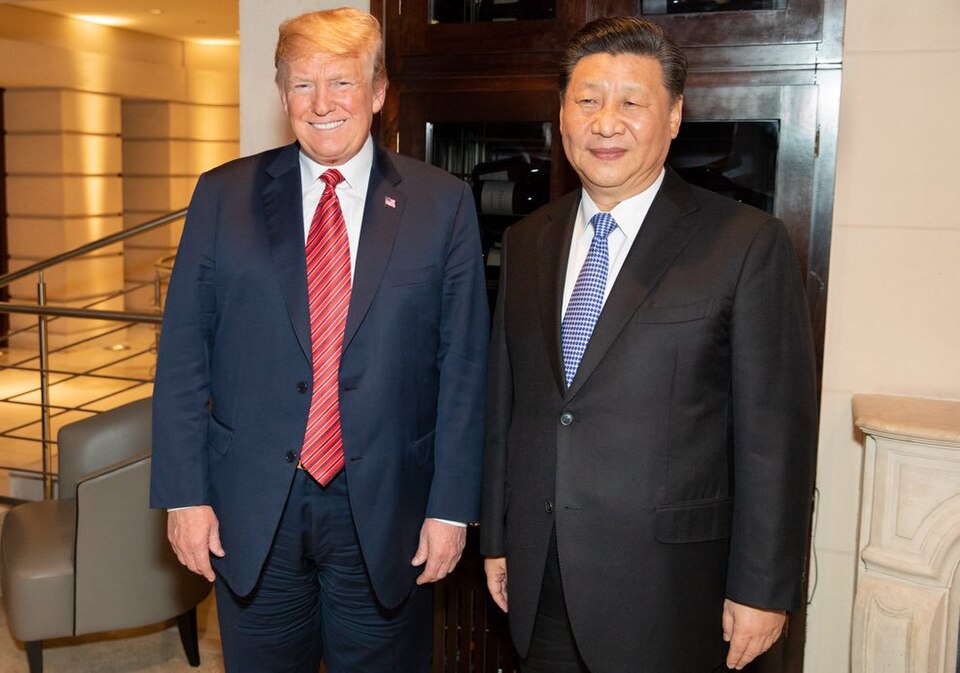
The verified development: Xi Jinping came to Washington on September 24, 2026, for a full state visit, and the theatre began before a word of policy was discussed. Donald Trump met the Chinese president personally on the tarmac at Joint Base Andrews, a greeting no foreign head of state had received from a U.S. president, papal arrivals aside, in more than six decades. In their first minute of joint remarks, Trump said three times what an honor it was to host Xi. The account indicates Xi was unmoved by the flattery; he said only that he was glad to be there.
The substance, such as it was, had been settled in advance. During economic talks on September 20, the two governments extended their trade truce to January 10, 2027, adding just two months to the one-year arrangement struck when the leaders first met, in Busan in October 2025, under which Washington lowered tariffs and Beijing paused enforcement of export controls on critical minerals. Treasury Secretary Bessent noted that China first had to make good on its promises; the deal could grow, or be scrapped. China’s own Foreign Ministry readout confirmed only a “new joint arrangement” in trade, without detail. According to the Trump administration’s accounting, the sides also identified $30 billion in nonsensitive goods flowing each way for reduced tariffs, and Beijing agreed to buy American coal, at least ten million metric tons of it, across 2027 and 2028. The Chinese readout did not repeat either item.
Artificial Intelligence, Talked Past
On AI, officials said, the two leaders largely restated positions. Trump had posted beforehand that the technology, which he now calls “super intelligence,” “will be a big topic of discussion, but I want to leave it exactly where it is. That is China’s position also.” Xi was more cautious, stressing that “AI must be kept under human control.” The concrete results: a U.S.-China AI dialogue convening in November, and a bilateral channel for reporting AI incidents.
Taiwan and the Arms Sale
Xi raised Taiwan, pressing Washington to stick to opposing Taiwan independence in its statements. Trump did not adopt the formulation, and the $14 billion arms package pending for Taipei moved nowhere. Rupert Hammond-Chambers of the U.S.-Taiwan Business Council, who counts this as the fourth freeze on such sales after earlier ones under Bush and Obama, was blunt: “The Trump Administration has let the fox in the henhouse. Telegraphing sensitivity to the Chinese position on Taiwan this past spring, Trump has empowered China to affect his decisions [on arms sales],”
Optics Over Outcomes
The stagecraft was extravagant: a welcome ceremony with drills by 479 military personnel and a flyover by a B-2 bomber and four F-22s, then a state dinner seating Sam Altman, Jensen Huang, Tim Cook, Jeff Bezos, Mark Zuckerberg, Sundar Pichai and Elon Musk. Xi brought no Chinese executives with him, a contrast with Trump’s May visit to Beijing. The Center for a New American Security’s Emily Kilcrease called the absence “a rather depressing marks of how bad the relationship has gotten.” Trump claimed the pair had “made tremendous strides on the issues facing our two countries”, citing a Board of Trade that has yet to launch. Xi, for his part, framed the rivalry gently: “Our competition should be a healthy one and should be kept within bounds. It should be a race of catching up with one another, not a wrestle in which one either wins or loses.” Xi spoke of common understanding reached across many issues, though outside the two pandas bound for Zoo Atlanta, the hard questions all travel on: to APEC in Shenzhen from November 18-19 and the G20 in Miami from December 14-15.
Sources
- Trump-Xi Summit: Heavy of Vibes, Light on Substance – The Diplomat
- The Limits of Trump and Xi’s Photo-Op Summit | Council on Foreign Relations