
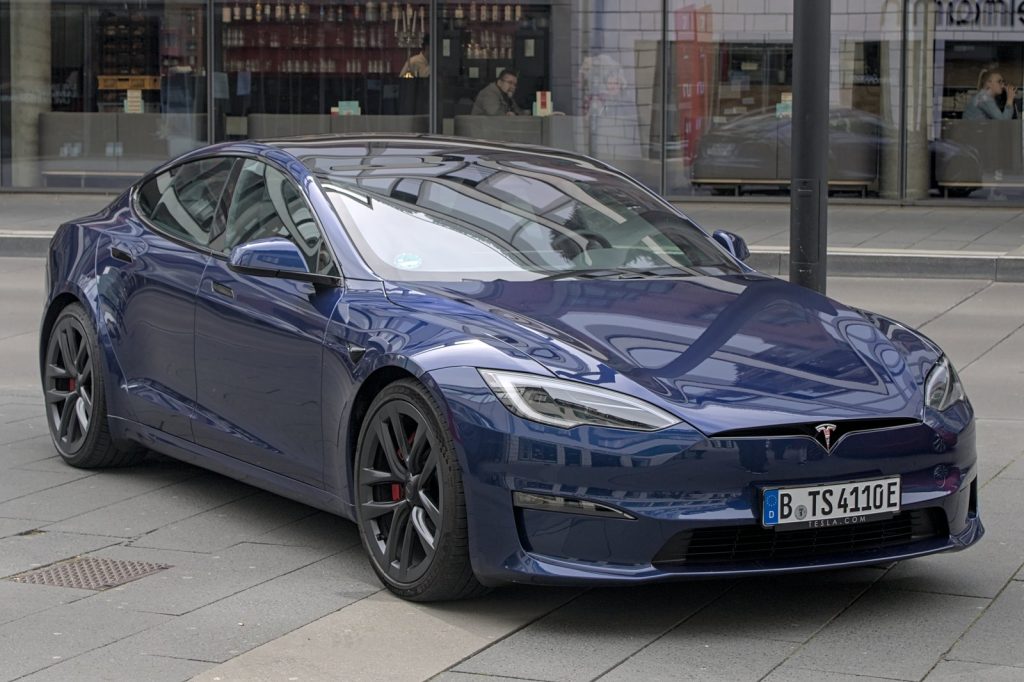
How Tesla’s Model S Plaid Defies Economics With $100K+ Pricing in a Seller’s Market
HAWTHORNE, CALIFORNIA, October 17, 2026 — The Tesla Model S Plaid remains one of the most expensive sedans on the market, its $90,000-plus price tag holding firm despite inflation, supply chain disruptions, and the broader shift toward more affordable electric vehicles. The technical reality is that the Plaid isn’t just surviving—it’s setting a benchmark for what buyers will pay for performance, software-driven innovation, and the kind of brand prestige that traditional automakers still struggle to replicate.
The Engineering Edge: How a 10% Software Tweak Pushes 204 mph
The Plaid’s speed isn’t just about brute force. Tesla’s three-motor, 1,020-horsepower setup was already one of the quickest production sedans when it launched in 2021, but the real magic lies in what happens after purchase. A 2026 Plaid equipped with the Track Pack and a third-party tuning module from SirHarrold demonstrated that a 10% software-based power increase—no hardware changes required—could push the car to 204 mph and shave 0.13 seconds off its 0-60 mph time. The detail that matters is that this isn’t just marketing: DragTimes testing confirmed measurable gains in quarter-mile and half-mile acceleration, with the tuned Plaid crossing the finish line 5.4 mph faster at the half-mile mark.
Under the hood, the Plaid’s adjustable suspension—including a stance mode that lowers the car for show before raising it for practicality—and features like Drag Strip mode (exclusive to the Plaid) reinforce its status as a moving testbed. The fact that these upgrades can be unlocked via over-the-air updates means Tesla isn’t just selling a car; it’s selling access to a platform that evolves long after the sale. Road & Track’s criticism of the Plaid’s design flaws didn’t stop it from acknowledging the car’s transformative role in redefining EV performance—a duality that fuels its cult status.
Why Tesla’s $90K+ Price Tag Holds Firm: Cost Structure and Brand Halo
The Plaid’s pricing power isn’t an accident. Tesla’s Fremont Factory, acquired in 2010 from General Motors and Toyota, gave the company vertical integration over battery and motor production—a cost advantage that traditional automakers can’t match. The Plaid shares 30% of its components with the Model X, a crossover SUV introduced in 2015, which keeps production expenses in check while allowing for premium pricing. According to Tesla’s own documentation, the Plaid’s starting price of roughly $90,000 reflects this balance: enough to justify its performance credentials, but not so high that it alienates buyers who see it as a long-term investment.
The brand halo effect is equally critical. The Plaid isn’t just a fast car; it’s a statement. Features like the yoke steering wheel, ventilated and heated seats, and Drag Strip mode aren’t just luxuries—they’re signals of exclusivity. Even as Tesla announced the Plaid’s discontinuation in May 2026, its pricing strategy has already influenced competitors. The car’s residual value remains strong, with used EV sales surging 60% year-over-year in late 2024, and Teslas holding residual value comparable to internal combustion engine vehicles—a rarity in the EV market.
As ever, the detail that matters is Tesla’s ability to monetize intangibles. Over-the-air updates like Grok AI, rolled out in 2025, add long-term value to the Plaid, reducing buyer hesitation about depreciation. The fact that a Chevy dealership in San Jose, California, accepted a 2024 Plaid as a trade-in—highlighting its ventilated seats, heated steering wheel, and Drag Strip mode—shows that even non-Tesla buyers recognize its market value.
The Trade-In Paradox: How a $100K+ EV Becomes a Hot Commodity
The Plaid’s market resilience extends beyond its original buyers. A 2024 Plaid traded in at a Chevrolet dealership in San Jose became an instant talking point, not because it was a Tesla, but because it was a well-equipped, high-performance EV in a segment dominated by trucks and SUVs. The dealer’s video tour of the car—ventilated front seats, heated seats in both rows, Drag Strip mode—underscored a key truth: the Plaid’s features aren’t just for enthusiasts. They’re the kind of tech that appeals to buyers who want luxury without compromise.
Cox Automotive data from late 2024 showed used EV sales up more than 60% year-over-year, with Teslas turning over at the same pace as internal combustion engine cars. The technical reality is that dealers accept Teslas on trade-ins regardless of brand, because the Plaid’s residual value is no longer niche. Even as Tesla phases out the Model S and Model X in 2026, the Plaid’s legacy as a profit driver and tech showcase ensures its pricing strategy will shape the next generation of luxury EVs.
The Plaid Effect: Redefining ‘Luxury’ in the EV Era
The Plaid’s influence extends far beyond Tesla’s own lineup. Its pricing power reflects a broader shift in the automotive industry: buyers are willing to pay for performance, software-driven innovation, and the kind of brand prestige that traditional automakers still struggle to replicate. The fact that Tesla can charge a premium for intangibles—like over-the-air updates and a reputation for pushing the boundaries of EV technology—sets a new standard for what luxury means in the electric age.
Other automakers are taking note. The Plaid’s ability to extract measurable performance gains through software—without hardware changes—demonstrates a strategy rare in traditional automakers. While competitors like Mercedes-Benz and BMW have introduced high-performance EVs, none have matched Tesla’s ability to turn a $100K+ sedan into a moving tech platform. The Plaid’s discontinuation doesn’t diminish its market impact; if anything, it cements its role as a benchmark for what buyers expect from a premium EV.
The detail that matters is that the Plaid’s pricing power isn’t just about the car itself. It’s about the ecosystem Tesla has built around it: vertical integration, over-the-air updates, and a brand that buyers associate with innovation. As Tesla moves forward, the Plaid’s legacy will be its ability to prove that luxury EVs don’t have to be a compromise—they can be the future.
Sources
- Tesla Model S
- Tuner Teases Out More Electric Ponies From Tesla Model S Plaid — Hits 200 MPH In 16 Seconds
- Man Goes To Chevrolet Dealership. Then He Tries To Trade In A Tesla Model S: 'Can You Do That?'
Photo: Alexander-93 (CC BY-SA 4.0)




