
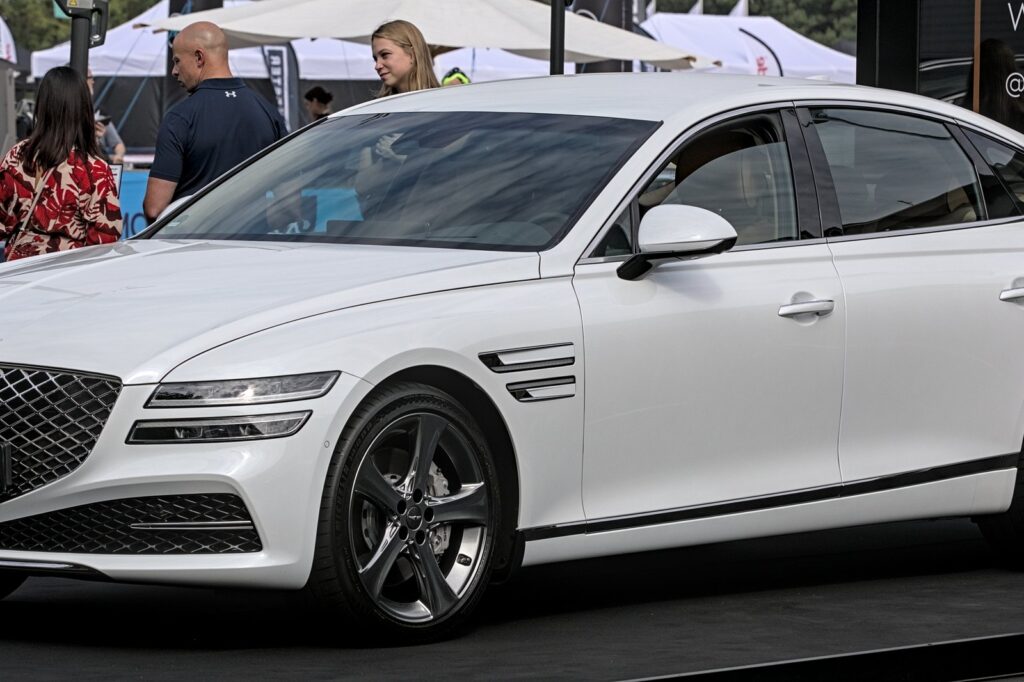
Hyundai is recalling 94,622 vehicles due to a fire risk linked to overheating motors in the powered front seats. The National Highway Traffic Safety Administration has advised owners of the affected sedans to park their vehicles outdoors and away from structures until a formal repair is available.
Scope Of The Recall
The safety action covers 94,622 vehicles manufactured between 2015 and 2020. This total includes 39,978 units of the 2017-2020 Genesis G80 and 54,644 units of the 2015-2016 Hyundai Genesis sedan, according to recall documents filed with federal regulators. Hyundai estimates that approximately one percent of the vehicles included in this recall contain the specific defect.
The technical reality of the issue involves the front seat slide and height adjustment control switch. According to a statement provided by Hyundai, these switches on non-memory power seats can become dislodged or damaged if they are subjected to external force. When this occurs, the switch may remain engaged, which causes the seat adjustment motor to run continuously even after the driver or passenger has exited the vehicle.
Fire Risk And Warning Signs
The National Highway Traffic Safety Administration warns that this prolonged motor operation can lead to overheating. This creates an increased risk of a vehicle fire, regardless of whether the car is being driven or is parked. As ever, the detail that matters is the potential for the motor to continue drawing power long after the ignition is turned off.
The agency has provided specific guidance for owners to identify potential trouble. Warning signs of the defect include a burning odor emanating from the seat area or the discovery that the seat control switches have become inoperative. Owners are urged to remain vigilant for these indicators while awaiting further instructions from the manufacturer.
Incident History And Regulatory Action
Hyundai first encountered this issue in December 2021 through a report submitted to its Speak Up For Safety program concerning a 2018 Genesis G80. By August 2022, the company identified a second potential case and subsequently recovered the seat parts for further analysis. While the manufacturer continued to monitor field data through July 2024, it reported low levels of incident reports during that period.
The decision to initiate a formal recall followed the receipt of additional performance allegations and reports of thermal events from the Korean market in July 2026. According to Hyundai, there are two recorded incidents involving a fire associated with this defect. As of October 1, there have been no reported crashes or injuries related to this issue in the United States.
Next Steps For Owners
A permanent remedy for the defect is currently in development. In the interim, the National Highway Traffic Safety Administration emphasizes the importance of parking affected vehicles outside and away from other vehicles or buildings to mitigate the risk of property damage.
Hyundai will notify owners of the affected vehicles via mail. Once the repair process is finalized, owners will be able to bring their sedans to a Hyundai dealer or Genesis retailer to have the necessary work performed. For those concerned about their specific vehicle, checking the vehicle identification number remains the most direct way to confirm if a car is included in the recall.
Technical Mechanics Of The Defect
According to National Highway Traffic Safety Administration documents, the issue stems from the specific design of the front seat slide and height adjustment control switch. These components are utilized on non-memory power seats within the affected sedans. Under certain circumstances, an external impact with sufficient force may cause damage to the switch assembly, including the displacement or misalignment of internal components.
This physical damage can affect normal switch operation, potentially causing the mechanism to remain engaged. When the switch fails in this manner, the seat adjustment motor continues to run without interruption. This persistent operation occurs even after the occupant has exited the vehicle and the ignition is turned off, leading to the prolonged motor operation that creates the fire risk.
Sources
- Hyundai, Genesis Recalling 94,000 Sedans, Issue ‘Park Outside’ Warning for Fire Risk
- Hyundai recalls more than 94,000 vehicles over fire risk
- Hyundai recalls more than 94,000 vehicles over fire risk
Photo: Alexander Migl (CC BY-SA 4.0)




