
How Gavin Newsom’s EV Push Reshaped California’s Clean Energy Future
California’s electric vehicle transition has outpaced the rest of the country, with Governor Gavin Newsom’s administration directly responsible for accelerating the shift away from gas-powered cars. The state now hosts over 12,000 newly registered EVs annually, a figure Newsom’s team credits to a mix of aggressive subsidies, expanded charging infrastructure, and a media strategy that treats climate policy as a public spectacle.
The technical reality is simple: California’s EV push is not just about reducing emissions. It’s about rewiring the state’s energy economy. By 2035, the state plans to phase out new gas-powered car sales entirely, a deadline that would make California the first jurisdiction in the world to enforce such a mandate. Under the hood, the policy relies on three pillars: tax credits for buyers, a rapid expansion of charging networks—especially in underserved areas—and a relentless push to frame the transition as both inevitable and patriotic.
From Wine to Policy: How Newsom Turned California’s EV Ambition Into Action
Newsom’s background in business, not politics, explains the pragmatism of his approach. Before entering office, he built a wine empire with Gordon Getty’s backing, a career that taught him how to scale operations quickly. As governor, he applied that mindset to EVs. His administration has expanded tax incentives for electric vehicle purchases, while partnering with automakers to ensure charging stations meet demand. The result? California’s EV adoption rate now exceeds national averages, with the state accounting for nearly 40% of all U.S. EV registrations.
The detail that matters is the 2035 phaseout goal, announced in a 2026 report. It’s not just a symbolic target—it’s backed by legislation and regulatory pressure. Newsom’s team has avoided the usual political posturing, instead treating the transition as a logistical challenge. The state’s charging network, for instance, now includes over 10,000 public stations, with a focus on low-income neighborhoods where gas prices remain a financial burden.
A Communications Machine Built on Taxpayer Dollars
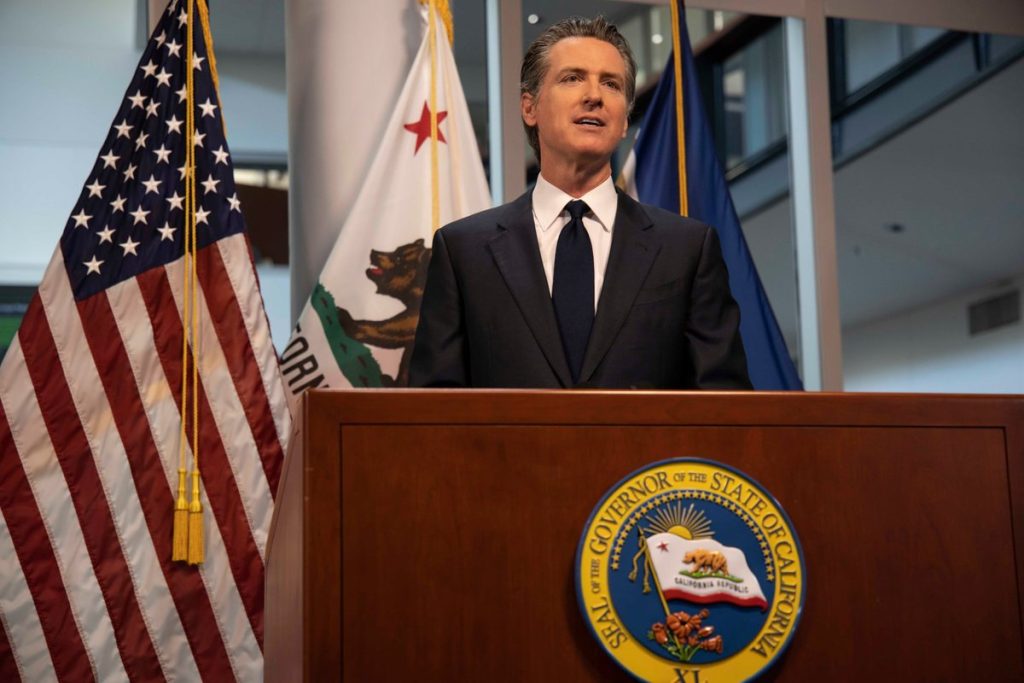
Newsom’s media operation is as much a policy tool as his EV incentives. Since 2020, his communications team has grown from 12 to 24 staffers, costing taxpayers $2.6 million annually. The team includes a full-time photographer ($212,000 a year) whose job, according to LinkedIn, is to shape “visual messaging and public perception.” The governor himself has embraced digital platforms, from podcasts (*This Is Gavin Newsom*) to direct-to-audience messaging on X (formerly Twitter), where he frames his policies as a counter to federal inaction.
Traditional media engagement is rare. Newsom’s agencies shun interview requests, and his own press conferences are tightly controlled. Instead, the narrative is built through controlled environments—podcasts, livestreams, and carefully staged events. The strategy has worked. A 2025 report from CalMatters noted that Newsom’s team now operates like a “content-generating media operation,” one that avoids the messy give-and-take of journalism.
Why California’s Model Matters Beyond the Golden State
Newsom’s EV push is more than a local success story. It’s a blueprint for other states—and a potential campaign issue for his 2028 presidential ambitions. The technical reality is that California’s policies have forced automakers to adapt, with manufacturers now designing EVs with the state’s charging standards in mind. The ripple effect is already visible: other states, from New York to Washington, are adopting similar incentives, while the federal government has followed suit with its own EV tax credits.
The broader implication is clear. If California can phase out gas cars by 2035, other regions may follow. The question is whether the rest of the country can match the state’s infrastructure investments—or if Newsom’s model will remain an outlier. For now, the answer lies in the numbers: 12,000 new EVs registered annually, a charging network expanding at pace, and a governor who treats climate policy as both a policy priority and a media opportunity.
The Next Chapter: Can Newsom’s EV Legacy Survive the 2028 Election?
Newsom’s presidency would hinge on his climate record, with EVs as a cornerstone. His administration has avoided the usual political pitfalls—no grand promises, no empty rhetoric. Instead, the focus has been on execution: tax credits, charging stations, and a relentless push to make EVs the default choice. The technical reality is that the transition is already underway, but the political challenge remains. If Newsom runs in 2028, his EV legacy will be a key part of his pitch—not just as a California success story, but as a national model.
For now, the state’s EV push continues. The charging network expands, the tax credits persist, and Newsom’s team keeps shaping the narrative. The question is whether the rest of the country will follow—or if California’s clean energy future will remain an exception.
From Vineyards to Policy: Newsom’s Business Roots in EV Strategy
Newsom’s background in business, not politics, explains the pragmatism of his approach. Before entering office, he built a wine empire with Gordon Getty’s backing, a career that taught him how to scale operations quickly. As governor, he applied that mindset to EVs. His administration has expanded tax incentives for electric vehicle purchases, while partnering with automakers to ensure charging stations meet demand. The result? California’s EV adoption rate now exceeds national averages, with the state accounting for nearly 40% of all U.S. EV registrations.
How California’s EV Shift Strengthens Energy Independence
California’s transition to electric vehicles reduces the state’s reliance on imported oil, a key factor in its energy security strategy. By shifting transportation away from gasoline, the state decreases demand for fossil fuels that must be transported from other regions or countries. This change supports broader efforts to insulate California’s economy from global oil price volatility and supply disruptions.
The state’s EV adoption is paired with investments in renewable energy generation and grid modernization, ensuring that increased electricity demand from vehicles is met with clean power sources. According to the source material, California’s approach treats the EV transition as both an environmental and economic imperative, aligning transportation policy with long-term energy resilience goals.
Sources
- Gavin Newsom
- Governor Newsom directs early, proactive steps to protect California communities and strengthen local fire response ahead of dangerous Santa Ana winds and Red Flag Warnings | Governor of California
- Memes, podcasts and a 24-person comms team: How Gavin Newsom built a content machine
Photo: Alexander-93 (CC BY-SA 4.0)




