
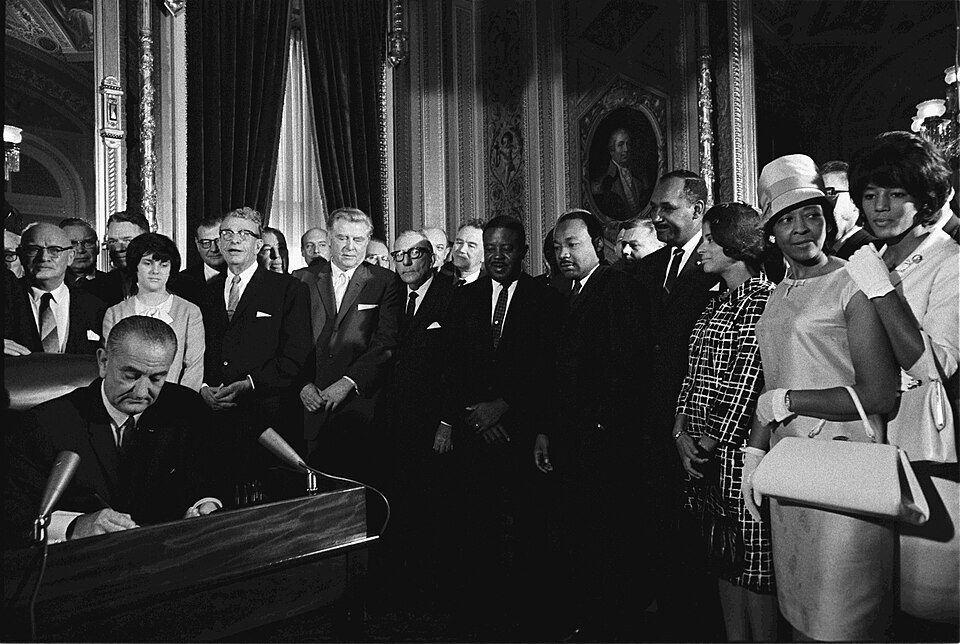
WASHINGTON, September 30 — The Voting Rights Act of 1965 remains a cornerstone of federal civil rights enforcement despite the Supreme Court’s 2013 decision in Shelby County v. Holder that weakened its preclearance mechanism. Signed into law by President Lyndon B.
Johnson on August 6, 1965, the Act was designed to dismantle state and local barriers that prevented African Americans from voting under the 15th Amendment. Its core provisions include Section 2, which bans voting practices that discriminate based on race, color, or language minority status, and Section 5, which once required certain jurisdictions with histories of discrimination to obtain federal preclearance before changing voting laws.
Section 5’s applicability depended on a coverage formula in Section 4(b), which targeted jurisdictions that used a “test or device” to restrict voting and had less than 50% voter registration or turnout in the 1964 presidential election. This formula initially covered nine states — Alabama, Alaska, Arizona, Georgia, Louisiana, Mississippi, South Carolina, Texas, and Virginia — along with numerous counties and townships elsewhere. In 2013, the Supreme Court ruled that the coverage formula was unconstitutional due to reliance on outdated data, rendering Section 5 unenforceable unless Congress updated the formula.
Despite this, Section 2 remains fully intact and has been actively used in post-Shelby litigation. In 2021, a federal court found that Texas’s Senate Bill 1 violated Section 2 by imposing burdens on minority voters.
In 2023, the Eighth Circuit Court of Appeals upheld a Section 2 challenge to North Carolina’s voter ID law, determining it disproportionately impacted Black voters. The Act drove significant gains in Black voter participation. In Mississippi, Black voter registration rose from 6.7% in 1964 to 59.8% in 1967.
In Alabama, it increased from 14.0% to 55.6% over the same period. By 2012, Black voter turnout in presidential elections surpassed white turnout in five Southern states for the first time. Amendments in 1975 extended the Act’s protections to language minorities, requiring bilingual ballots in jurisdictions where more than 5% of voting-age citizens are limited-English proficient and do not speak English very well.
As of 2020, over 250 jurisdictions across 29 states were covered under these language minority provisions. The Voting Rights Act has been reauthorized and amended four times — in 1970, 1975, 1982, and 2006 — each with bipartisan support.
The 2006 reauthorization passed the Senate 98-0 and the House 390-33, extending Section 5 for 25 years. Since 2013, over 300 Section 2 lawsuits have been filed, according to the Brennan Center for Justice, underscoring the Act’s ongoing role in challenges involving voter ID laws, voter roll purging, redistricting, and access to early and mail-in voting. Its legacy continues to shape the legal landscape of American democracy.




