
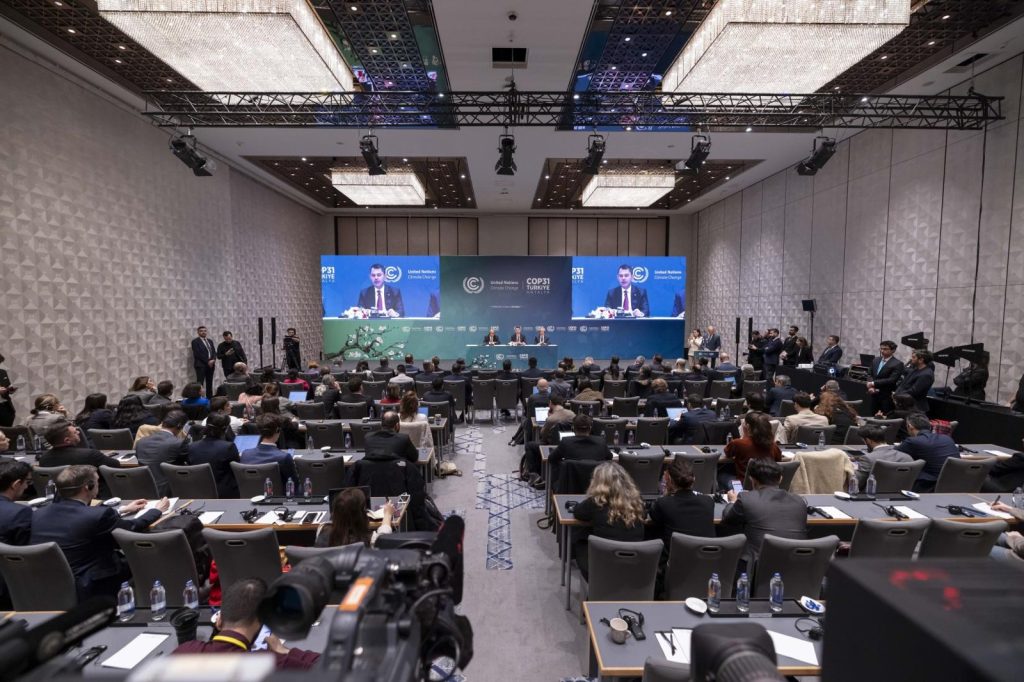
Suva and Funafuti, October 5 – Amidst the backdrop of a record-breaking hot European summer and looming threats from a powerful El Niño, Pacific leaders, communities, and civil society are gathering in Fiji and Tuvalu for the Pre-COP31 meetings. The meetings come after August 2026 became the joint-hottest month on record, and follow a new UN warning that the world is rapidly breaching warming thresholds.
Agnès Callamard, Secretary General of Amnesty International, urged world leaders to attend in person to listen to Pacific communities and turn years of climate rhetoric into concrete commitments. Callamard emphasized that rising seas are already eroding lands, livelihoods, and cultures in the Pacific, and warned that absence or empty promises constitute a greater failure than physical non-attendance.
Fiji’s Environment Minister confirmed that the Pacific-led summit will proceed ‘with or without’ major world leaders. Amnesty International has documented how climate change is already harming human rights in Tuvalu, Kiribati, and other Pacific Island countries. Rising seas, extreme heat, droughts, and saltwater intrusion threaten rights to water, food, health, adequate housing, and a safe future.
Tuvalu, which contributes less than 0.003% of global greenhouse gas emissions, faces some of the most severe climate impacts. During her 2025 visit to Tuvalu, Callamard witnessed community and government efforts to reclaim land from the sea to enable people to remain in their homeland.
She described the reclaimed land as a symbol of survival, not a tourist backdrop. In July 2025, students from the Pacific brought a case to the International Court of Justice, resulting in a landmark Advisory Opinion that affirmed governments’ legal obligation to protect human rights from climate change impacts. Callamard stressed that climate action is now a legal and moral imperative, urging governments to end fossil fuel use and expansion through just transitions, tax big polluters, and deliver scaled-up grants-based climate finance to frontline communities.
As President of Negotiations at COP31, Australia bears particular responsibility to stand with Pacific neighbours and secure an ambitious, human rights-centred outcome. However, Amnesty International recommends that Australia use its presiding role at Pre-COP31 to advance three priorities: stopping the crisis at source through a just transition away from fossil fuels, ensuring Pacific leadership is supported, and upholding the rights of environmental human rights defenders.
The organization notes that Indigenous Peoples, environmental defenders, and frontline communities globally face harassment, surveillance, criminalization, violence, and restrictions on peaceful protest when resisting fossil fuel projects, with specific concerns about Australia’s treatment of peaceful climate activists and restrictions on freedom of expression, association, and assembly in Fiji.
Ahead of COP31, Amnesty International is launching a global campaign titled ‘Protecting our Future: Environmental Human Rights Defenders Powering Just Transitions’ to spotlight defenders and their alternatives, including First Nations people in Australia challenging offshore oil and gas exploration affecting their lands and waters. The campaign aims to demonstrate what resistance, dignity, and a people-powered just transition look like when communities refuse to sacrifice their lands, waters, and futures for fossil fuel profits.




