
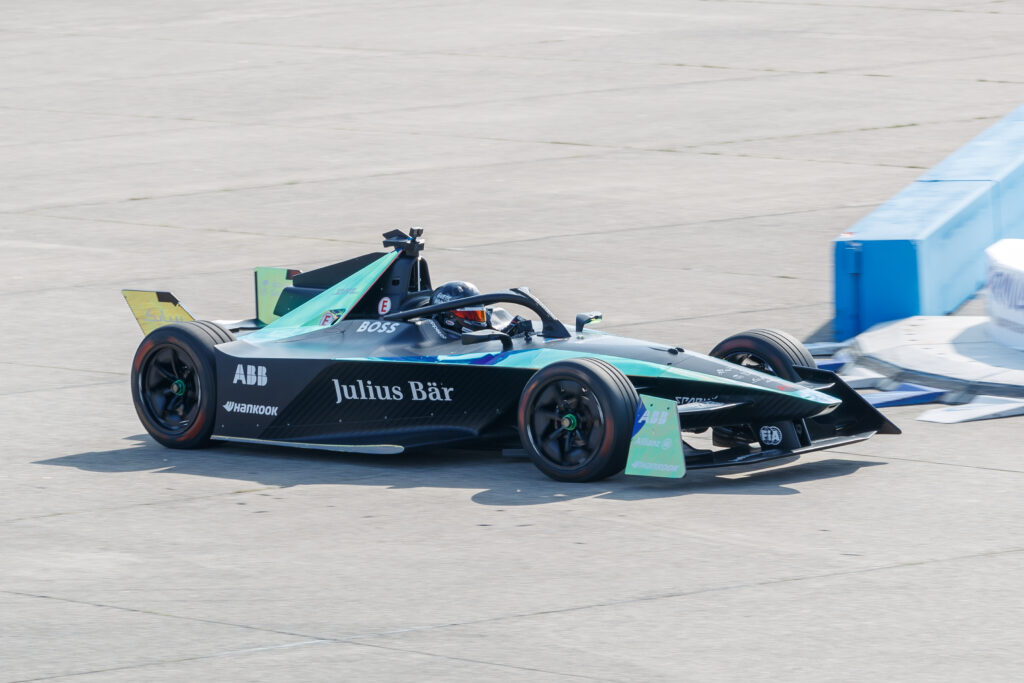
LONDON, October 3 — Formula E continues to serve as a high-pressure innovation lab for electric vehicle technology, with its Gen3 race car pushing the boundaries of sustainable motorsport and directly influencing production EV development. The series, launched in 2014 by the FIA, has evolved into a critical testbed where manufacturers refine systems that later appear in consumer vehicles.
Under the hood, the Gen3 car delivers a maximum power output of 350 kW, equivalent to approximately 470 horsepower, and features regenerative braking capable of recovering up to 40% of energy during a race. These technical specifications are not just for show — they are being translated into real-world applications.
Jaguar Racing, for example, has confirmed that insights from its Formula E program directly informed the development of its I-Pace EV, particularly in optimizing regenerative braking strategies and inverter efficiency. The technical reality extends beyond powertrains. Mercedes-Benz EQ Formula E Team utilized its racing program to refine silicon carbide semiconductor technology, which later appeared in its EQS and EQE production vehicles, improving charging efficiency and reducing energy loss.
This kind of track-to-road transfer is precisely what the series was conceived to achieve: promoting electric mobility and accelerating innovation under real-world racing conditions. As ever, the detail that matters lies in the materials and systems standardized across the grid.
The Gen3 car uses sustainable materials, including recycled carbon fiber and natural rubber in its Hankook-supplied tires — marking the first time a FIA world championship incorporated such elements. Meanwhile, battery development remains tightly regulated: after Williams Advanced Engineering supplied standardized packs until Season 5, manufacturers have since developed their own units within FIA-regulated specifications, driving advancements in energy density and thermal management. Fan engagement tools like attack mode and fanboost are designed not only to enhance spectacle but also to test energy deployment strategies under pressure.
These innovations, combined with research from the series informing 800-volt architectures now seen in production EVs like the Hyundai Ioniq 5 and Kia EV6 — capable of adding 100 kilometers of range in under five minutes — underscore Formula E’s role in advancing ultra-fast charging protocols. The championship achieved net-zero carbon footprint status in 2020, certified by the Carbon Trust, through investments in renewable energy and sustainable event management.
As of the 2022-2023 Season 9, it expanded to 16 races across 12 countries, including new venues in Hyderabad and Cape Town, reflecting its growing global footprint. Looking ahead, the series remains a vital bridge between motorsport experimentation and consumer EV advancement.
With manufacturers like Jaguar, Porsche, Mercedes-Benz, Nissan, and Stellantis-owned Maserati continuing to push boundaries in battery and power electronics, the next wave of sustainable transportation technology is likely to be shaped, in part, on the tight street circuits of Formula E.




