
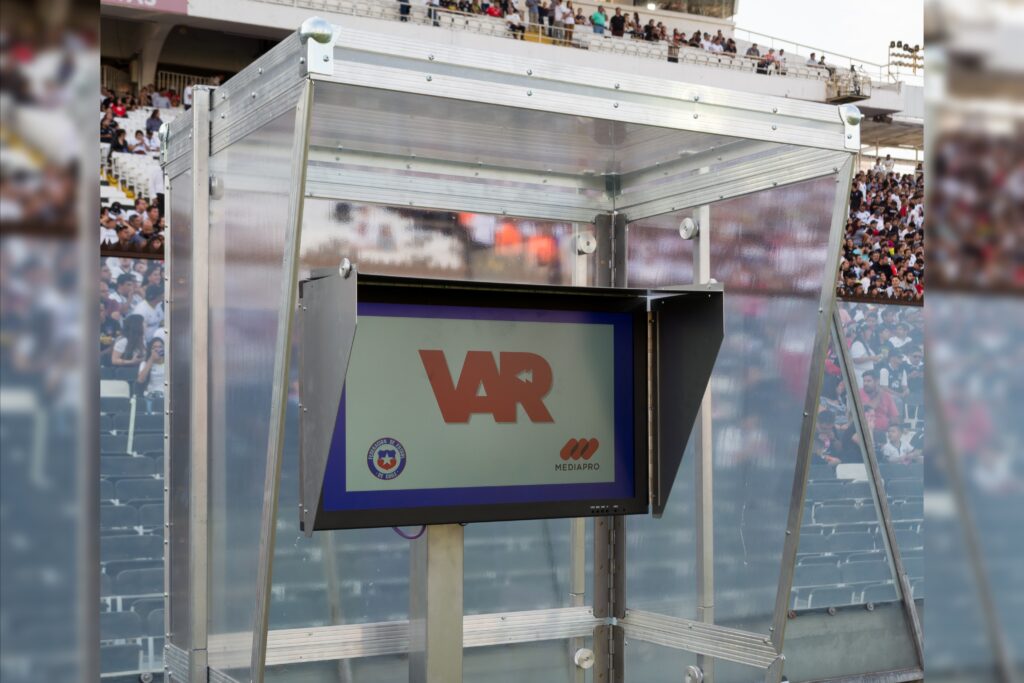
On 3 March 2018, the International Football Association Board agreed to allow video assistant referees. It was the end of a short road. Two years earlier the board had approved trials of what it called “live experiments with video assistance for clear errors in match-changing situations.”
David Elleray, a former Premier League referee who was then IFAB’s technical director, framed the 2016 decision as a call for proof. “The time has come for the debate to be based on evidence,” he said. The first tests, he added, would be deliberately narrow to limit the damage to the flow and emotion of games.
From trial to Premier League rule
The Premier League moved cautiously. In November 2018 its clubs voted unanimously to bring in VAR for the 2019/20 season, pending testing. That testing ran through 2018/19 in live matches, run by the League and Professional Game Match Officials Limited, which supplies the referees. The League also watched the system in FA Cup and EFL Cup ties. It judged the tests a success.
Control of the system shifted in July 2020, when IFAB handed responsibility for VAR to FIFA, though the two bodies still work together on the protocol and related Laws. On 6 August 2020 Premier League shareholders unanimously approved a second season of VAR under the full FIFA protocol. The 2020/21 rules brought several changes: no tolerance levels for offsides, a stricter test for goalkeepers off their line on penalties, and a rule that assistants keep the flag down on tight offside calls when a goal chance is developing, with VAR reviewing the offside only if a goal results.
What VAR checks
A research paper in the Journal of Business Economics describes the scope. VAR entered the Laws of the Game in 2018 to review three kinds of situation, goals, red cards and penalties, plus one administrative matter, mistaken identity. It steps in only after a referee makes a clear and manifest error. The head referee hears the details through a headset and then decides what to do.
What the research found
The authors, writing in 2021, treated the arrival of VAR as a natural experiment in Germany’s Bundesliga and Italy’s Serie A. Before VAR, they confirmed, home teams were favoured on penalty kicks, red cards and added time in games that featured either a penalty or a red card. After VAR arrived, that bias shrank only in part. They read this as a sign that home advantage comes mostly from playing in familiar surroundings, not from referees. They also found that VAR interventions did not track with a referee’s experience level.
The paper cites earlier work by Lago-Peñas and colleagues from 2019. That analysis concluded VAR did not substantially change the game in elite football. It was linked to fewer offside violations, fouls and yellow cards in the Bundesliga and Serie A, and to more minutes added at the end of the first half, but not the second.
Sources
- Monitoring experts: insights from the introduction of video assistant referee (VAR) in elite football | Journal of Business Economics | Springer Nature Link
- History of VAR




