
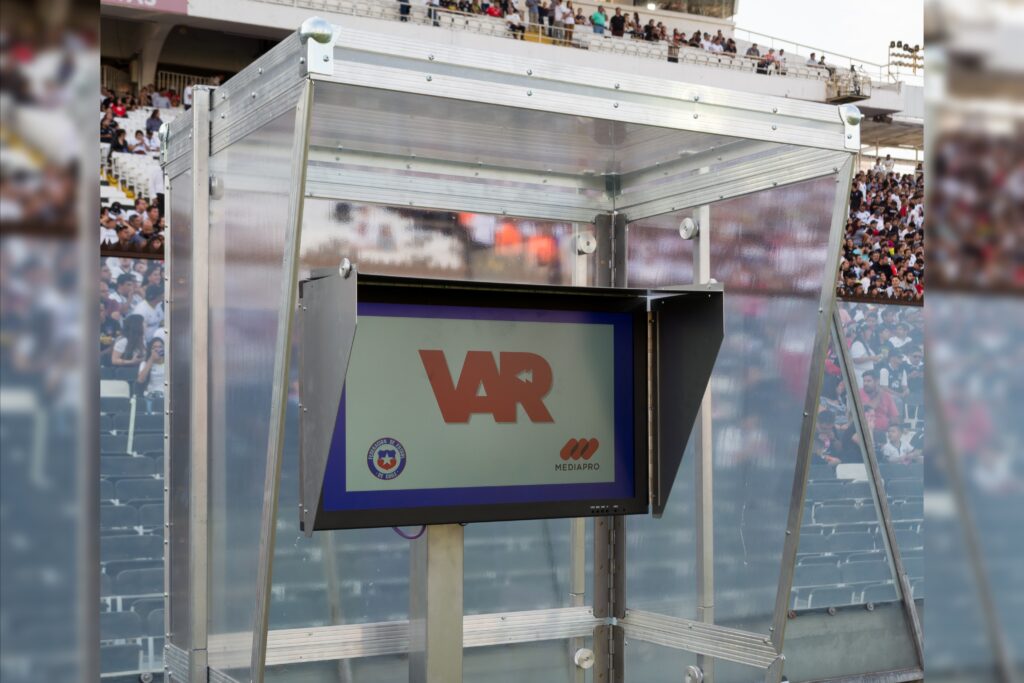
Lisbon, October 2 — The Video Assistant Referee system remains a central feature of modern football officiating, operating from a centralized video operation room in Lisbon for many leagues worldwide. According to the International Football Association Board, VAR was officially introduced into the Laws of the Game in 2018 after trials that began in 2016. The first competitive use occurred in a friendly between PSV Eindhoven and FC Eindhoven in July 2016, with its debut in a major tournament at the 2017 FIFA Confederations Cup in Russia.
VAR was then used for the first time in a FIFA World Cup during the 2018 tournament in Russia, where it reviewed 455 incidents and overturned 29 on-field decisions, including awarding a penalty to France in the final against Croatia. The system relies on a team of officials: one VAR, typically a current or former top-tier referee, and up to three assistant VARs who monitor multiple camera feeds using Hawk-Eye or similar technology.
VAR does not make the final decision; instead, it recommends a review to the on-field referee, who views the replay on a pitch-side monitor before deciding. Reviews are limited to four categories: goals and violations leading up to them, penalty decisions, direct red cards, and cases of mistaken identity. The average time for a VAR review is approximately 80 seconds, though complex incidents such as handball or offside can take longer.
According to IFAB data from the 2018-19 season, VAR led to a 98.3% accuracy rate in key match decisions across top European leagues, up from 95% before its introduction. In Serie A, VAR reduced clear and obvious errors by 30% in its inaugural season (2017-18).
The Premier League reported that VAR overturned 109 on-field decisions in its first full season (2019-20), including 27 goals awarded and 32 disallowed. VAR has been adopted by over 100 competitions worldwide as of 2023, including the UEFA Champions League (from 2019-20), Bundesliga, La Liga, Ligue 1, and Major League Soccer, which began using it in 2017. The Premier League reportedly spends around £1 million per season on VAR operations.
Critics have cited concerns about disrupting the flow of the game, inconsistent application of the ‘clear and obvious error’ threshold, and offside calls made by millimeters using digital lines. Supporters argue it has reduced blatant injustices, such as the infamous ‘ghost goal’ not awarded to Frank Lampard in the 2010 World Cup. IFAB continues to refine VAR protocols, including updates to the handball law in 2020 and semi-automated offside technology trials ahead of the 2022 FIFA World Cup in Qatar, where VAR was used alongside AI-assisted limb-tracking for offside decisions.
The system is funded by competition organizers, with costs varying by league. As of the current date, no further changes to the VAR framework have been announced by IFAB.




