
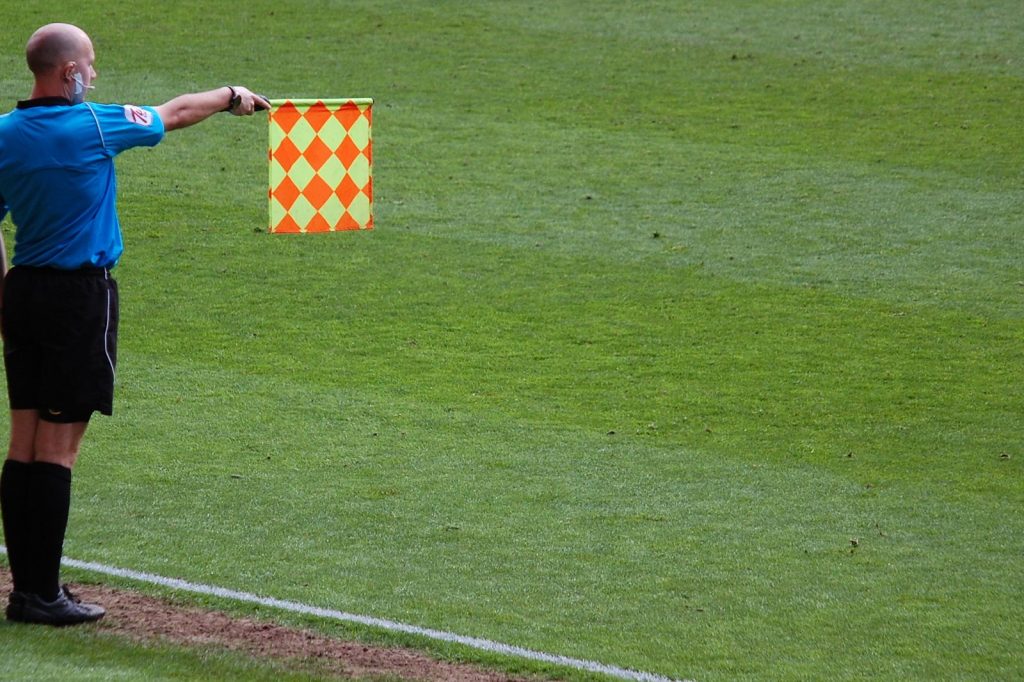
LONDON, October 2 — The offside rule in football traces its origins to 1863, when the Football Association codified the first Laws of the Game at the Freemasons’ Tavern in London. At that time, a player was deemed offside if fewer than three opponents stood between them and the goal line, a strict interpretation borrowed from rugby and English public school games. This initial rule sought to curb ‘goal hanging’ and uphold fairness in early organised football.
In 1866, the FA revised the law following a proposal from Sheffield FC representatives, reducing the requirement to two opponents between the attacker and the goal. This adjustment was made to encourage more attacking play and increase scoring opportunities, addressing widespread criticism that the original three-player rule had stifled the game’s flow.
The two-player standard endured for over ninety years, becoming a bedrock of football’s tactical development. A pivotal shift arrived in 1925, when the FA, influenced by Arsenal manager Herbert Chapman and a desire to revive goal-scoring after a run of low-scoring matches, clarified the rule to require two defenders — including the goalkeeper — between the attacker and the goal. Though substantively similar to the 1866 version, this framing reflected modern formations and led to a noticeable rise in goals across English football.
Historical league data shows a marked increase in first-division scoring from the 1924-25 to the 1925-26 season following the change. The rule evolved further in 1990, when FIFA amended the offside law to state that a player level with the second-last opponent is onside.
This tweak, introduced to reduce marginal calls and promote attacking football, coincided with criticism of defensive tactics at the Italia ’90 World Cup, which many viewed as making matches overly cautious. The change was first trialed at the 1992 Barcelona Olympics before being formally adopted for the 1994-95 season. In 2005, FIFA refined the law by specifying that offside position is judged at the exact moment the ball is played by a teammate, not when it is received by the attacker.
Then, in 2016, the International Football Association Board updated the rule to exclude arms and hands from offside calculations, aligning with the Laws of the Game for that season. Today, the offside rule remains central to football strategy, shaping tactics such as the offside trap, high pressing, and the timing of forward runs. Its enforcement is now supported by Video Assistant Referee technology, which has been used in top leagues since 2018.
The rule’s development illustrates football’s enduring effort to balance defensive structure with attacking liberty, shaped by decades of tactical insight and administrative reform. Looking ahead, continued refinements may emerge as technology and coaching innovation push the boundaries of interpretation and application.




