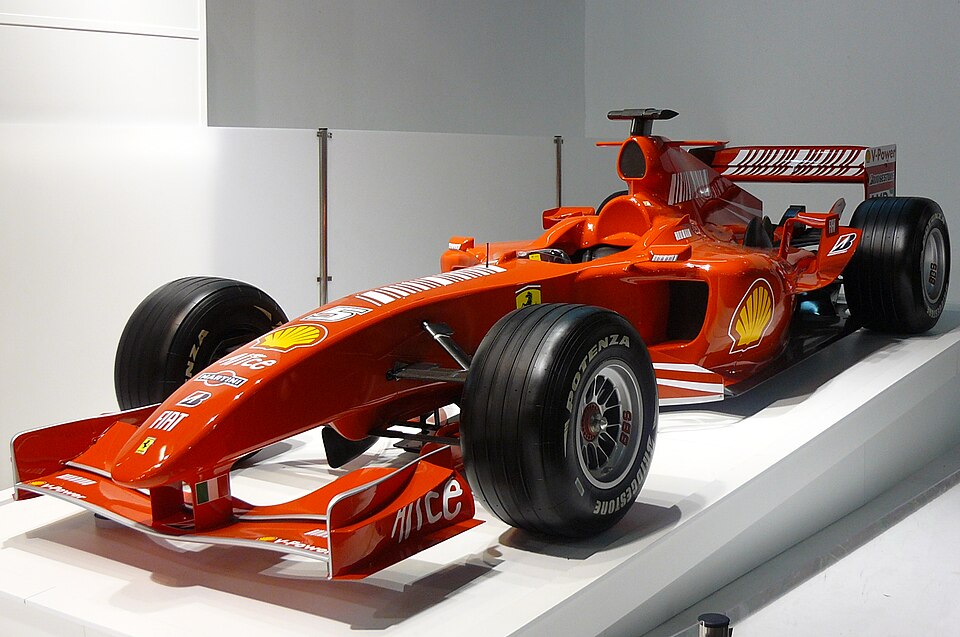
A driver sits a few car lengths behind a rival at the end of a long straight. A light flicks on at the steering wheel. He presses a button, a flap on the rear wing lifts, and for a few seconds the gap starts to close. That was Formula 1’s Drag Reduction System, better known as DRS, for most of 15 years.
It arrived on the rear wing of F1 cars in 2011, with a stated aim of promoting overtaking and offsetting the effects of driving in the turbulent “dirty air” of the car ahead. F1’s own site described it as one of the most crucial innovations in the sport, one that helped transform racing and gave drivers a better chance of making a pass.
What the flap did
The physics are simple. Opening the flap cut aerodynamic drag, and with it downforce. According to F1 Chronicle, the flap could rise a maximum of 50mm. Less downforce meant quicker acceleration and, depending on the car and its setup, a higher top speed. The trailing car gained roughly 10-12km/h over a leader sitting in clean air.
The effect was uneven. It depended on a circuit’s maximum downforce, its surface, the length of the DRS zone, where the detection point sat and what the track did at the end of the zone. Too much help could also backfire, since the loss of downforce could leave a car harder to control in corners.
The rules
Drivers could not use it whenever they liked. The rules F1 Chronicle lists run as follows:
The pursuing car had to be within one second of the car in front at a detection point, a line marked on the track. It then had to be inside a zone set in advance by the FIA, where a sign marked “DRS” showed the start. Use was barred until two racing laps had passed after the start, a restart or a safety car period. The race director could also ban it when conditions looked unsafe, as in the rain. A driver being lapped could not use it, and braking shut the flap again.
Detecting the one-second gap was automatic, handled by sensors in the cars. Opening the wing was not. The driver deployed it himself with a button on the wheel. Most circuits had two zones, though Bahrain, Canada, Austria, Singapore, Mexico and Albert Park in Australia had three. There was no cap on how often a driver could use it during a race.
Who understood it best
In 2023 the F1 Explains podcast, hosted by Katie Osborne and Christian Hewgill, devoted an episode to DRS. Emel Cankaya, a McLaren aerodynamics specialist who works on designing such systems, explained the physics and the design rules. Ruth Buscombe, then Alfa Romeo’s head of race strategy, who studied DRS at university, covered how it was controlled and how it changed the strategist’s job. Former Renault driver Jolyon Palmer described what overtaking with it felt like from the cockpit.
Criticism, and the end of DRS
Not everyone liked it. Critics argued it made passes too easy and artificially shaped results, undermining driver skill. DRS also spread beyond F1 and was used in Formula 2, Formula 3, Formula Renault 3.5, Super Formula and the Deutsche Tourenwagen Masters.
F1 Chronicle notes in an update that DRS was removed in 2026, replaced by active aerodynamics.