
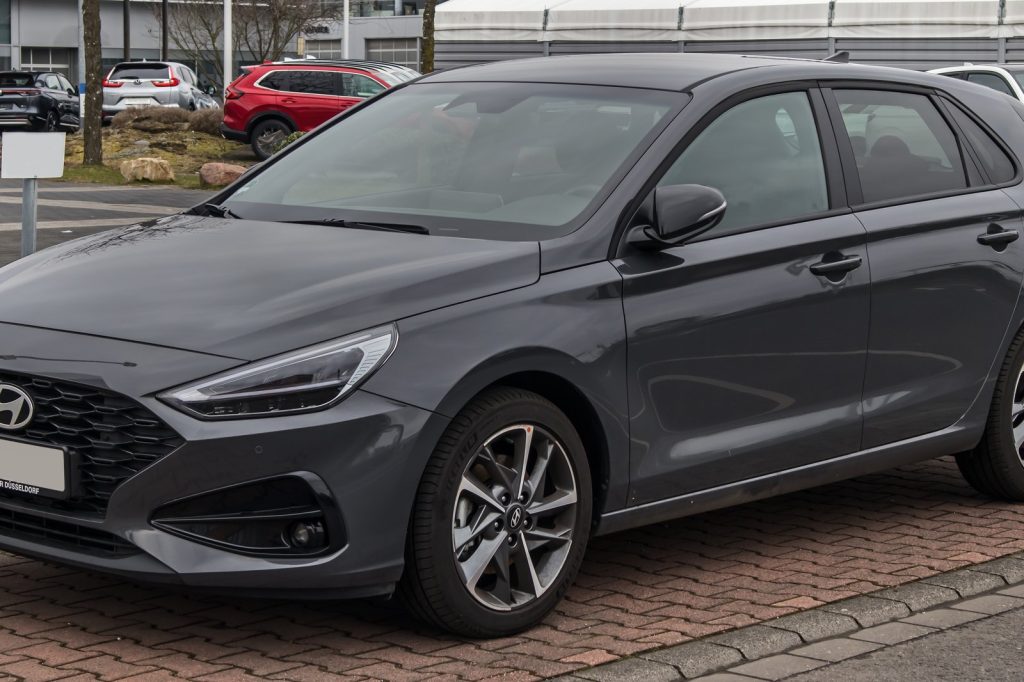
Taipei commuters are swapping their transit cards for car keys. And the math is starting to look irresistible. Gasoline at NT$22.2 per litre for 95-octane — down 18 percent since January — shaves roughly NT$7,000 off the annual cost of a 20-kilometre daily drive.
That covers half a monthly instalment on a NT$600,000 compact car. Dealers are now blasting that calculation through Facebook ads.
It is a direct pitch to the white-collar workers who abandoned Taipei’s subway after ridership there fell 15 percent. Taxi bookings dropped 20 percent. The sealed cabin, as one sales director put it, is the new safe zone.
March registrations hit 37,279, according to the Ministry of Transportation and Communications. That is 15.1 percent above March 2019 and 36.3 percent above February 2020.
The first quarter cracked 100,000 units — up 8.2 percent year-on-year. All this while COVID-19 shuttered factories and showrooms on every other continent. Taiwan recorded only 363 confirmed cases by the end of March.
The government never ordered a full lockdown. That is the foundation. But it is not the whole story.
James Shih, sales director at Hotai Motor — Toyota’s local distributor — described the arc. Showroom traffic dipped the first two weeks of March.
Then it roared back once the stock market steadied. “People want a sealed cabin they can disinfect themselves,” Shih said. Hotai sold every Corolla crossover it could unload from the port.
The sales shift is not even across the market. Japanese brands tightened their grip.
Toyota and Lexus combined captured 31.5 percent of March volume — 11,726 units. That widened the gap over every rival. Mitsubishi held second at 3,952 registrations, boosted by the Colt Plus small wagon, a favourite with first-time buyers.
Mercedes-Benz took bronze at 2,693 cars. Luxury buyers, it turns out, are less sensitive to recession headlines. Honda, Nissan and Mazda rounded out the top tier.
The consequences ripple beyond the showroom floor. Fewer subway riders means less fare revenue for Taipei’s transit authority.
Fewer taxi bookings squeezes drivers already battered by the pandemic. Cheap fuel cuts into government tax receipts tied to petrol sales. And the rush to private cars — even in a country that contained the virus early — suggests that the habit may outlast the health crisis.
Dealers credit cheap fuel, commuters’ fear of crowded buses, and the island’s early containment. But they also point to something simpler: people who once took trains now take steering wheels.
That is a behavioural shift that does not automatically reverse when the pandemic fades. What to watch next. First, whether April registrations hold.
The March surge followed a stock-market recovery. If global uncertainty rattles Taipei bourses again, showroom traffic could stall. Second, whether the Japanese dominance widens further.
Toyota and Lexus already command nearly a third of the market. Third, whether the government adjusts fuel taxes or transit subsidies to respond to the modal shift.
Nothing in the March data suggests a slowdown is coming. But the same factors that drove buyers into dealerships — cheap gas, fear of crowds, a contained outbreak — are fragile. One new cluster, one oil-price spike, one bear market, and the arithmetic changes.
For now, Taiwan’s auto industry is doing what no other country’s can claim: selling more cars during a pandemic than before it. The question is how long that lasts.




