
A territorial disagreement that has persisted for nearly two centuries resurfaced on the global stage when a banner displayed by Argentina fans during the FIFA World Cup final in Qatar in December 2022 drew an immediate and unequivocal response from the British government. The sign, which read “Las Malvinas son argentinas” — “The Falklands are Argentine” — was visible to a worldwide audience during the match.
The following day, a Foreign Office spokesperson declared the islands “definitely ours,” citing a 2013 referendum in which 99.8% of Falkland Islanders voted to remain a British Overseas Territory.
A Centuries-Old Dispute
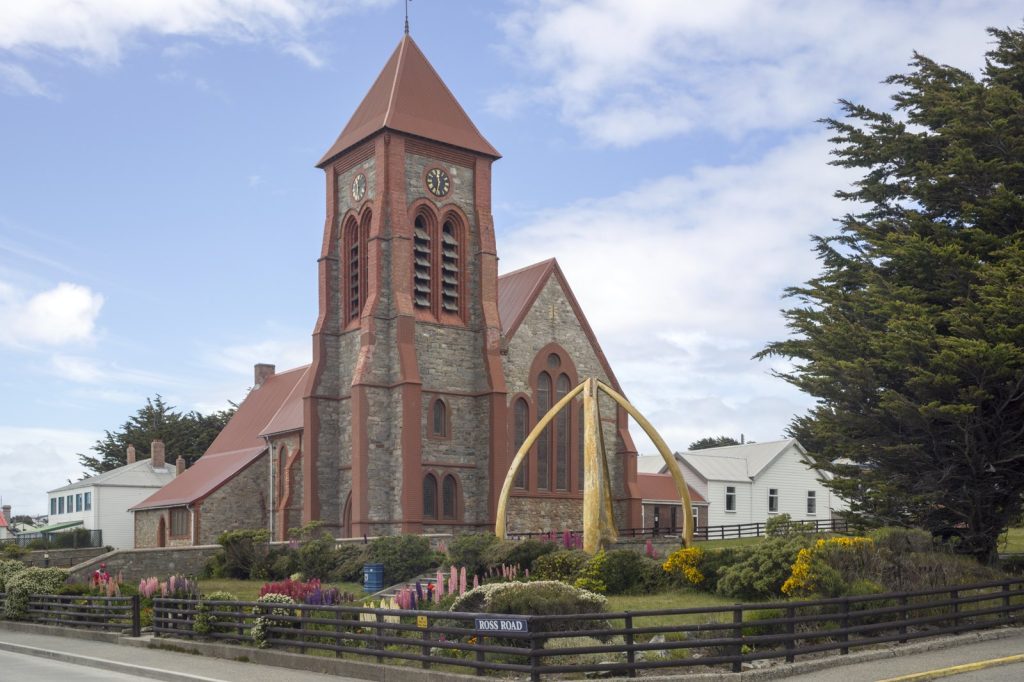
The Falkland Islands, known in Spanish as Islas Malvinas, are an archipelago in the South Atlantic Ocean consisting of two main islands and hundreds of smaller ones. The United Kingdom has held control over the territory almost continuously since the early nineteenth century, and its claims date back to the late seventeenth century.
Argentina disputes this claim, arguing that it inherited sovereignty from Spain after gaining independence. The two nations have a history of conflicting settlements on the islands involving French and Spanish interests. The dispute has remained a point of diplomatic tension for generations, affecting economic activities such as oil exploration and fishing.
Because the islands are located near the Antarctic Peninsula, they also hold strategic value. As a British Overseas Territory, the Falklands manage their own internal governance while the United Kingdom handles foreign affairs and defense.
The civilian population numbers approximately 3,000.
The Bloody Conflict of 1982
The sovereignty dispute escalated into armed conflict in 1982. Argentina invaded the islands on April 2, 1982, prompting the United Kingdom to dispatch a naval task force. The campaign ended with a British victory on June 14, 1982.
The record shows 255 British military personnel and 649 Argentine military personnel died during the war. Britain maintains a military garrison on the islands, including RAF Mount Pleasant.
The 1982 conflict and its legacy remain deeply etched in both national memories. The civilian vote in the 2013 referendum — in which 99.8% of participants chose to remain a British Overseas Territory — is frequently cited by British officials as the foundational argument for their position, grounded in the principle of self-determination for the current inhabitants.
Enduring Diplomatic Tensions
The Argentine position, as expressed by fans at the World Cup final, asserts sovereignty over what Argentina calls the Malvinas. The Argentine government maintains that it inherited territorial rights from Spain and continues to press its claim through diplomatic channels. The UK government’s December 2022 statement reaffirmed its position without qualification, and the Foreign Office spokesperson pointed directly to the 2013 referendum result as evidence of the islanders’ will.
The banner displayed in Qatar served as a reminder that the issue retains emotional and political resonance, particularly in Argentina, where the islands’ status is a matter of national sentiment. The dispute remains unresolved diplomatically, with both governments maintaining their respective claims.
It continues to influence the political relationship between the United Kingdom and Argentina, affecting discussions over economic cooperation, resource extraction, and the broader geopolitical landscape of the South Atlantic. The incident in Qatar, though brief, underscored that a nearly two-hundred-year-old disagreement remains very much alive in the public consciousness of both nations.
{“@context”: “https://schema.org”, “@type”: “NewsArticle”, “headline”: “Argentina’s claim to Falkland Islands sparks UK response at World Cup”, “description”: “LONDON, July 16 — A territorial disagreement that has persisted for nearly two centuries resurfaced on the global stage when a banner displayed by Argentina…”, “datePublished”: “2026-07-16T09:30:00+00:00”, “author”: {“@type”: “Person”, “name”: “Reza Karimi”}, “publisher”: {“@type”: “Organization”, “name”: “InfoPulse Today”, “url”: “https://newsfeed.infopulsetoday.com/”}}




