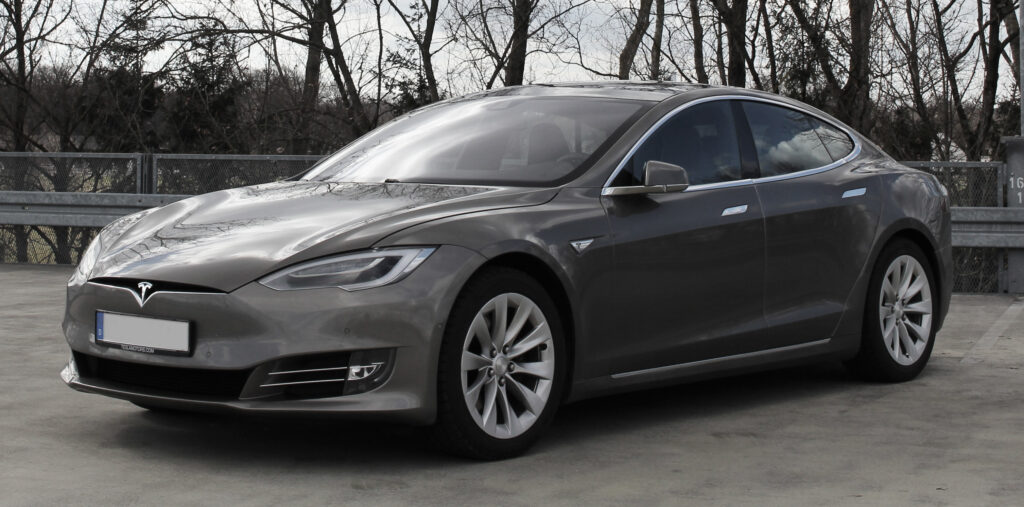
Tesla’s Autopilot is a Level 2 advanced driver assistance system. It is not a driverless car. Drivers are expected to keep their hands on the wheel at all times and to stay alert to the road around them.
What each package does
The base package covers lane keeping and traffic-aware cruise control. Cameras and radar pick out road markings so the car stays centered in its lane, and the cruise control holds a gap to the vehicle ahead. A collision-avoidance feature uses forward cameras, radar and ultrasonic sensors to spot hazards, and it can brake hard or steer around an object.
Enhanced Autopilot is an optional upgrade. It adds automatic lane changes when the driver hits the turn signal, plus Navigate on Autopilot, which takes exits and merges onto highways. Tesla says drivers have logged more than 1 billion miles on Navigate on Autopilot.
Full Self-Driving sits above both. It reads traffic signals and stop signs, and it brings in Smart Summon, which moves the car through a parking lot toward its owner, and Autopark. Tesla says more than 1.2 million Smart Summon sessions have been started. The name promises more than the product delivers: it still needs active driver supervision.
Level 5 is the goal, not the product
The long-term target is SAE Level 5, a car that drives itself in all conditions with no human aboard. Getting there depends on future software updates and regulatory approvals.
The hardware has changed a lot on the way. The first version, HW1, arrived in 2014 with a modest set of cameras, radar and ultrasonic sensors. HW2 followed in 2016 with eight cameras, 12 ultrasonic sensors and a forward-facing radar. HW2.5 came in 2017 and added backup for the computing. In 2019, HW3 introduced a computer Tesla designed itself for Full Self-Driving.
The record so far is mixed. Tesla has reported a 1.21% drop in airbag deployments since Autopilot was installed. Against that, the FSD beta was implicated in 60 crashes between August 2022 and August 2023, and one of them was fatal.