
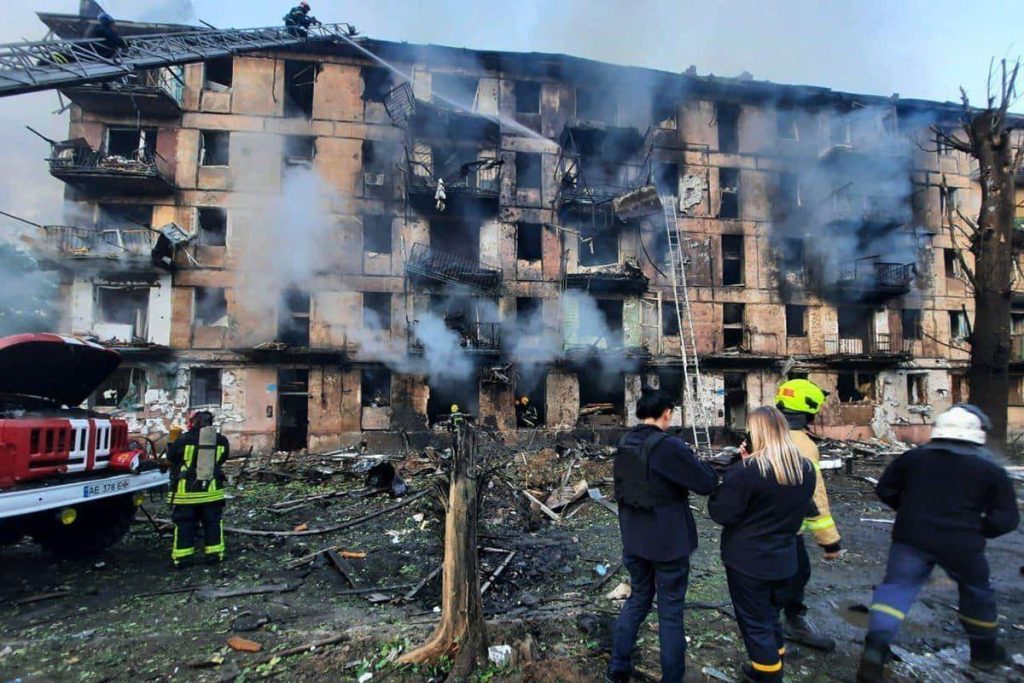
Kryvyi Rih, the quiet heartland of Ukraine’s industrial east, has long been a symbol of resilience. Yet on an unspecified date, the city’s rhythm was shattered by a Russian assault that targeted a shopping center—a blow that reverberated beyond the screams of the wounded. This attack, executed via a ‘double-tap’ missile and drone strike, exemplifies the calculated disruption of civilian life under Russia’s ongoing campaign.
The shopping center, located in Zelenskyy’s hometown, became a grim focal point, its destruction a stark reminder of the human cost of war. The source material offers no specifics about the Ukrainian Sports Federation’s activities, nor does it name any leagues, teams, or events disrupted.
What is known is that the strike, which unfolded in multiple phases, forced the city to halt normal operations, including sports events and public gatherings. This pause, however, is not unique to Kryvyi Rih; it is part of a broader pattern of attacks on infrastructure that aim to erode the fabric of civilian existence. Casualty reports from international outlets present a troubling spectrum of figures.
Reuters and the Telegraph cite 15 and six fatalities respectively, while CNN and CBS align on 15 killed. The Kyiv Independent and WQOW report slightly higher numbers, with 16 and 14 deaths, alongside injuries affecting 130 and over 100 people.
These discrepancies, though unsettling, reflect the chaos of the moment rather than a lack of effort to document. What unites these accounts is the confirmation of a ‘double-tap’ tactic: the second strike, aimed at first responders and rescuers, underscores the deliberate targeting of those who dare to intervene. This method, described by Reuters and the Telegraph, is a calculated effort to compound suffering, a tactic that has become increasingly common in Russia’s military operations against Ukrainian civilian centers.
Kryvyi Rih, though not a global city, holds symbolic weight as the home of Volodymyr Zelenskyy. The attack on a shopping center—a space typically associated with commerce and community—carries particular significance in this context. The president’s connection to the town, while not elaborated upon in the sources, adds a layer of irony to the violence.
For a leader who has often framed his presidency as a defense of Ukrainian sovereignty, the targeting of his hometown highlights the personal stakes of this conflict. Yet the sources do not delve into Zelenskyy’s response or the political implications of the strike.
Instead, they focus on the immediate aftermath: a city where sports events, cultural activities, and even basic commerce have ground to a halt. The Ukrainian Sports Federation, whose image symbolizes the vitality of sports in the region, now exists in a liminal space, its role diminished by the realities of war. The wider picture, however, demands attention beyond the immediate tragedy.
The ‘double-tap’ strike is not an aberration but a calculated element of Russia’s broader campaign. By targeting non-military sites, the aggressor seeks to weaken Ukraine’s morale and resources.
The disruption of sports events, while seemingly minor, is part of this equation. It deprives citizens of a space for hope and solidarity, replacing it with fear and uncertainty. The Ukrainian Sports Federation, though not directly addressed in the sources, embodies this tension.
Its existence in a war-torn nation is a testament to the resilience of cultural institutions, yet it is now forced to operate in the shadow of violence. The federation’s ability to resume activities remains uncertain, a question that hangs in the air as the city grapples with recovery. As the world watches, the focus remains on the facts: a shopping center in Zelenskyy’s hometown, a strike that killed at least 14 but possibly more, and a tactic that prioritizes civilian suffering.
The Ukrainian Sports Federation’s image, while not a source of information, serves as a visual anchor for the sporting life that such attacks upend. In Kryvyi Rih, where the past and present collide, the line between sport and survival has blurred.
The federation, like the city itself, must navigate a future where normalcy is a distant memory. For now, the priority is clear: to document the facts, to honor the victims, and to recognize that the war’s toll is not measured solely in numbers but in the disruption of life’s simplest joys.
{“@context”: “https://schema.org”, “@type”: “NewsArticle”, “headline”: “Russian Attack Disrupts Sports Events in Kryvyi Rih”, “description”: “Kryvyi Rih, the quiet heartland of Ukraine’s industrial east, has long been a symbol of resilience. Yet on an unspecified date, the city’s rhythm was…”, “datePublished”: “2026-08-21T09:30:00+00:00”, “author”: {“@type”: “Person”, “name”: “Beatrice Bianchi”}, “publisher”: {“@type”: “Organization”, “name”: “InfoPulse Today”, “url”: “https://newsfeed.infopulsetoday.com/”}}




