
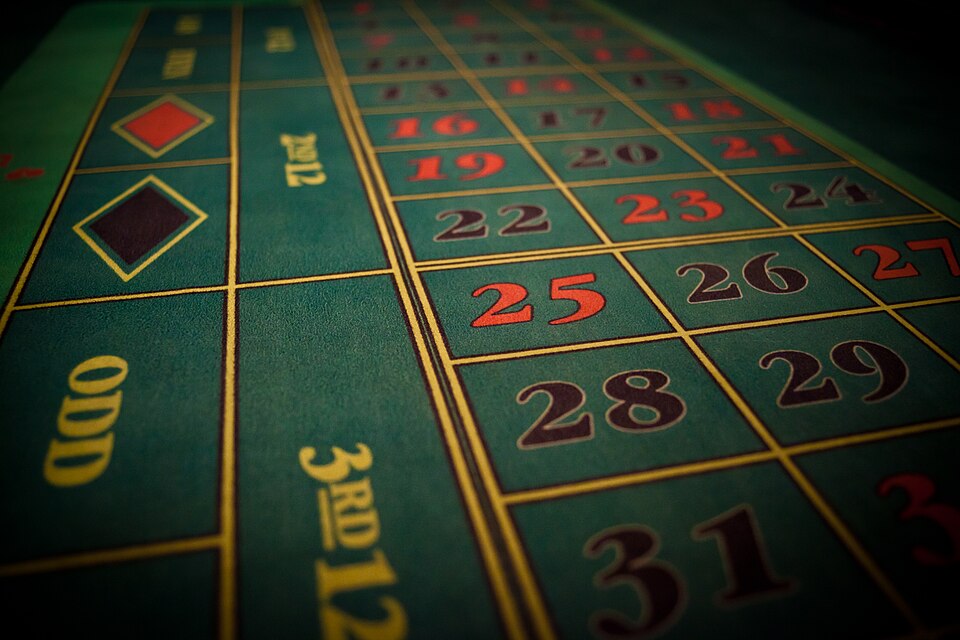
PARIS, July 21 — The shift in French gambling is unmistakable: a pastime that gave the world the roulette wheel and the queen of hearts now sits at a crossroads between its deep-rooted history and a tightly controlled digital future. Nearly half the country—49% of people, according to a 2022 TGM Research report—took part in some form of betting in the previous 12 months, with 28% specifically backing sports.
That participation rate, locked inside a uniquely French system of state monopolies and strict licensing, tells a story of continuity under pressure.
A Legacy Written in Cards and Wheels
France’s contribution to global gambling is a matter of historical record. The 16th century saw the addition of the queen card to the Blackjack deck. In the 17th century, mathematician Blaise Pascal invented the roulette wheel.
Parimutuel betting emerged around 1870. The first casino opened in Dieppe in 1822, designed by architect Pierre Châtelain with the Count of Brancas.
A second casino followed in Boulogne-sur-Mer in 1825, built by Auguste Versial and engineer Marguet. Casino activity proper began in 1834, and more venues opened in Saint-Malo (1839), Trouville (1845), and Pornic (1853). Meanwhile, Paris’s gaming houses were shuttered in 1837.
The regulatory framework was set early. Napoleon’s decree of June 24, 1806, prohibited games of chance but carved out exceptions for thermal spas and Paris.
The law of June 15, 1907, regulated gambling in seaside, thermal, and climatic resorts. The 1919 law banned games within a 100 km radius of Paris but extended authorizations to tourist resorts. The law of March 31, 1931, allowed thermal resorts within that radius to have casinos, leading to the reopening of Enghien-les-Bains casino.
In 1987, the minimum gambling age was lowered from 21 to 18. Slot machines became legal in 1988.
Monopoly Structures and the Online Frontier
Two state monopolies still dominate. Française des Jeux holds the monopoly until 2044 for lottery games—both online and offline—and offline sports betting. Pari Mutuel Urbain holds the monopoly for offline horse betting.
Online gambling was only legalized in 2010, and access is channelled through licensed operators under the Autorité de Régulation des Jeux en Ligne, the national regulator. The trend underneath these facts is a careful balancing act: France allows gambling, keeps it under tight state control, and only opened the digital door 16 years ago.
The 1988 legalisation of slot machines marked a turning point, as did the 2010 online legalisation. Yet the monopolies persist, creating a landscape where private operators can only compete in specific online verticals. What’s changing now, as of July 2026, is the broader European context—cross-border competition, pressure for harmonised standards, and the steady digitisation of consumer habits.
France’s model is not giving way easily, but the tension between tradition and technology is palpable. Watch this space: the next regulatory tweak or market move could tip the balance.
For now, the rules are clear, the history is long, and the stakes are high.
Sources
{“@context”: “https://schema.org”, “@type”: “NewsArticle”, “headline”: “French Gambling Faces Crossroads: 49% Participation Amid Restrictions”, “description”: “PARIS, July 21 — The shift in French gambling is unmistakable: a pastime that gave the world the roulette wheel and the queen of hearts…”, “datePublished”: “2026-07-21T09:30:00+00:00”, “author”: {“@type”: “Person”, “name”: “Maria Romano”}, “publisher”: {“@type”: “Organization”, “name”: “InfoPulse Today”, “url”: “https://newsfeed.infopulsetoday.com/”}, “citation”: [{“@type”: “CreativeWork”, “url”: “https://en.wikipedia.org/wiki/Gambling_in_France”}]}




