
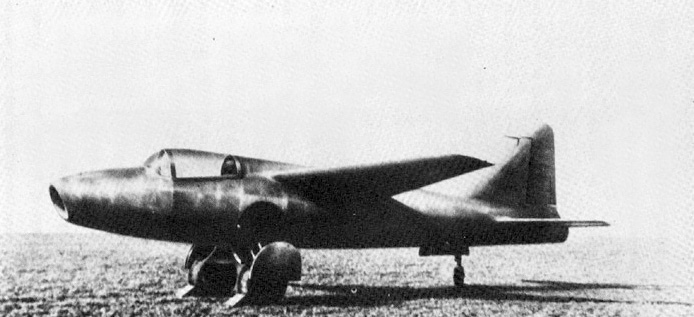
LONDON, July 8 — The jet engine, the machine that shrank the world, has a history that reads like a race between two men who never met, working on opposite sides of the English Channel. Frank Whittle filed his patent in Britain in 1930. Hans von Ohain got the first turbojet aircraft, the Heinkel He 178, into the air on August 27, 1939.
The mechanics here are deceptively simple: air gets sucked in, compressed, mixed with fuel, set on fire, and expelled to produce thrust. The catch is that making this work at scale, reliably, and profitably, took decades.
The first commercial jet engine was the de Havilland Ghost, the powerplant for the Comet airliner. That was the beginning of the end for propeller-driven travel. But the early engines were thirsty and loud.
The bypass ratio — the amount of air that flows around the core of the engine versus through it — was roughly one-to-one. That meant a lot of fuel burned for every pound of thrust.
Then came the turbofan. The Pratt & Whitney JT8D, which entered service in the 1960s, powered the Boeing 727 and the early 737s. It was a workhorse.
But follow the engineering arc: the bypass ratio on modern turbofans has climbed to about ten-to-one. That means ten parts of air bypass the core for every one part that goes through it. The result is a cooler, quieter, and dramatically more efficient engine.
On closer reading of the numbers, the improvement is stark. Jet engines have improved fuel efficiency by roughly 70% since the 1960s.
That is not a marginal gain. That is a structural shift in the economics of flight. An airline that ran 1960s engines today would burn nearly three and a half times the fuel per passenger-mile.
Those savings flow straight to the bottom line, or to ticket prices, or both. The General Electric GE90, first run in 1993, represents the heavy-lift end of the market.
It can produce up to 115,000 pounds of thrust. That engine powers the largest twin-engine airliners. The Rolls-Royce Trent series, which first ran in 1990, powers the Airbus A380 and the Boeing 787.
These are not just different engines; they are different philosophies of air movement, each optimized for a specific aircraft’s weight, range, and mission. The business logic is brutal. Airlines operate on thin margins.
Fuel is the single largest operating cost. A 70% efficiency gain over sixty years means the difference between a profitable route and a money-losing one.
The engine manufacturers — General Electric, Rolls-Royce, Pratt & Whitney — are not just selling hardware. They are selling the ability to keep a seat filled at a price a passenger will pay. What to watch next is the continued push on the bypass ratio.
Ten-to-one is not a ceiling. Engineers are looking at even higher ratios, which would mean even more air bypassing the core.
The trade-off is weight and drag. A larger fan needs a larger nacelle, which adds weight and aerodynamic resistance. The optimization problem is not solved.
It is just more refined than it was in 1930.




