
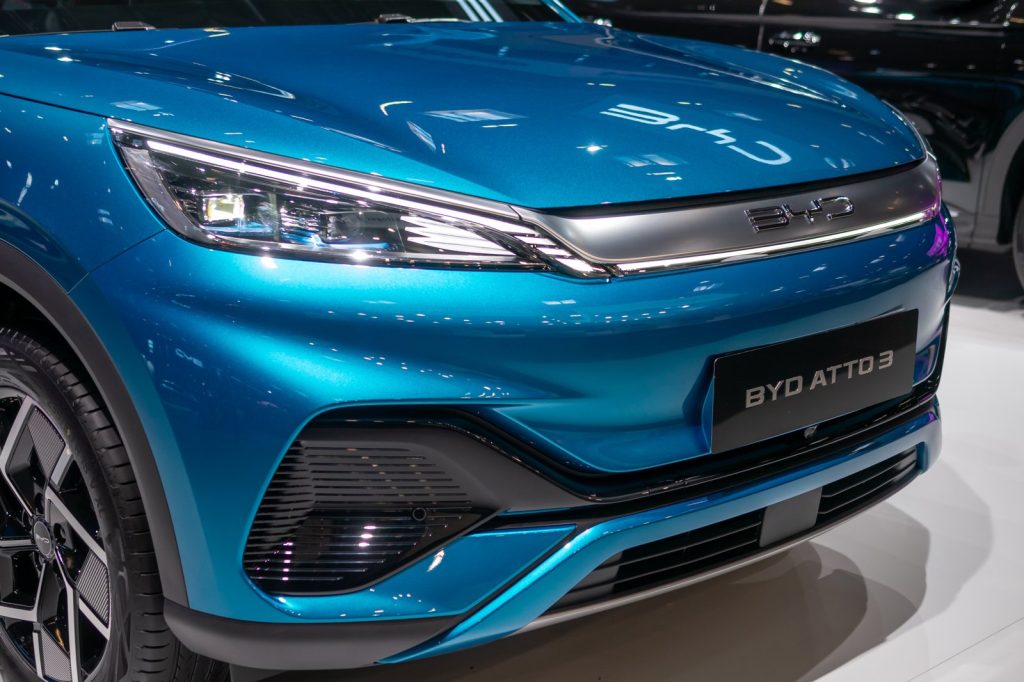
TEHRAN, July 9 — The global electric vehicle race has narrowed to two giants, and the contest between China’s BYD Auto and America’s Tesla is reshaping an industry that barely existed two decades ago. BYD Auto, founded in 2003 as a subsidiary of BYD Company Ltd. by Wang Chuanfu, has become the world’s second-largest EV manufacturer after Tesla. The company is headquartered in Shenzhen, China, and employs over 290,000 people.
In 2022, BYD sold 911,000 battery electric vehicles and 1.86 million plug-in hybrid vehicles, totaling 1.86 million new energy vehicles. The company’s sales grew 208 percent year-over-year in 2022.
Tesla, founded in 2003 by Elon Musk, Martin Eberhard, and Marc Tarpenning, delivered 1.31 million vehicles globally in 2022, a 40 percent increase from 2021. The Tesla Model Y was the best-selling EV globally in 2022 with 771,000 units sold. Tesla’s market capitalization reached $1 trillion in October 2021, making it the most valuable automaker.
The company operates Gigafactories in Fremont, California; Austin, Texas; Shanghai, China; and Berlin, Germany. The two companies took different paths to dominance.
BYD produces its own batteries, a strategic decision that gives it control over a critical component. In 2020, the company introduced the Blade Battery, which uses lithium iron phosphate chemistry and passed nail penetration tests without catching fire. BYD’s vehicle lineup includes the Han sedan, the Tang SUV, and the Atto 3 crossover.
A Changing of the Guard
The first quarter of 2023 marked a notable shift. BYD surpassed Tesla in global EV sales during that period, selling 552,000 vehicles compared to Tesla’s 423,000. The source indicates that BYD’s lead came largely from its inclusion of plug-in hybrids in its sales figures, while Tesla remained ahead in battery electric-only sales.
BYD’s 208 percent sales growth in 2022 far outpaced Tesla’s 40 percent increase, though Tesla started from a larger base in pure battery EVs. Both companies are now expanding into new markets.
BYD has entered Europe, and Tesla is building a factory in Mexico.
Regional Implications
For countries in the Middle East and Central Asia, the competition between BYD and Tesla carries implications that go beyond consumer choice. The broader regional picture is one of transition. Gulf states, which have built their wealth on oil exports, are investing in EV infrastructure and manufacturing.
The rise of Chinese automakers like BYD offers these countries an alternative to Western brands, potentially reshaping trade patterns in the region. BYD’s entry into Europe also matters for Middle Eastern markets.
European regulations are pushing automakers toward electric vehicles, and Chinese companies are positioning themselves to fill the gap. If BYD succeeds in Europe, it could become a major player in markets that have long been dominated by German, Japanese, and American brands.
What to Watch
The immediate question is whether BYD can sustain its sales momentum. The company’s 2022 figures showed strong growth, but the global EV market is becoming more crowded. Tesla remains the leader in pure battery EVs, and its brand recognition and charging infrastructure give it an advantage in many markets.
For Tesla, the challenge is maintaining its lead while scaling production. The company’s Gigafactory in Shanghai has been a key driver of its growth, but geopolitical tensions between the United States and China could complicate its operations.
The new factory in Mexico is expected to help Tesla serve the North American market, but it will take time to reach full production. BYD’s battery technology is another factor to watch. The Blade Battery’s safety claims have attracted attention, and the company’s vertical integration gives it cost advantages.
But Tesla has also invested heavily in battery technology, including its 4680 cells, and has partnerships with battery suppliers around the world. The competition between these two companies is likely to define the EV market for years to come.
For now, BYD holds the edge in overall sales volume, while Tesla leads in pure battery EVs and market valuation. The race is far from over, and the outcome will have consequences for automakers, suppliers, and consumers across the globe.




