
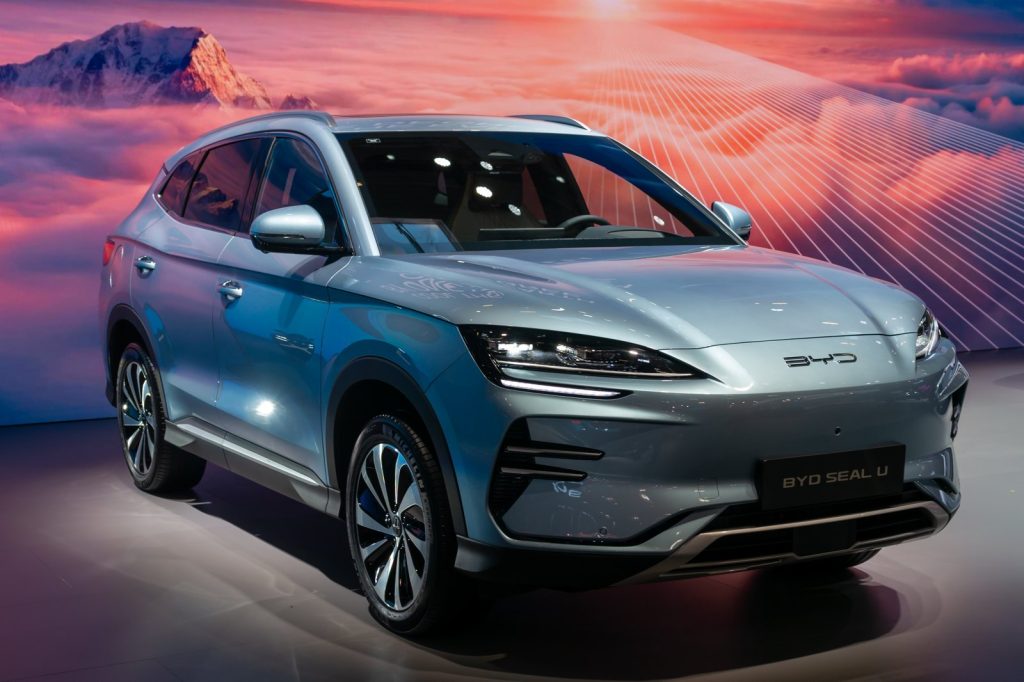
BEIJING, July 13 — How did a country that barely sold electric cars a decade ago come to dominate the global industry? The numbers tell a stark story. According to the IEA Global EV Outlook 2024, China accounted for 60% of all electric vehicle sales worldwide in 2023, moving 8.1 million units.
Its domestic EV market share hit 35% of new car sales last year, up from 25% in 2022. The mechanism behind this shift is a blend of industrial policy, aggressive corporate strategy, and control over the supply chain.
Since 2009, the Chinese government has poured over $100 billion in subsidies and tax breaks into the industry, according to the Center for Strategic and International Studies. That money didn’t just buy cars—it built an ecosystem.
The players that reshaped the market
BYD, headquartered in Shenzhen and founded in 1995 by Wang Chuanfu, sold 3.02 million new energy vehicles in 2023. That figure pushed it past Tesla to become the world’s top EV seller. The company’s Blade Battery, introduced in 2020, uses lithium iron phosphate (LFP) chemistry and is known for safety and lower cost.
Other Chinese manufacturers are also posting significant numbers. SAIC Motor sold 1.1 million new energy vehicles in 2023.
Geely sold 640,000. NIO, a premium-focused player, sold 160,000. Then there’s CATL.
Founded in 2011 by Zeng Yuqun, the battery giant supplied 37% of all EV batteries globally in 2023. That dominance extends deeper into the supply chain.
China controls 70% of global battery cell production capacity and a staggering 90% of cathode and anode material processing, according to the IEA.
What this means for Western markets
The United States has taken notice. The Inflation Reduction Act of 2022 aims to reduce dependence on Chinese supply chains. Its mechanism is straightforward: to qualify for EV tax credits, battery components and critical minerals must be sourced from free-trade partners.
That effectively excludes most Chinese-made batteries and materials. But the scale of China’s lead makes a quick pivot difficult.
Building alternative supply chains takes years and enormous capital. The United States inherits a situation where the world’s largest EV market is also the world’s dominant battery producer. What researchers found is that the cost advantage China has built is not easily replicated.
The combination of government subsidies, massive scale, and vertical integration means Chinese EV makers can produce cars and batteries at prices Western manufacturers struggle to match. The question now is whether the Inflation Reduction Act’s incentives can spur enough domestic and allied production to create a genuine alternative.
For the moment, China’s position as the undisputed leader in EV production and sales looks secure, built on a foundation of policy, investment, and control over the materials that make the technology work.




