
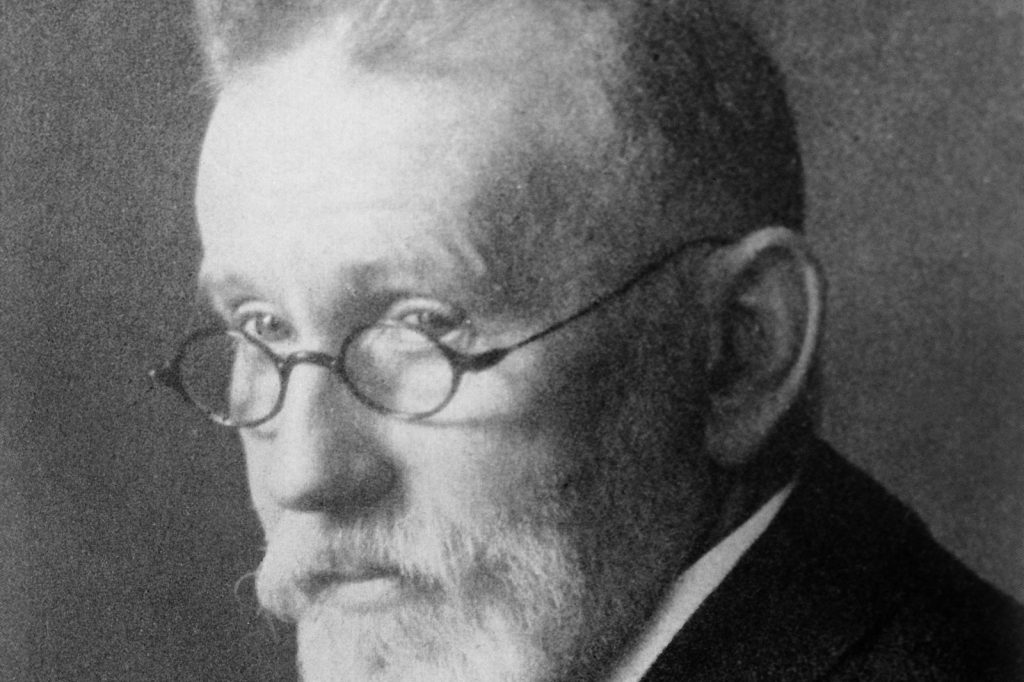
FRANKFURT, July 10 — The shift is subtle but seismic: a German physician who died in 1915 is shaping the future of targeted medicine more than ever. Paul Ehrlich, a father of modern immunology and chemotherapy, left behind a playbook that scientists are still running. Ehrlich was a man of firsts.
In 1900, he proposed the side-chain theory of antibody formation, explaining how cells produce antibodies to neutralize toxins. It earned him the Nobel Prize in Physiology or Medicine in 1908, which he shared with Ilya Mechnikov for their work on immunity.
But Ehrlich didn’t stop at theory. He pioneered chemotherapy itself. In 1909, he developed Salvarsan (arsphenamine), the first effective treatment for syphilis.
Ehrlich coined the term “magic bullet” to describe drugs that target pathogens without harming the host. That concept is now the backbone of modern targeted therapies.
Ehrlich also transformed how we see cells. He developed methods to stain them using aniline dyes, advancing histology. His work at the Royal Institute for Experimental Therapy in Frankfurt — now the Paul Ehrlich Institute — laid the groundwork for decades of discovery.
Receptors, Recognition, and Revolution
What’s changing is how deep Ehrlich’s influence runs. His concept of receptors — the idea that cells have specific docking sites for molecules — is the foundation of modern immunology. It’s also the intellectual bedrock for monoclonal antibodies and targeted drug development.
The trend underneath is clear: Ehrlich’s vision of a “magic bullet” is no longer a dream. It’s the operating principle for cancer immunotherapies, autoimmune treatments, and precision medicine.
Every time a drug designer asks “what does this receptor do?”, they’re walking in Ehrlich’s footsteps. Ehrlich was recognized in his own time. He was awarded the Prussian Order of Merit.
In 1954, a postage stamp was issued in his honor. But his true legacy isn’t in awards or stamps — it’s in the molecular logic that guides drug discovery today.
From Syphilis to Smart Drugs
The leap from Salvarsan to modern biologics is enormous, but the logic is identical. Ehrlich proved that a chemical could discriminate between a pathogen and a human cell. That discrimination — specificity — is what makes modern targeted therapies work.
Without his side-chain theory, we wouldn’t understand how antibodies recognize antigens. Without his receptor concept, we wouldn’t have checkpoint inhibitors or CAR-T cells.
Ehrlich’s work at the Royal Institute for Experimental Therapy wasn’t just academic. It was translational, decades before that word existed. He moved from basic immunology to a working drug in less than a decade.
That pace of translation is something today’s researchers still chase. The Paul Ehrlich Institute in Frankfurt continues his mission, regulating and researching vaccines and biomedicines.
It’s a living monument to a man who saw the future of medicine more than a century ago. What to watch next: as artificial intelligence accelerates drug discovery, Ehrlich’s “magic bullet” framework is being tested at unprecedented speed. AI models now screen millions of compounds for receptor affinity, doing in days what Ehrlich did in years.
The shift is that we’re finally catching up to his ambition. Consult your doctor for medical advice.




