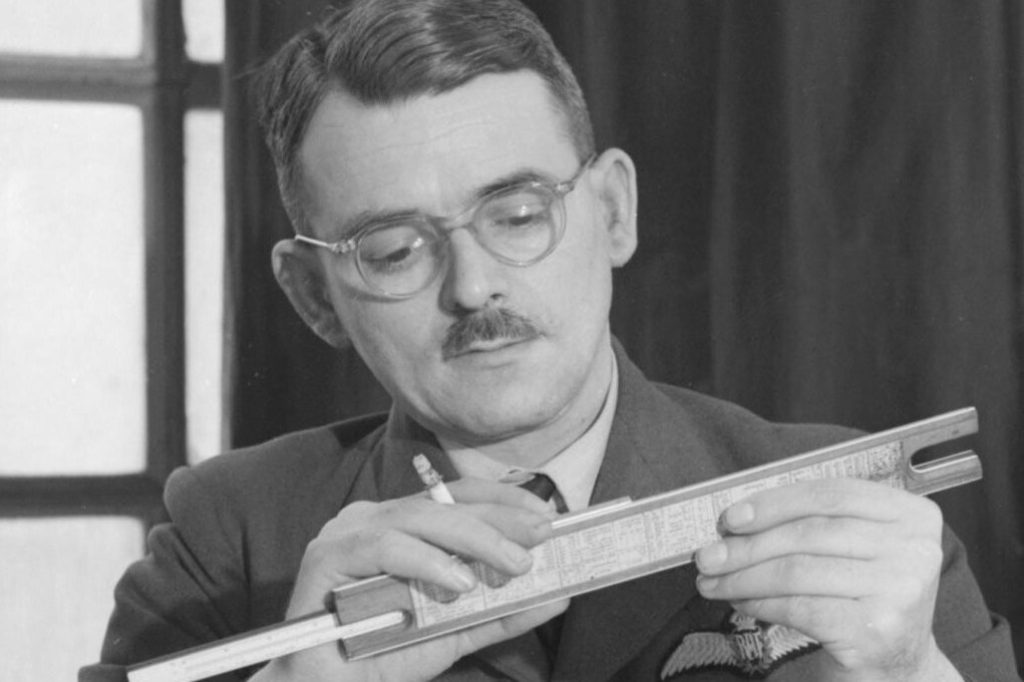
Frank Whittle was turned down by the Royal Air Force at fifteen. He failed the medical in January 1923, two days after reporting to RAF Halton as an aircraft apprentice: five feet tall, small chest. He trained for six months, put on three inches, and failed again. Then he applied once more, at Cranwell, and got in.
The boy who nearly never flew went on to co-create the turbojet. Whittle, born in Coventry on June 1, 1907, took out a patent on his design in 1930.
A thesis, and a rebuff
At Cranwell he went solo in 1927 after 13.5 hours of instruction, and he graduated in 1928, second in his class in academics. His thesis, “Future Developments in Aircraft Design”, argued that better propeller engines would not make flight above 500 mph routine. He described a motorjet instead. Later, working on the problem, he asked himself: “Why not substitute a turbine for the piston engine?”
In late 1929 he sent the concept to the Air Ministry. A. A. Griffith, a member of the Aeronautical Research Committee, wrote back that the design was “impracticable”, since materials of the day could not take the temperatures. Whittle was told that the future of the turbine rested with steam turbine engineers and metallurgists, not “some lucky inventor”.
Power Jets
With no support from the Air Ministry, Whittle and two retired RAF servicemen founded Power Jets Ltd, working with the firm British Thomson-Houston. Funding was thin. A prototype still ran for the first time in 1937.
Official interest arrived only after that success, and contracts followed. The strain wrecked his health. He had a nervous breakdown in 1940, and another in 1944 when Power Jets was nationalised. He resigned from the board in 1946.
Whittle retired from the RAF in 1948 and was knighted. Work as a technical advisor at BOAC came next, then jobs with Shell and Bristol Aero Engines. After he moved to the United States in 1976, he held a research professorship at the US Naval Academy from 1977 to 1979. He died of lung cancer at his home in Columbia, Maryland, in August 1996. A 2002 BBC poll ranked him 42nd among the 100 Greatest Britons.