
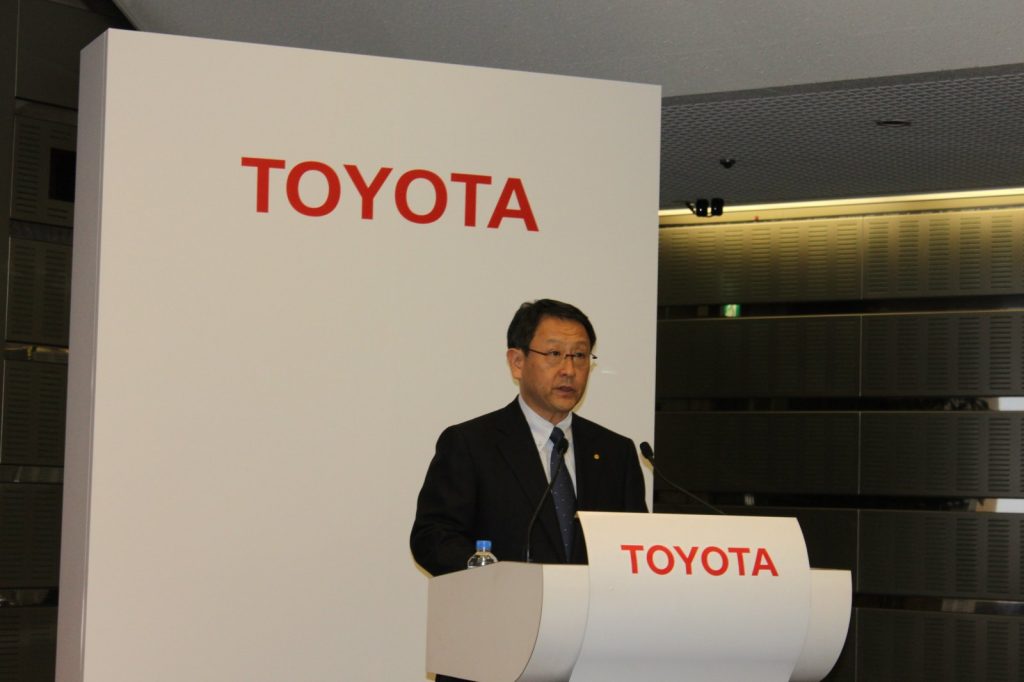
At the Consumer Electronics Show in Las Vegas on January 7, 2020, Toyota CEO Akio Toyoda announced a project that marks a significant shift for the automaker. The plan: build a 175-acre living laboratory for 2,000 people at the base of Mount Fuji, on the site of a former manufacturing plant.
This initiative, named Woven City, is not a conceptual design but a tangible construction project on real land. The location, a cleared factory site near Japan’s most iconic mountain, will serve as a testing ground for three interconnected technologies: autonomous vehicles, hydrogen fuel cell systems, and smart home ecosystems. Toyoda emphasized to the Las Vegas audience that these technologies require a setting where they can interact with real people making everyday decisions.
The factory that once produced car parts is now being repurposed to create a new kind of neighborhood. The project’s road system reflects this experimental approach.
Toyota has designed three distinct types of pathways woven together. One lane is reserved for faster vehicles, designed to move people quickly across the site. A second lane is for slower personal mobility options such as bicycles and electric scooters.
The third path is exclusively for pedestrians, built to resemble a park rather than a standard sidewalk. This controlled environment allows engineers to test how autonomous vehicles interact with bikes and walkers, without the unpredictability of public highways.
The goal is to push systems harder, fail safely, and learn more rapidly. Woven City is not Toyota’s first foray into rethinking transportation. The company had already invested heavily in hydrogen fuel cells with the 2014 launch of the Mirai sedan, and had developed robots and partnered with tech firms on artificial intelligence.
However, those efforts were dispersed. Woven City is an attempt to consolidate them into a single community and a single test environment.
The timing of the announcement is notable. In early 2020, the auto industry faced pressure from regulators demanding lower emissions, cities banning diesel vehicles, and ride-hailing services and electric scooters reducing car ownership. Toyota, as the world’s largest automaker by market value, needed to demonstrate it could do more than manufacture reliable sedans.
Woven City serves as a physical demonstration that the company understands the direction of transportation and wants to actively shape that future. Critics may point out that 2,000 residents is a small sample size and 175 acres is a fraction of a real city, with testing expected to take years.
However, Toyota is not claiming to solve urban planning overnight. The project is a laboratory, not a utopia. The objective is to collect data, refine technologies, and prove that hydrogen power and autonomy can function together in a real community. Success would allow lessons to scale; failures would be contained.
For now, the factory floor sits empty and the roads remain unbuilt, but the plan is in place to convert that plot into a woven grid of speed, slowness, and stillness at the base of Mount Fuji.




