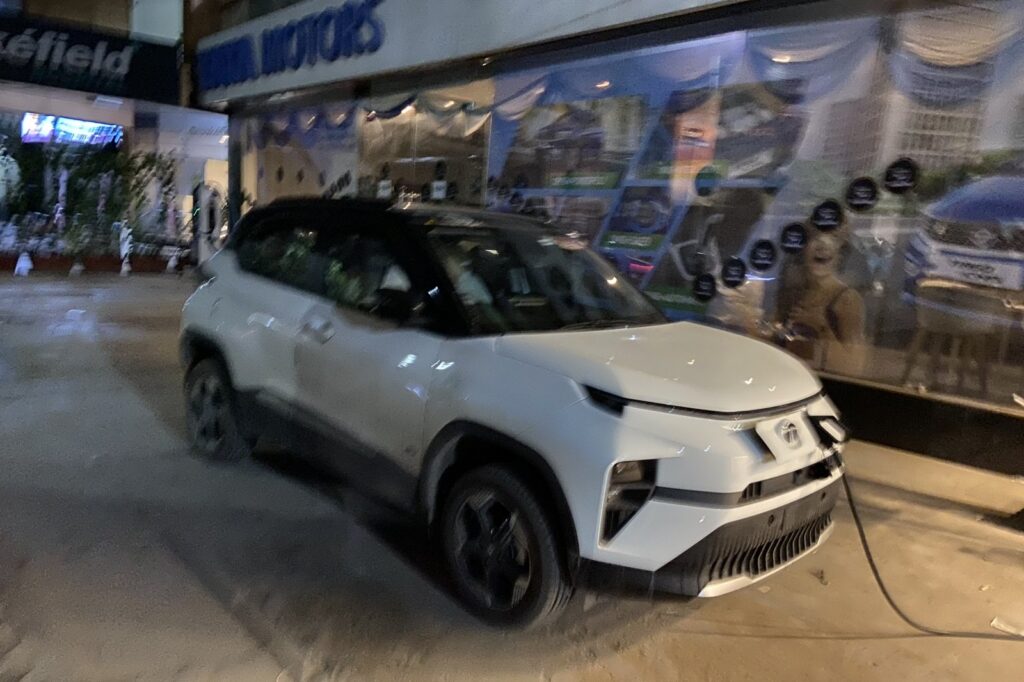
A Small Electric SUV Just Set India’s Benchmark
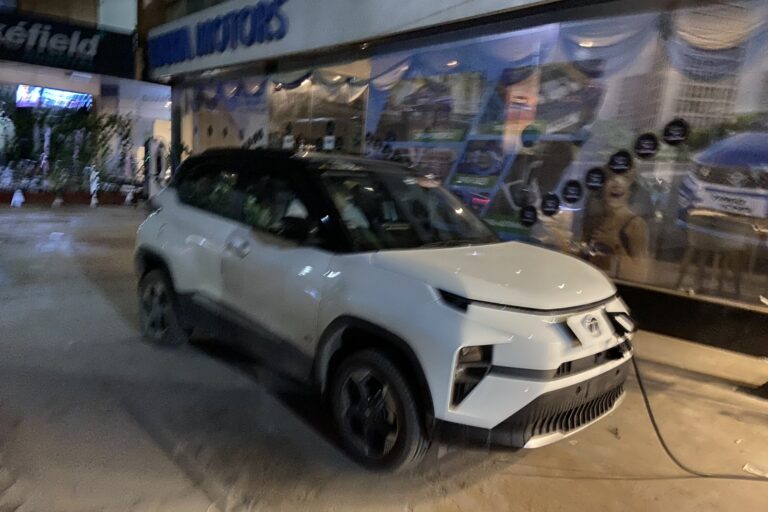
The Tata Punch.ev became the first standalone electric passenger car model in India to cross 5,000 monthly wholesale dispatches, hitting the mark in October 2026, according to Auto Punditz. For a compact electric SUV that starts at ₹9.79 lakh (ex-showroom), the figure is more than a sales record: it is the first hard evidence that affordable electric cars in India can sell at the same scale as mainstream petrol models.
Why 5,000 Units Matters
Wholesale dispatches measure what carmakers push to dealers, not final registrations, but the threshold carries weight because no single electric nameplate in India had cleared it before. The Punch.ev topped India’s electric passenger car sales chart in three of the four months before October, and its October run followed roughly 6.1% month-on-month growth in September and at least 6.3% more in October, according to Auto Punditz.
The number lands in a market where electric cars have mostly sold in small volumes at the premium end. The Punch.ev sits at the entry level, priced between ₹9.79 lakh and ₹12.99 lakh after a September 2026 revision, and that positioning is central to why the milestone reads as a market signal rather than a one-off.
The Mahindra Fight Is Close, and Getting Closer
Competition has tightened around the Punch.ev. Mahindra’s XEV 9S briefly overtook it in August 2026, dispatching 4,508 units against the Tata model’s 4,430, a lead of 78 vehicles. Tata regained the top spot in September with 4,702 units to Mahindra’s 4,636, a gap of 66, before pulling clear in October.
Analysts note the two models sit in different price and size segments, so the head-to-head is less a like-for-like product battle than a running scoreboard for India’s electric sales leadership. Still, the pattern shows how quickly the top of the chart can change hands, and Mahindra is continuing to expand its electric SUV lineup.
Tata’s Record Month
The Punch.ev’s milestone came inside the strongest month Tata Motors Passenger Vehicles has recorded. Total sales across domestic and international markets reached 75,426 units in October 2026, up 23% from 61,295 a year earlier, the company said. Domestic sales were 73,894 units and international sales 1,532 units, against 161 in October 2025.
Electric vehicles did much of the work. Tata sold 16,244 EVs in October, a 75% year-on-year jump from 9,286 units, and EVs accounted for around 21.5% of its total passenger vehicle sales, up from 15.2% a year earlier. The company also secured second place in October passenger vehicle registrations on Vahan data, with market share up roughly one percentage point, while Maruti Suzuki held the top spot.
Demand is now outrunning supply. Tata Motors said customer interest in some electric and CNG models exceeds available stock, prompting plans to increase production. The record month landed during India’s festive buying season, when carmakers traditionally see their strongest bookings, and Tata reported its highest-ever monthly bookings as well.
What Buyers Get for the Money
The updated Punch.ev, facelifted in February 2026, comes with two battery options: a 30 kWh pack with an ARAI-certified range of 365 km and a 40 kWh pack rated at 468 km. The smaller battery produces 88 bhp and 154 Nm of torque; the larger unit develops 129 bhp and the same torque, sending power to the front wheels through a single-speed automatic. The long-range version accelerates from 0 to 100 kph in around 9 seconds and tops out at 140 kph.
Tata also offers a Battery as a Service option, which lowers the upfront purchase price by separating battery usage charges from the cost of the vehicle. Warranty terms differ by pack: the 40 kWh version carries a lifetime high-voltage battery warranty covering unlimited kilometres for the first private owner for 15 years from registration, while the 30 kWh version gets eight years or 1.6 lakh km.
Equipment depending on variant includes a 360-degree camera, blind spot monitoring, ventilated front seats, wireless Android Auto and Apple CarPlay, a voice-assisted electric sunroof and cruise control. Safety kit runs to six airbags, electronic stability control and ISOFIX mounts, and the model holds a five-star Bharat NCAP rating.
The Next Challenger Is Maruti
The competitive pressure is set to come from India’s largest carmaker. Maruti Suzuki is expected to expand its electric range beyond the e Vitara with a smaller model that could target the affordable electric SUV segment where the Punch.ev is a key option, though the name, body style, battery capacity, range and launch date remain unconfirmed. Reports suggest Maruti could reveal another electric vehicle in 2027, without clarity on whether that will be the smaller car or its planned three-row electric MPV.
For Indian buyers, the practical questions around any electric purchase remain after-sales service, real-world driving range and charging infrastructure. The Punch.ev’s October number suggests a large enough group of city drivers has decided those trade-offs work for daily use, at least at this price. Tata’s production plans will now determine whether the 5,000-unit mark becomes a floor or a peak.
Sources
- Tata Punch.ev crosses 5,000 monthly dispatches for first time, sets new benchmark for India's EV market | Mint
- Tata Punch
- Maruti’s Upcoming Small EV Could Rival the Tata Punch EV
- Tata Punch EV Creates History: First Electric Car in India to Cross 5,000 Monthly Sales
- Tata Motors October sales hit 75,426 units, CNG and EV demand exceeds supply
- Tata Punch.EV Becomes First Electric Car To Cross 5,000 Monthly Sales Mark
Photo: VideshiBhaktNRI (CC0)