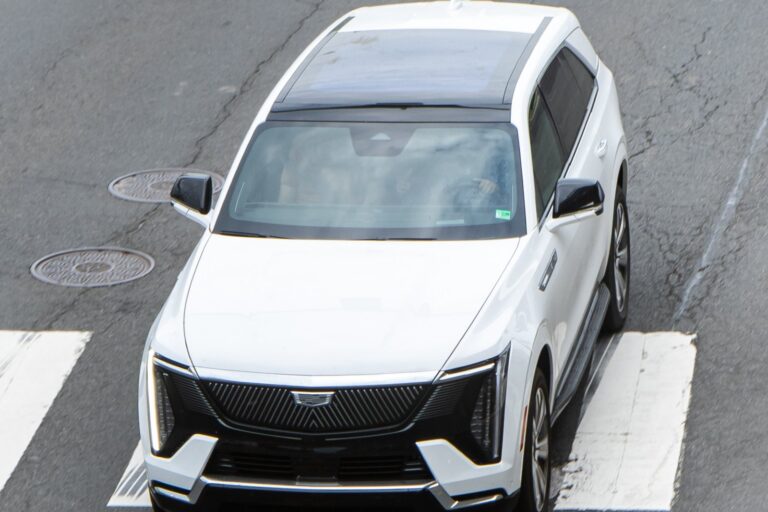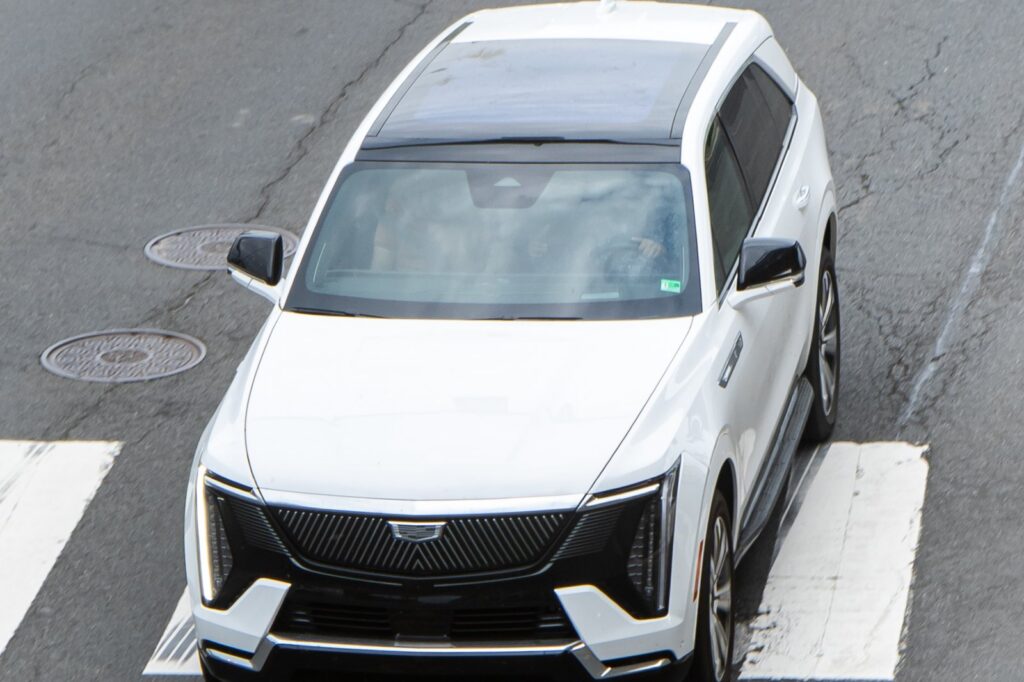
The Fort Worth fire department spent nearly 18 hours bringing a dealership inferno under control, a blaze that consumed six Cadillac Escalade IQs and highlighted the extreme difficulty of extinguishing large-format electric vehicle battery fires. The incident at the Frank Kent Cadillac dealership in Texas saw firefighters battle intense heat and toxic fumes as multiple electric vehicles ignited, requiring the use of specialized fire blankets to protect adjacent units.
The Challenge Of Extinguishing Large-Format Battery Fires
EV fires are notoriously difficult to extinguish because their batteries are designed to keep water out, and the chemicals inside can burn much hotter than gasoline fires, sometimes releasing poisonous gases. At the Fort Worth dealership, crews had to rotate every two hours to manage the intense heat and the duration of the operation. The fire involved multiple electric vehicles spreading quickly, forcing crews to cover burning units with special blankets designed to prevent the fire from spreading while they moved additional EVs to safety. Despite these measures, six of the electric SUVs were destroyed, while two additional unidentified Cadillac EVs suffered only minor damage. The incident underscores a growing challenge for fire services as high-capacity electric vehicles become more common on roads.
Technical Profile Of The Escalade IQ Battery
The Cadillac Escalade IQ features a 24-module battery unit with a usable capacity of 205 kilowatt-hours, one of the largest fitted to a production vehicle. The blaze involved vehicles built on General Motors’ Ultium platform, sharing battery technology with other high-capacity models such as the GMC Hummer EV. The Escalade IQ launched for the 2025 model year as a battery-electric counterpart to the gas-powered Escalade, with General Motors announcing the model in May 2023. Certain 2026 model year Escalade IQ and long-wheelbase IQL models were recalled in July due to a potential battery fire risk caused by an improperly secured internal component that could move and damage the battery. As the investigation into the dealership fire continues, it remains unclear whether the incident was related to the battery issue identified in the recall.
Charging Infrastructure And Model Updates
For 2027, General Motors is upgrading the on-board charger to 19.2 kW and switching from CCS1 to a native NACS charging port on the Escalade IQ and long-wheelbase IQL. Charging the Escalade’s massive battery on a standard 120V outlet will take almost a week, emphasizing reliance on high-power DC charging. The upgraded on-board charger enables owners to use a 240-volt, 80-ampere connection to top up the car’s batteries faster than on the outgoing model. On a 120V outlet, the Dual Level Charge Cord provides just 1.4 kW of power, meaning a full 0-to-100% charge will take almost a week. The native NACS port removes the need for a CCS-to-NACS adapter at Tesla Superchargers and other NACS-equipped stalls, improving charging accessibility for owners.
Insurance And Safety Standards
The Fort Worth dealership fire raises urgent questions for insurers and safety standards. EV fires are notoriously difficult because their batteries are designed to keep water out and can burn much hotter than gasoline fires, complicating the firefighting response. As high-capacity luxury EVs like the Escalade IQ become more prevalent, rising premiums for high-capacity luxury EVs are likely as insurers assess the extreme difficulty of extinguishing large-format battery blazes. The incident highlights the need for specialized firefighter training and equipment as EVs become more common, ensuring that fire departments have the right procedures to handle these fires safely and effectively. General Motors has stated that the recall for certain 2026 model year vehicles was prompted by a potential battery fire risk, though the connection to the Fort Worth incident remains under investigation.
Performance And Maneuverability Capabilities
The Cadillac Escalade IQ is built on General Motors’ Ultium electric vehicle platform and features a dual-motor, all-wheel-drive system. The vehicle offers two distinct output modes: a standard mode providing 680 horsepower and 615 lb-ft of torque, and “Velocity Max,” which increases performance to 750 horsepower and 785 lb-ft of torque. These power levels support the vehicle’s significant 205 kilowatt-hour battery capacity, which delivers an estimated 465 miles of range.
Beyond raw power, the Escalade IQ incorporates advanced chassis technology to improve handling. The rear wheels can turn up to 10 degrees, either opposite the front wheels at low speeds or in the same direction at highway speeds. This system also permits diagonal travel, a feature similar to the “crabwalk” mode found on the GMC Hummer EV, which shares battery and motor components with the Escalade IQ.
Firefighter Safety And Equipment Limitations
The Fort Worth fire department’s extended battle highlights critical gaps in current emergency response protocols for large-format EV incidents. According to incident reports, crews were required to rotate every two hours to manage intense heat exposure, a demanding schedule that underscores the physical toll of these operations. The department utilized specialized fire blankets to contain the blaze, yet the technology’s effectiveness is limited when multiple vehicles are involved, as the fire rapidly spread across the dealership lot. Furthermore, the toxic fumes released during combustion pose additional health risks to responders, requiring enhanced respiratory protection that standard fire gear may not fully provide. As electric vehicle adoption accelerates, the incident serves as a catalyst for re-evaluating firefighter safety standards and investing in equipment specifically designed for the unique challenges of high-capacity battery fires.
Insurance industry analysts have noted that the Fort Worth event will likely trigger a reassessment of risk models for high-capacity luxury EVs. Because EV batteries are engineered to be water-resistant and the internal chemistry can sustain combustion at temperatures exceeding those of traditional fuel fires, extinguishing the blaze requires significantly more resources and time. This operational difficulty directly impacts the cost of coverage, with projections suggesting rising premiums for owners of large-format electric SUVs as insurers factor in the specialized equipment and extended man-hours needed for fire suppression. The Fort Worth fire department’s experience has become a reference point for discussing the need for updated underwriting practices that account for the specific hazards presented by vehicles built on platforms like GM’s Ultium architecture.
Sources
- Several Cadillac Escalade IQs Destroyed In EV-Fueled Fire That Lasted 18 Hours
- Cadillac Escalade IQ
- The 2027 Cadillac Escalade IQ Gets A NACS Port And Faster Home Charging
Photo: OWS Photography (CC BY 4.0)