
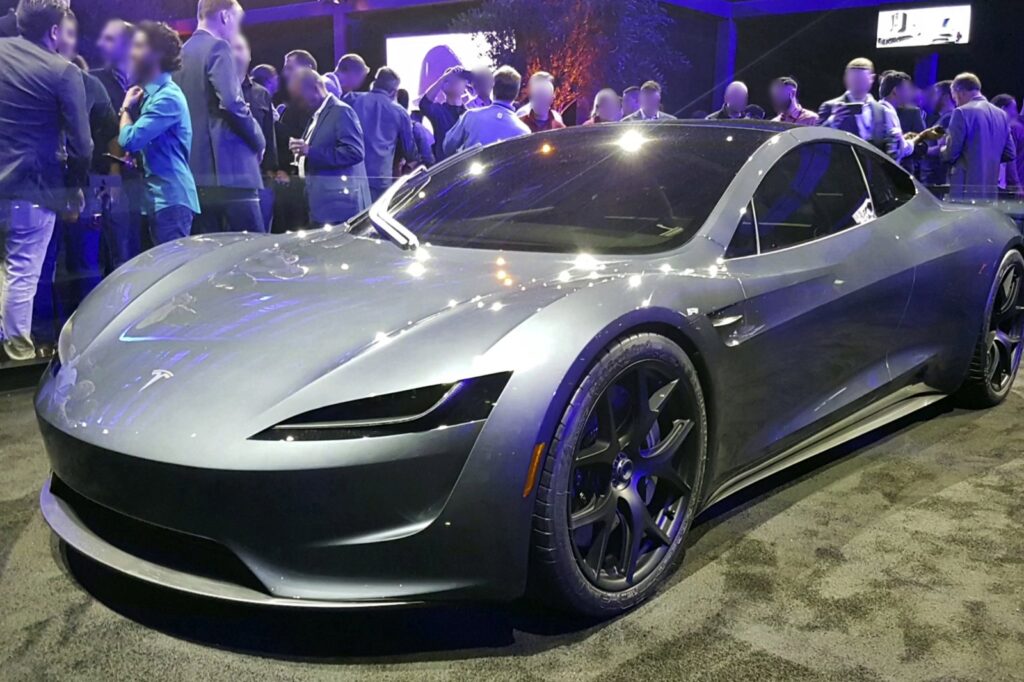
Tesla Debuts 2026 Roadster, an EV Sports Car at Least $200,000
The 2026 Tesla Roadster enters the market with a starting price above $200,000, setting a new benchmark for premium electric sports cars. This pricing move reshapes expectations for performance and luxury in the EV segment and increases pressure on established rivals.
How Pricing Positions the Roadster in the Premium EV Sports Car Landscape
Tesla’s 2026 Roadster is priced at least $200,000, placing it at the top tier of the electric sports car market according to the debut announcement. This level exceeds the typical range for most EV sports models and aligns with the upper end of luxury performance vehicles. The Roadster’s cost reflects Tesla’s strategy to compete in a niche where acceleration, range, and exclusivity are key selling points. By setting the price this high, Tesla signals confidence in its ability to deliver performance that justifies the premium, particularly in areas like 0-60 mph times and top speed, which have been central to its marketing for the Roadster since its initial reveal.
Impact on Competitors Like Rimac, Lucid, and Porsche
The Roadster’s pricing intensifies competition among premium EV manufacturers. Rimac, known for its high-output electric hypercars such as the Nevera, operates in a similar price bracket and may face direct comparison on performance metrics. Lucid, while focused on luxury sedans like the Air, has expressed interest in expanding into sports-oriented models and could see its pricing strategy challenged. Porsche, with its Taycan Turbo S and upcoming electric variants of the 911 and 718 lines, now faces a clearer benchmark from Tesla in the over-$200,000 EV sports space. The Roadster’s entry may prompt these firms to adjust their own pricing, performance claims, or feature bundles to maintain competitiveness in the high-end segment.
Shift in Consumer Expectations for EV Performance and Luxury
Tesla’s pricing decision influences what consumers expect from premium electric vehicles. At over $200,000, the Roadster raises the bar for what buyers consider acceptable in terms of acceleration, battery range, interior materials, and technological features. This shift may encourage other automakers to elevate their offerings to meet or exceed these expectations, particularly in areas like software integration, over-the-air updates, and driver assistance systems. As EV sales in the U.S. showed renewed strength in Q3 2026 — with 262,649 EVs sold and Tesla accounting for more than half of those sales — the market appears receptive to high-performance electric models, even amid broader economic pressures. The Roadster’s price point reinforces the idea that EVs can compete not just on efficiency but on outright performance and prestige.
Tesla’s Brand Strategy in the High-End EV Space
By launching the Roadster at this price level, Tesla reinforces its brand positioning as a leader in innovation and performance, not just volume sales. While the Model Y and Model 3 continue to drive the majority of Tesla’s U.S. sales — 69% and 28% respectively in Q3 2026 — the Roadster serves as a halo product that draws attention to the brand’s technological capabilities. This strategy allows Tesla to attract early adopters and enthusiasts willing to pay a premium for cutting-edge EV technology, while reinforcing its image as a pioneer in electric propulsion. The move also helps differentiate Tesla from competitors that rely more heavily on traditional luxury branding or established motorsport pedigrees.
What This Means for the Broader EV Market’s Maturation
The Roadster’s pricing reflects the maturation of the EV market, where vehicles are no longer judged solely on environmental benefits but also on performance, luxury, and brand value. As the global electric car fleet continues to double every two to three years, according to Ember’s data tracker, the introduction of high-priced, high-performance models like the Roadster signals growing consumer confidence in EVs across all segments. This trend supports the idea that electric vehicles are becoming viable alternatives not just for daily commuting but for enthusiast-driven purchases as well. The Roadster’s entry may accelerate investment in battery technology, power electronics, and thermal management systems, benefiting the wider EV ecosystem even as it occupies a narrow, high-end niche.
Origins of the Tesla Roadster Concept and Development Timeline
The Tesla Roadster traces its roots to the company’s first production vehicle, the original Tesla Roadster launched in 2008, which was based on the Lotus Elise chassis and helped establish Tesla’s credibility in the electric vehicle market. That early model demonstrated that EVs could deliver sports car performance, with a 0-60 mph time under four seconds and a range exceeding 200 miles on a single charge, challenging perceptions about electric powertrains.
Development of the 2026 Roadster began years before its debut, with Tesla first unveiling a prototype in November 2017 alongside the reveal of the Tesla Semi.
Despite delays in bringing the vehicle to market, the prolonged development period allowed Tesla to refine its battery technology, power electronics, and thermal management systems, leveraging advancements from the Model S, Model 3, Model Y, and Cybertruck programs. The 2026 Roadster represents the culmination of over a decade of iterative improvements in Tesla’s electric propulsion architecture.
Global Market Implications And Future Projections
As the global electric car fleet continues to double every two to three years, according to Ember’s data, high-performance models like the Roadster contribute to the normalization of electric vehicles as viable alternatives for all segments of the market.
This trend is further supported by the growth in EV sales in the U.S., with Q3 2026 seeing the highest volume in a year, as reported by Cox Automotive. The market’s recovery and the increasing share of EVs in total vehicle sales suggest a shift towards more sustainable and performance-oriented options, driven by consumer demand and technological advancements.
As the EV market continues to mature, with countries like China producing more electric vehicles than the rest of the world combined, the impact of premium models like the Tesla Roadster will be felt across the industry. This includes potential advancements in battery technology, power electronics, and thermal management systems, which could benefit the wider EV ecosystem and further accelerate the adoption of electric vehicles globally.
Sources
- Electric vehicle
- EV Sales in the U.S. Continue to Rise: Q3 2026 Hits Highest Volume in a Year – Cox Automotive Inc.
- EV Sales Data Tracker | Ember
Photo: Smnt (CC BY-SA 4.0)




