
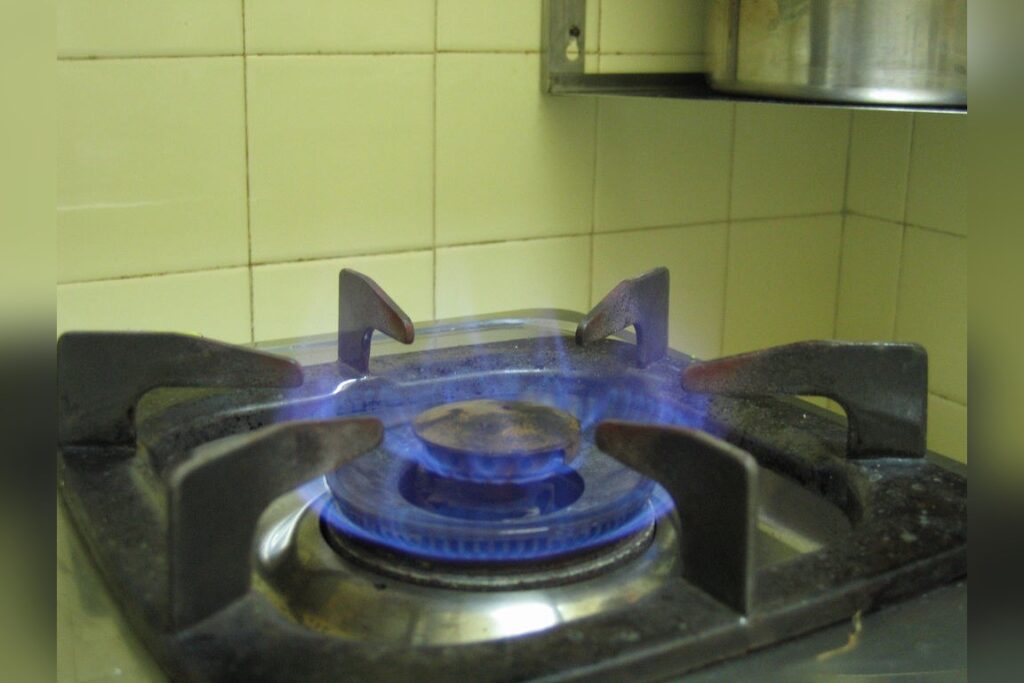
OLYMPIA, September 18 — The Washington State Supreme Court ruled 6-3 on Thursday that Initiative 2066, the 2024 ballot measure approved by voters to halt the state’s shift away from natural gas in homes and buildings, is unconstitutional in its entirety. The court affirmed a lower court ruling that found the initiative violated the state constitution’s single-subject rule, which limits citizen initiatives to no more than one subject.
Chief Justice Debra Stephens, writing for the majority, said the initiative included “several provisions with markedly distinct purposes and regulatory effects” and that it was not possible to sever and save any of the separate provisions. The measure filled 21 pages and contained more than a dozen sections.
It sought to unwind changes to the state energy code that offer builders incentives in the permitting process for choosing electric heat pumps over natural gas furnaces. It also aimed to repeal parts of a 2024 state law intended to accelerate Puget Sound Energy’s transition away from natural gas, prevent approval of utility rate plans that would end or restrict access to natural gas or make it too costly, and erase some zero-emission goals from state law.
The Path to the Ballot
The Building Industry Association of Washington drew up the measure and enlisted Let’s Go Washington, a conservative political committee, to gather signatures to get it on the ballot. In 2024, nearly 52% of voters approved it, and it passed in 34 of Washington’s 39 counties, including Snohomish and Pierce. However, it never took effect.
Within days of the certification of the 2024 election, a coalition including Climate Solutions, Washington Conservation Action, Front and Centered, King County, and the city of Seattle sued. Its attorneys argued that the measure’s “most obvious constitutional infirmity” was that it violated the prohibition on “logrolling”—the practice of attaching an unpopular policy to a popular one to increase its likelihood of enactment.
In March 2025, a King County Superior Court judge agreed and struck down the law.
The Dissent
Justice Sal Mungia, in a dissent joined by Justices Sheryl Gordon McCloud and Charles Johnson, wrote that he would have struck some sections that “silently amend the law” in a way voters could not understand their impact, but would have upheld the rest of the initiative. “Courts are required to construe initiatives in favor of constitutionality when possible. This court can uphold much of I-2066 as constitutional and should do so,” Mungia wrote.
Gregg Small, executive director of Climate Solutions, praised the ruling, saying, “What a win for Washington families in keeping our energy affordable and clean.
And we welcome this timely ruling in support of clearer, more honest information on how initiatives impact our lives and communities.” Greg Lane, the building association’s executive vice president, said dejectedly, “This is the end of the line.” He added that while the effort may have gained builders some flexibility in codes that was not there before, “fundamentally there is still the effective ban on natural gas on all new commercial and residential construction.” Brian Heywood, founder of Let’s Go Washington, derided the decision.
Strategically, the ruling hands climate-aligned plaintiffs a decisive win in a state where voters had narrowly endorsed the opposing position. The broader stakes extend beyond Washington’s borders, as other states weigh similar ballot measures on energy policy.
What this signals is that the single-subject rule remains a potent check on initiative campaigns that bundle multiple policy changes into one package. The question now is whether the building association or Let’s Go Washington pursues a narrower measure in a future cycle, or whether the legislature moves to codify the natural gas restrictions the initiative sought to undo.




