
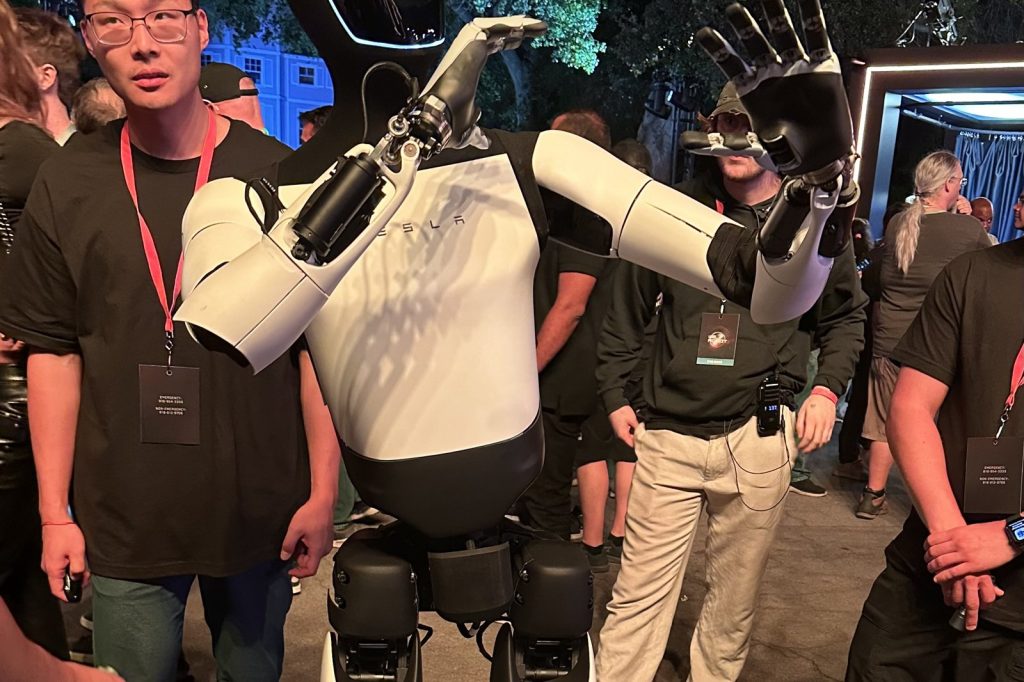
Tesla’s October 10, 2024, “We, Robot” event shifted focus from its automotive roots to showcase a working humanoid robot. The Optimus robot moved across the stage and interacted with its surroundings, marking the first live public demonstration of the machine performing tasks beyond static display.
This presentation positioned the robot as a functioning piece of hardware rather than a conceptual design. The same event featured the Cybercab robotaxi, an autonomous vehicle engineered to transport passengers without a driver. This vehicle represents the culmination of Tesla’s work in self-driving technology and battery systems.
However, the Optimus robot presents a fundamentally different business proposition: a general-purpose labor machine. According to event reports, Optimus is designed to perform tasks in manufacturing and service industries.
This application spans multiple sectors, potentially enabling the robot to work on factory floors, stock warehouse shelves, or clean hotel lobbies. If Tesla achieves mass production, the economic impact could be substantial, addressing persistent labor shortages in developed economies with a machine that operates without breaks or benefits. Tesla’s history provides context for this ambition.
The company was founded in 2003 by Martin Eberhard and Marc Tarpenning. Elon Musk joined after the founding, leading the initial funding round in 2004 and assuming the role of chairman.
Under his leadership, Tesla developed a reputation for pursuing technologies deemed impossible by others. The Roadster, Model S, and Gigafactory each faced skepticism before becoming industry standards. The Optimus robot and Cybercab represent similar gambles.
Autonomous driving technology remains technically challenging despite years of development. Humanoid robots present even greater difficulties, requiring balance in unpredictable environments and the ability to manipulate objects of varying shapes and weights.
Tesla is applying the same engineering approach that succeeded with electric vehicle production to these new challenges. The company’s name honors Nikola Tesla, the inventor who developed modern electrical power systems. This naming reflects a pattern of ambitious thinking.
Nikola Tesla pursued wireless power and global communication when telegraph wires were the standard. Similarly, Tesla announces products years before production readiness, shows prototypes that may not reach manufacturing, and makes promises that resemble science fiction.
The Optimus demonstration differed from previous announcements. It was not a promise or a concept but a machine moving on a stage. That hardware exists now. The Cybercab, if successful, would transform urban transportation.
The Optimus robot, if successful, would transform the entire economy of physical labor. Both remain uncertain, but Tesla has previously converted similar uncertainties into production realities.
The company that built the first mass-market electric sedan is now building humanoid robots.




