
Tesla’s Market Value Overtakes Ford and General Motors Combined
On January 10, 2020, Tesla’s shares climbed to a record $492.14, pushing the company’s market capitalization past $89 billion after a 7 % single‑day gain. That valuation placed the electric‑car maker above the combined worth of Ford and General Motors by roughly $2 billion, a milestone that stunned the traditional Detroit automakers.
Ford and General Motors each move millions of vehicles annually, yet Tesla delivered only 367,500 cars worldwide during the full year of 2019. Despite the lower volume, investors assigned a higher market value to the younger firm, prompting a fundamental question for the legacy players: what are they building that the market no longer prizes? Ben Kallo, an energy‑technology analyst at Robert W Baird, summed up the shift.
“Five years ago no one knew what a Tesla was. It has usurped BMW as an aspirational car.
Tesla has more going on in those four walls than we know about.” His comment points to a change in consumer desire, where a Tesla is no longer a novelty but the object of aspiration. That desire helped drive Tesla’s stock price, which more than doubled in the final three months of 2019 alone. Not everyone is convinced, however.
David Kudla, chief investment strategist at MainStay Capital Management, warned that Tesla had returned to being a “story stock.” He flagged the same long‑standing concern: “There are still some problematic issues out there, chief among them is what will its sustained profitability look like, and when will it start to be valued like a car company and not a tech company.” The distinction matters because technology firms command premium valuations on expectations of high margins and rapid growth, whereas car companies are judged against cyclical downturns, union labor costs, and thin profit per vehicle.
If Tesla eventually trades like Ford, its share price could suffer a sharp decline. If it continues to be priced as a technology firm, the pressure on Ford and General Motors intensifies. The valuation advantage extends beyond the ticker.
A high market cap gives Tesla a powerful currency for raising capital, enabling it to sell shares at elevated prices to fund new factories, battery plants, and vehicle programs. Ford and General Motors, with lower valuations relative to earnings, face a tougher time accessing capital on comparable terms, which could widen the technology gap between the upstart and the entrenched rivals.
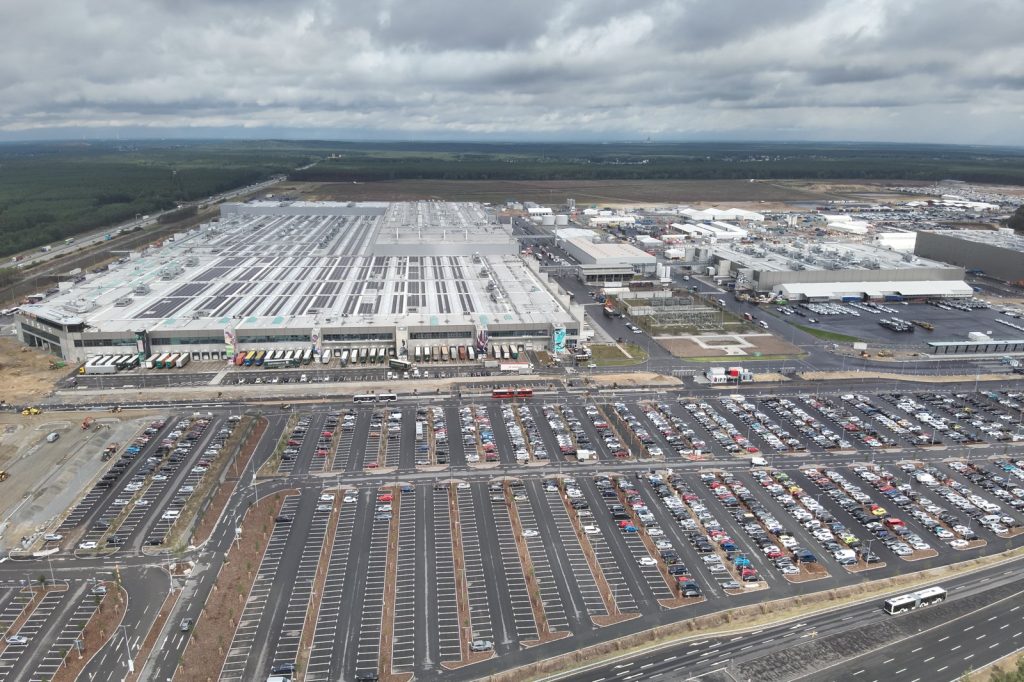
Tesla has already disclosed plans for a factory in Berlin and another near Austin, Texas, projects that will require billions of dollars. The company’s rising stock also makes it a magnet for talent; engineers and software developers are drawn to the firm that is winning, signaled by a surging share price and an $89 billion market cap. Detroit’s long‑standing effort to lure tech workers away from Silicon Valley has consequently become more difficult.
Dealers feel the strain as well. Ford and General Motors depend on a vast network of franchised dealerships, while Tesla sells directly to consumers.
As Tesla’s valuation climbs, investors increasingly question why the traditional dealer model persists. Although the dealer system enjoys legal protections in many states, those safeguards appear fragile when the market clearly favors the direct‑sales alternative. The immediate impact is psychological.
On January 10, 2020, a company that did not exist 17 years ago surpassed two firms that had defined American industry for a century. Boardrooms in Dearborn and Detroit can no longer ignore the fact; they must answer for it, explain how their own electric‑vehicle initiatives—such as the Ford Mustang Mach‑E and the GM Ultium platform—will close the gap, and demonstrate that their market value will follow suit.




