
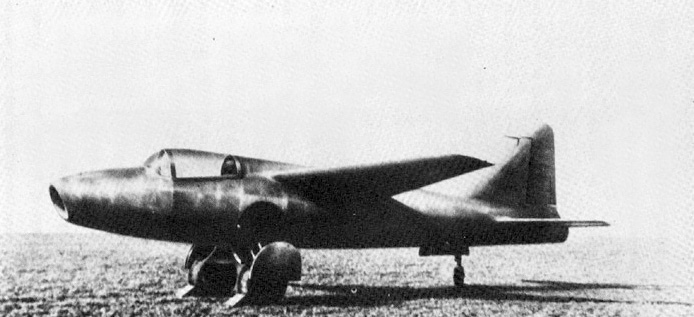
The first turbojet to fly an aircraft left the ground in August 1939, in Germany. It powered the Heinkel He 178. In England, Frank Whittle had patented a turbojet design in 1930, and his engine did not fly successfully until May 1941.
General Electric built the first American jet engine for the US Army Air Force. The XP-59A, the experimental jet it powered, first flew in October 1942. From the Wright brothers’ flight in 1903 until the late 1930s, the gas-powered piston engine with a propeller had run aviation.
The core: squeeze, burn, spin
The mechanics are simple on paper. An intake pulls air in. A compressor, a drum of many blades on a shaft, squeezes it into ever smaller spaces and raises the pressure. In the front-of-engine stage, air is compressed to between 3 and 12 times its original pressure. Fuel is sprayed in, as many as 20 nozzles doing the work in some engines, and the mixture ignites in the combustor, whose lining is often ceramic to survive the heat.
The burning gas expands and rushes through a turbine. The turbine sits on the same shaft as the compressor, so its spinning keeps the compressor turning. What is left leaves through the nozzle at the back. NASA explains the push with Newton’s third law: for every action there is an equal and opposite reaction. Gas goes backward and the aircraft goes forward.
An afterburner, a second combustion chamber between the turbine and the nozzle, raises the gas temperature ahead of the nozzle. That adds about 40 percent more thrust at takeoff, and a larger share at high speed.
The catch with a plain turbojet
In a turbojet, all the air entering the intake passes through the core. That burns a lot of fuel for flight below supersonic speeds. The turbofan was invented to fix it.
A big fan at the front, with blades mostly made of titanium, speeds up the incoming air and splits it in two. One part goes through the core. The other goes through a duct around it and rejoins at the back, supplying much of the thrust. This cooler air also quiets the engine.
The idea is to move a larger mass of air more slowly, which gives the same thrust for less fuel. Engineers measure it as the bypass ratio, the air flowing around the core divided by the air flowing through it. A ratio of 6 means six times as much air takes the duct as takes the combustion chamber. The bypass stream yields between 30 and 70 percent of a turbofan’s thrust.
Whittle’s patent already described the principle behind the turbofan, though it did not use the name. Turbofans are the most efficient engines at roughly 500 to 1,000 km/h, which is the range most commercial aircraft fly in. Most airliners use high-bypass turbofans. Most modern fighters use low-bypass ones, with afterburners.




