
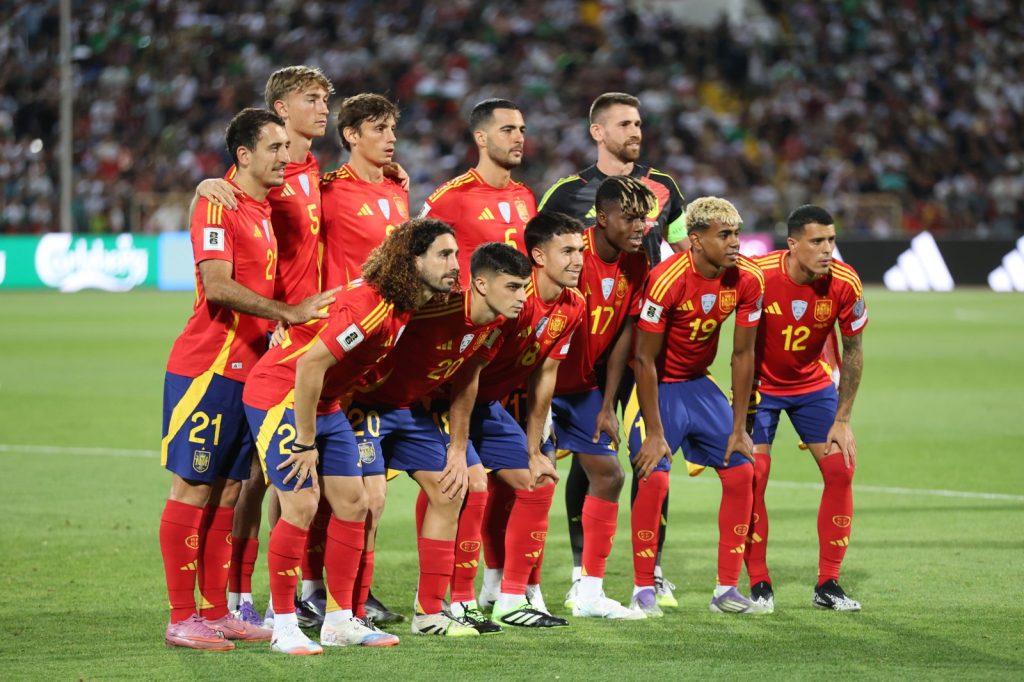
The final whistle in Berlin confirmed a 2‑1 victory for Spain over England, but the significance of the result extends far beyond the match extends beyond a single goal. Spain secured its fourth European Championship title, a tally no other nation has matched. The triumph came after a flawless campaign: seven wins from seven matches, the first time any side has achieved a perfect record in the tournament’s history.
This flawless run underscores a deeper strength in Spanish football. Rather than relying on luck or a favourable draw, the team displayed a system, a generation and a philosophy that operates at a level the rest of Europe has yet to replicate.
The victory adds to a historic timeline: Spain’s first Euro crown arrived in 1964, the second in 2008 after a forty‑four year gap, the third in 2012 and the fourth in 2024. Three titles in the last five editions illustrate a sustained era of success, moving Spain ahead of Germany, which previously held the record with three championships. The Olympiastadion hosted 65,600 spectators, the majority of whom watched Spain lift the trophy while England observed from the opposite side.
England’s appearance marked its second consecutive Euro final, a feat previously accomplished only by the Soviet Union, West Germany, unified Germany and now England. Despite reaching the final twice, England has yet to convert either appearance into a win.
Their first final came in 2021 at Wembley, where they lost to Italy on penalties; the Berlin encounter ended in a 2‑1 defeat. Consequently, England has never won a major men’s tournament final played outside its own borders. For Spain, the pattern is reversed: they arrive, they win and they depart with the hardware. The match was the seventeenth edition of the European Championship, a competition that began in 1960.
With four titles, Spain now claims nearly a quarter of all championships ever awarded. This consistency across different decades, varying squads and multiple coaching staff points to an institutional robustness that England and most other nations lack.
Looking ahead, Spain’s young core — players who dominated midfield battles and maintained high possession throughout the tournament — will carry this confidence into future challenges, including the 2026 World Cup. A side capable of winning seven straight games in a continental tournament possesses the credentials to compete on the global stage. England, meanwhile, faces a moment of reckoning.
Reaching two successive finals demonstrates clear progress, yet progress without a title risks becoming a ceiling. Historical parallels show that teams achieving back‑to‑back finals — such as the Soviet Union (1960, 1964), West Germany (1972, 1976, 1980), Germany (1992, 1996) and Spain (2008, 2012) — all managed to win at least one of those encounters, except the Soviet Union.
England now joins the group of sides that have reached the summit repeatedly without claiming the prize. The outcome in Berlin did more than name a champion; it redrew the hierarchy of European football. At the pinnacle, standing alone, is Spain, its fourth title establishing a new benchmark for continental supremacy.




