
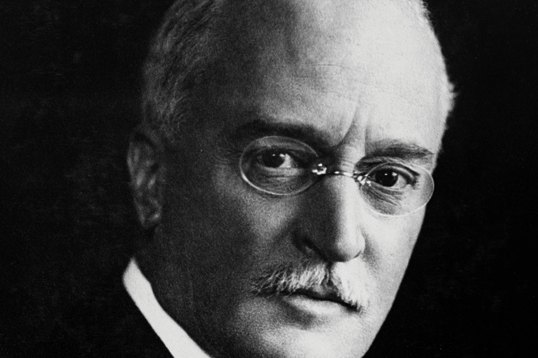
The headline number in the diesel story, 26.2%, is usually attached to the wrong year. It was not the 1893 prototype that hit it. DieselNet dates the figure to a test on February 17, 1897, when Rudolf Diesel’s engine, running under load, converted that share of its fuel energy into work. The steam engine of the day managed about 10%. The catch is the four years in between.
An engine that did not work at first
Diesel was born in Paris in 1858 and opened his first shop there in 1885 to start on a compression-ignition engine. Development took 13 years. The idea behind it, as MotorTrend describes it, was to inject fuel at the end of the compression stroke so that the higher temperature set it alight. Diesel knew from experience, the magazine says, that even the best steam engines wasted 90 percent of the energy in their fuel.
His first patent filing was only a design on paper. The patent, titled “Arbeitsverfahren und Ausführungsart für Verbrennungsmaschinen”, described an engine that did not yet work, and AStA at RWTH Aachen notes that people doubted the process could be made to run at all. Diesel’s 1893 book laying out the theory changed that, because it caught the eye of Heinrich von Buz, head of Maschinenfabrik Augsburg, later MAN.
Accounts of what happened next do not line up neatly. MotorTrend says a single cast-iron cylinder, about 10 feet tall with a flywheel at its base, ran under its own power for the first time on August 10, 1893. DieselNet agrees that prototype testing at MAN began that day, with a 150 mm bore and 400 mm stroke, but says the first test was unsuccessful. The Aachen students’ account puts the first engine running by itself on February 17, 1894, built with the Friedrich Krupp company. None of the three says which milestone the others are describing.
From prototype to product
Money moved faster than the engineering. Sulzer Brothers of Switzerland bought certain rights in 1893. In 1897 the Busch-Sulzer company of St. Louis built America’s first diesel, and its president, Adolphus Busch of the Budweiser brewery, had paid $1 million in cash for the US licensing rights, according to MotorTrend. Sulzer started its first diesel in June 1898, and the engine went into mass production that year.
The finished engine drifted from the original patent, and Diesel spent years in disputes over it. Other companies took the design further once his patents began to expire. MotorTrend dates the expiry of the initial patents to 1908, which freed him to work on smaller diesels for trucks, buses and cars.
The fuel that was never petroleum only
Diesel expected his engines to burn a range of fuels, including coal dust and vegetable and seed oils. At the 1900 World’s Fair he ran demonstration engines on peanut oil to prove it. On September 29, 1913, he disappeared from a ferry crossing to Great Britain under circumstances still unexplained.
The engine outlived him in ships and submarines of both World Wars, where it beat the gasoline engine. The first diesel passenger cars arrived in 1936.
Sources
- Early History of the Diesel Engine
- On This day in history: Dieselmotor
- Rudolph Diesel – Visionary Of Power




