
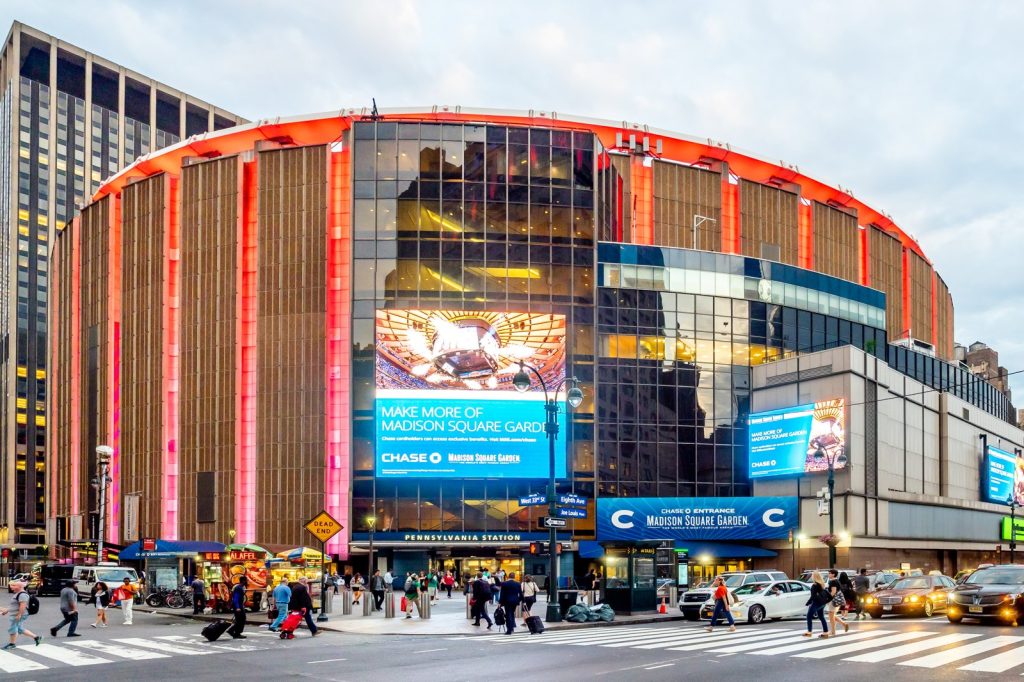
Leon Rose has a clean cap sheet and an empty bench. The Knicks emerged from the first round of the NBA draft with no picks and no new salary commitments. That was the goal.
The hard part starts now. New York went into draft night owing nothing on next year’s books from rookie-scale deals.
They kept it that way. For a team that just won 50 games and pushed a conference semifinal series to seven, the absence of a first-round pick was a deliberate choice — not a failure. The front office wanted flexibility.
They got it. But flexibility without spending is just a spreadsheet.
The Knicks need bodies. They need a bench that can hold up across an 82-game season and into June. And they need to fill those roster spots without triggering the second apron, a punitive luxury-tax threshold that owner James Dolan has publicly refused to cross.
That stance shapes everything. The second apron restricts how teams can aggregate salaries in trades, sign buyout players, and use the mid-level exception. Cross it and future first-round picks get frozen seven years out.
The repeater penalties compound. For a team that has already committed big money to Jalen Brunson, Julius Randle, and OG Anunoby, the margin for error is thin.
New York has roughly $12 million in room below the first apron, depending on how cap holds shake out. That is enough for one decent free agent or a couple of minimum-salary veterans. It is not enough to build a deep rotation.
The Knicks used 13 different starting lineups last season because of injuries. The guys who filled those gaps — Precious Achiuwa, Isaiah Hartenstein — are now free agents themselves.
Hartenstein will command offers north of $15 million a year. The Knicks can offer him the early Bird rights max, which is around $16 million, but that would push them deep into the tax. Dolan’s directive suggests that is not happening.
So the team that relied on Hartenstein’s passing and rim protection in the playoffs may have to replace him with a minimum-signing center or a two-way contract. The draft-night silence was the easy part. The Knicks did not have to negotiate, did not have to guarantee any money, did not have to explain to a prospect why he would sit behind Brunson and Donte DiVincenzo.
Now Rose has to call agents. He has to sell veterans on taking less money for a chance to play in Madison Square Garden.
He has to find shooters who will accept non-guaranteed deals and bigs who will accept spot minutes. Other teams in the Knicks’ position — contenders with capped-out rosters — usually lean on the taxpayer mid-level exception, worth about $5 million. That is available here.
But it hard-caps the team at the second apron, meaning every dollar spent on a free agent locks the Knicks into that ceiling. One bad contract, one injury that forces a trade, and the whole structure cracks.
Dolan’s refusal to spend into the second apron is not a budget line item for the front office. It is a constraint that dictates which players are reachable and which are not. The Knicks can sign their own free agents using Bird rights without the same cap penalties, but every external signing carries risk.
Rose has to weigh the present — a team that was two wins from the Eastern Conference finals — against a future that includes Brunson’s extension eligibility next summer and Randle’s looming player option. The fans in New York have waited long enough. They watched the Knicks stumble through the 2010s, watched the Porzingis trade, watched the coaching carousel.
Now they have a team that competes. The question is whether the owner will let the general manager spend what it takes to keep it competitive.
Rose has no picks left to trade. He has no cap space to absorb a bad contract for assets. He has a clean slate and a hard limit.
The bench will get filled. The question is with whom — and whether those names are good enough to matter in May.




