SANTA CLARA, November 3, 2026 — Santa Clara County leads the nation for household electric-vehicle ownership, with 24.1% of homes, about 163,000, reporting at least one EV, according to new U.S. Census Bureau data. All five of the country’s top counties for EV ownership are in California.
The figures come from the 2025 American Community Survey one-year estimate, the first time the survey has asked households about alternative energy. Nationally, roughly 7.3 million of the country’s 134 million households reported having an EV, or 5.5%.
The View From the Top
California’s state-level share stands at 13.8% of occupied households, well clear of second-placed Washington at 8.9%. Hawai’i follows at 8.5%, Nevada at 8.2% and Vermont at 7.7%.
The technical reality behind the rankings is that “EV” here is a broad church. The Census Bureau counted leased vehicles alongside purchased ones, and plug-in hybrids qualified alongside fully battery-powered cars. The survey did not ask how many EVs each household ran, so the numbers measure penetration by household, not fleet depth.
Under the hood of the California result, the county list reads like a map of the state’s wealthiest tech corridors. The nine counties with the highest shares nationwide were all Californian: Santa Clara, Marin, San Mateo, Alameda, Contra Costa, Orange, Napa, San Diego and Los Angeles, in that order. Farther down, El Dorado and Yolo counties sat 17th and 18th at about 12.7% each, Placer was 24th at an estimated 11.5%, and Sacramento County recorded 10.3%.
A Renter Gap in Every State
The homeowner-renter divide is the detail that matters most for anyone thinking about the next stage of adoption. Nationwide, 6.4% of owner-occupied households had at least one EV against 3.6% of renters. In California the same gap appears at a higher level: 17.7% for owners, 8.9% for renters.
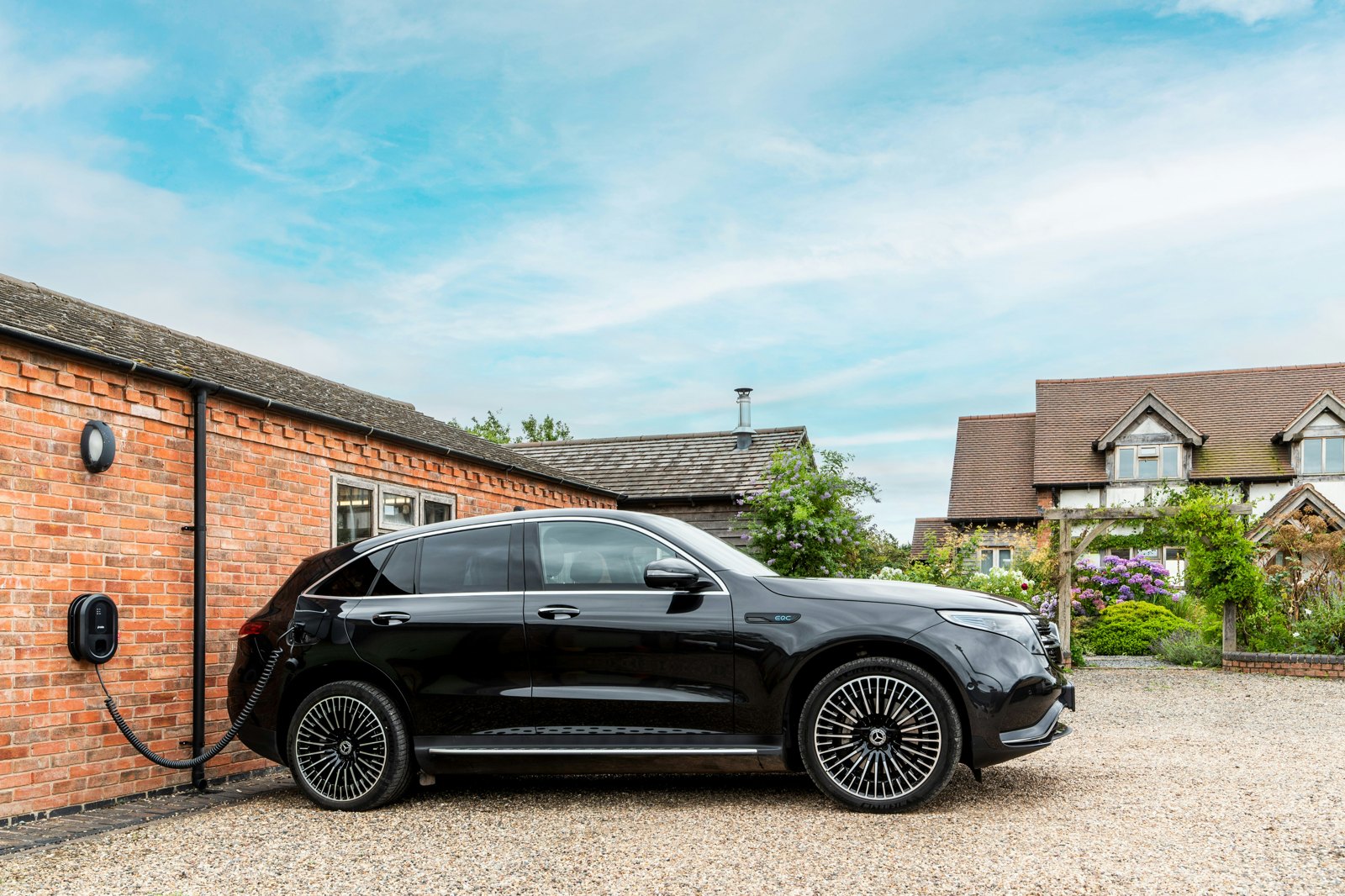
That pattern held in every other state, and the practical explanation is unglamorous. Owners with a garage or a driveway can charge overnight on cheap domestic power. Renters often cannot, and public charging means waiting rather than plugging in at home.
Washington radio host Gee Scott, discussing the census figures on KIRO Newsradio, put the cost case plainly. “First of all, electric vehicles are expensive,” he said, adding of public charging: “It’s not really fun to go and sit at the charging place.” He described King County’s numbers as concentrated on the Eastside: “Bellevue is the king and queen of Teslas.”
Outside California, a Different Map
The leading counties beyond California’s borders cluster in tech and government centres. Boulder County, Colorado, and Loudoun County, Virginia, each posted 13.9%, with King County, Washington, at 13.4%. The Census Bureau found no statistically significant difference among those three estimates.
At the bottom, North Dakota recorded 1.3% of households with an EV. Wyoming and Louisiana each reported 1.6%, and South Dakota and Mississippi 1.8%.
Census Bureau survey statistician Tricia Holley said in a news release that Western states in general “led the way in switching to electric vehicles.”
Policy and Price at the Edges
California has layered incentives and mandates on top of its market lead. Since August, first-time EV buyers in the state have been eligible for a rebate of up to $3,500 on a new vehicle and up to $1,750 on a used one. Nearly 12,000 residents have used the MyFirstEV programme, according to data released October 16 by Governor Gavin Newsom’s office.
The California Energy Commission recorded more than 233,000 zero-emission vehicle sales so far this year, about 18% of passenger vehicle sales, taking the cumulative total to just under 2.8 million. Newsom in June re-affirmed the state’s zero-emission vehicle sales requirements after opposition from President Donald Trump, a dispute still in federal court. Earlier this month more than two dozen states, led by Attorney General Rob Bonta, sued the Trump administration over a rule rolling back fuel economy standards, alleging it is arbitrary and violates federal law.
Washington, by contrast, has spent and stepped back. The state put $45 million into an EV rebate programme that ended in 2024 and gave up about $43 million in sales tax revenue through EV exemptions between 2019 and 2023, according to KIRO. Businesses can still claim credits of up to $100,000 on qualifying fleet purchases, and the Washington State Department of Commerce is preparing a $5 million instant rebate programme expected to start in January 2027. Federal EV tax credits ended in September 2025.
As ever, the national picture is one of concentration rather than uniform progress. A household in Santa Clara County is roughly 18 times more likely to have an EV than one in North Dakota, and the charging question that separates owners from renters applies in every state on the list.
Sources
- California sweeps top 5 counties for household EV ownership in new census data
- California sweeps top 5 counties for household EV ownership in new census data
- Orange, San Diego and LA among top counties for EV ownership in US
- California sweeps top 5 counties for household EV ownership in new census data
- ‘Bellevue is the king and queen of Teslas’: Gee says high costs hold Washington back despite No. 2 EV ranking – MyNorthwest.com
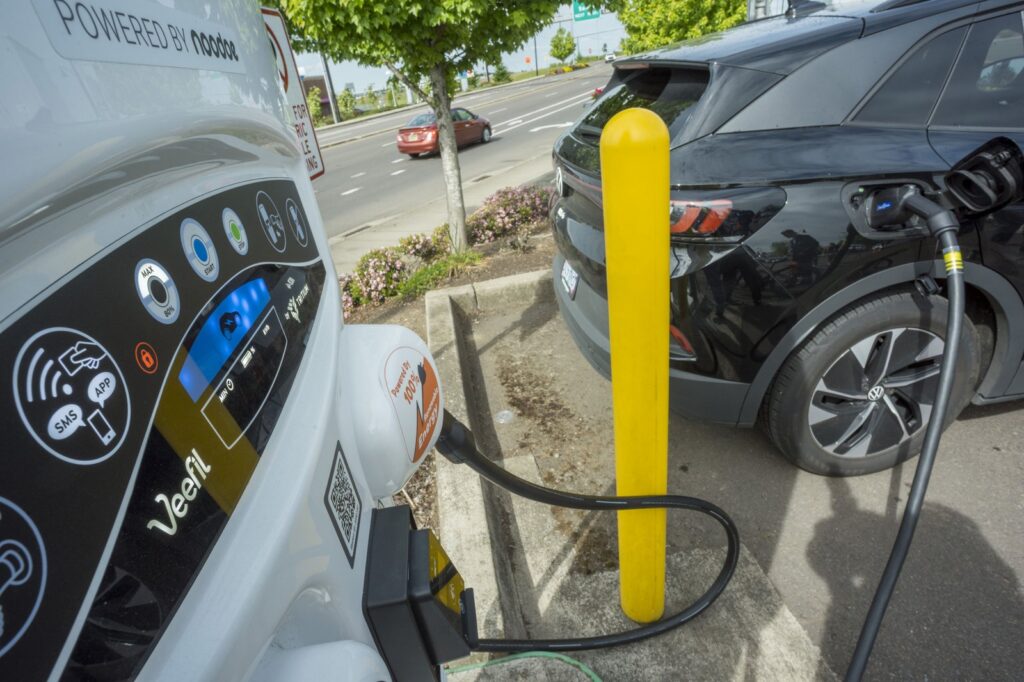
Photo: Oregon Department of Transportation (CC BY 2.0)