
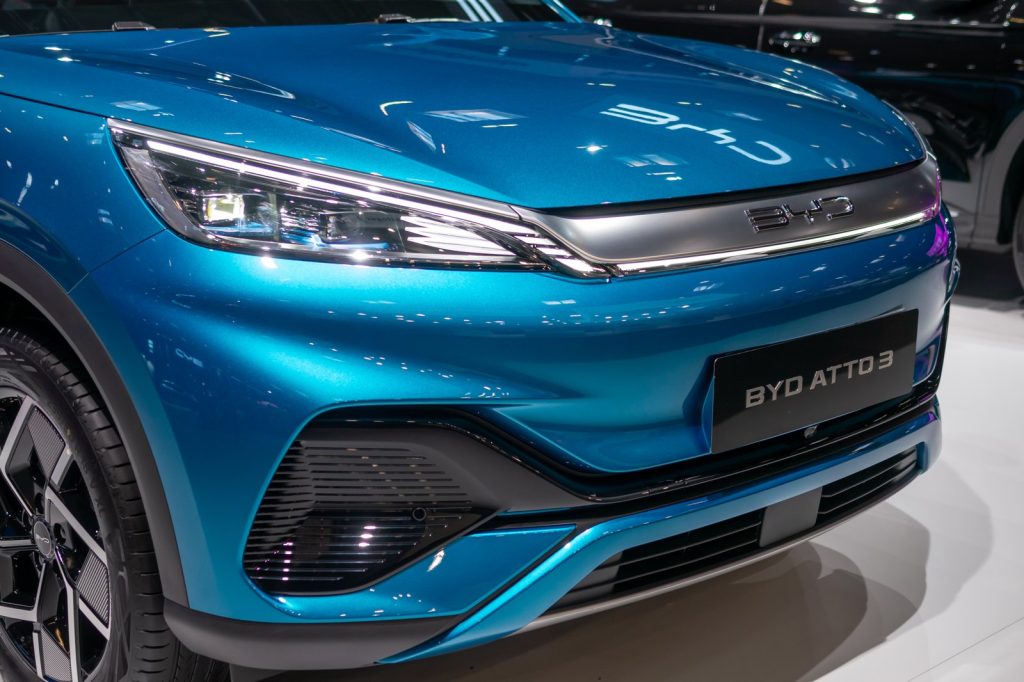
China’s EV Dominance Faces a Reckoning
China’s electric vehicle market, once the world’s fastest-growing and most aggressive exporter, is now running into walls. After nine years as the undisputed leader in plug-in car sales, Chinese automakers are losing ground in Europe, their biggest export market, while domestic demand weakens under the weight of high oil prices and shifting subsidies. The reversal is reshaping global trade, with countries like Morocco emerging as new production hubs to sidestep tariffs and geopolitical friction.
At the end of 2023, China had 20.41 million plug-in vehicles on its roads—nearly 91% of all cars in circulation—and sold 7.4 million new electric models in 2023 alone, accounting for 30.2% of the country’s total car market. But the momentum has stalled. In September 2026, battery-electric cars took a record 47.3% of new sales, while combustion engines fell to 33%, down from 90.2% in April 2021. The shift came as gasoline sales collapsed 43.5% year-over-year, according to Ember’s analysis of China Passenger Car Association data. The decline reflects both high oil prices—pushed above $100 a barrel by the Iran war and Strait of Hormuz disruptions—and the fading appeal of small, cheap EVs after subsidy cuts.
The cracks in China’s EV export strategy are most visible in Europe, where the European Union has spent two years erecting trade barriers. In 2024, the EU imposed up to 35% tariffs on Chinese EVs, on top of the existing 10% duty. The goal was to protect 13 million auto-sector jobs from what Brussels called a “flood” of cheap, state-subsidized Chinese vehicles. Yet the tactic has backfired: Chinese EV sales in Europe nearly doubled between 2024 and 2025, figures show. The reason? Chinese firms have shifted production to Morocco, where they avoid EU tariffs while tapping into the country’s free trade agreements with both the EU and the US.
—
Morocco’s Gamble: A New Factory for China’s EVs
Morocco is betting big on becoming the Mediterranean’s answer to China’s EV dominance. The country already exports $17 billion in cars and parts annually—more than China does to the EU—and has deep ties to Renault and Stellantis, which operate one of the region’s largest automotive clusters. But the real opportunity lies in its free trade status with the EU and US, its phosphate reserves (70% of the world’s supply), and its industrial zones, including the tax-free “Tanger automotive city.”
Chinese automakers are moving in fast. Since 2024, they’ve announced $6 billion in investments in battery and EV component plants, filling gaps in cathode and cell production. Morocco’s government has spent decades preparing for this moment, building free zones where imports, manufacturing, and re-exports face no tariffs. This year, it even introduced a carbon tax to align with EU rules. The result? In 2024, Morocco produced 560,000 vehicles, but only 50,000 were electric. By 2027, that number could surge as Stellantis and Renault expand EV capacity alongside Chinese partners.
The strategy works because Morocco’s trade deals with the EU and US let its exports slip past tariffs. A car built in Morocco by a Chinese-owned factory, using Moroccan labor and EU-sourced parts, enters Europe duty-free. The EU’s tariffs don’t apply. This isn’t just about avoiding costs—it’s about rewriting the supply chain. China’s EV giants are no longer just exporters; they’re becoming integrated players in a new industrial ecosystem.
—
The Tariff Trap: Why Europe’s Rules Backfired
The EU’s tariffs were meant to slow China’s EV invasion. Instead, they accelerated a shift in production. The bloc’s move came after China exported 1.25 million EVs in 2024, more than seven in ten of the world’s electric cars. But the numbers tell a different story: Chinese sales in Europe doubled in a year, even with tariffs in place. The reason? The tariffs didn’t stop the cars—they just moved the factories.
Brussels framed the tariffs as a defense against “unfair competition,” citing state subsidies that give Chinese EVs a price advantage. But the math doesn’t add up. In September 2026, battery-electric cars took 47.3% of China’s market, while combustion engines shrank to 33%. The collapse in gasoline sales—down 43.5% year-over-year—shows how quickly consumer behavior changes when oil prices spike. The EU’s tariffs may have protected European automakers in the short term, but they’ve also handed China a blueprint for bypassing trade barriers entirely.
There’s another irony: the EU’s rules have forced Chinese firms to invest in Europe’s backyard. Morocco’s phosphate mines and industrial zones are now critical to China’s EV strategy. The country’s $6 billion in new battery and component plants isn’t just about avoiding tariffs—it’s about securing a foothold in a market the EU thought it had locked down.
—
What’s Next for China’s EV Empire?
China’s EV dominance is no longer guaranteed. At home, sales are down 28% in 2026, with combustion cars falling faster than electric models. The government’s push for energy security and urban air quality has worked—China now has 93% of the world’s electric buses and 65% of its electric light commercial vehicles—but the market is maturing. Small, cheap EVs are losing appeal as memory-chip shortages and subsidy cuts hit sales.
Abroad, the story is one of adaptation. Morocco is just the first stop. Other countries with free trade deals—Thailand, Vietnam, Mexico—are watching closely. The lesson for global trade is clear: tariffs don’t stop supply chains; they redirect them. China’s EV strategy has always been about scale, and scale means flexibility. If Europe blocks one route, China finds another.
For now, the numbers still favor China. It remains the world’s largest EV market, with 20.41 million plug-in cars on the road. But the days of unchecked growth are over. The question isn’t whether China’s EV empire will shrink—it’s how quickly it will pivot. And the answer may lie in places like Morocco, where the next generation of electric cars is already being built.
Sources
- Plug-in electric vehicles in China
- China and the EU could turn Morocco into a surprise global hub for electric vehicles
- China's Combustion Cars Fall to 33% of Sales in a Market Down 28%
Photo: carlos aranda / Unsplash (Unsplash License)




