
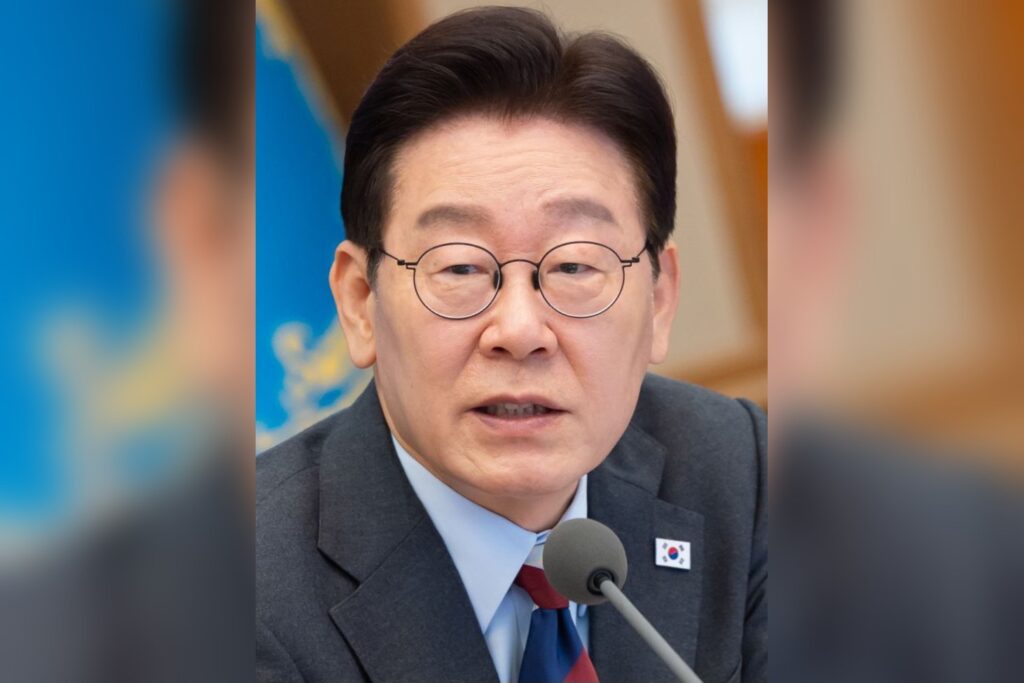
SEOUL, September 26 — South Korean President Lee Jae Myung has called on the United States to pursue a freeze of North Korea’s nuclear program rather than its immediate elimination, and to offer sanctions relief in exchange, according to remarks he gave to the New York Times on September 22. Lee separately told the Associated Press that he favours a practical, phased approach to dismantling the North’s nuclear weapons rather than an all-at-once demand.
The two interviews, published within days of each other, mark a notable public shift in Seoul’s stated approach to its northern neighbour.
A conflict the tracker rates critical
The Council on Foreign Relations’ Wachenheim Center for Peace and Security Global Conflict Tracker classifies the confrontation with North Korea as an interstate war with critical impact on the United States, and lists its status as developing. The tracker page was updated September 10. Under leader Kim Jong-un, North Korea has pursued nuclear weapons and ballistic missiles as a guarantee of regime survival, posing what the tracker describes as an acute threat to South Korea and Japan, both key U.S. allies.
Kim has also deepened ties with Russia, providing artillery and troops for the war in Ukraine, while silencing domestic opposition through mass detention and political purges.
Live-fire drill and a border injury
On September 14, North Korea announced it had conducted a live-fire drill on the Saturday of that week, testing several different weapons systems simultaneously. State media said the exercise included attack drones, tactical ballistic and cruise missiles, and large-calibre multiple rocket launchers. The drill followed the completion of the annual trilateral military exercise Freedom Edge, involving the United States, Japan and South Korea.
Days later, on September 21, the South Korean military said three soldiers were injured during an operation in the heavily mined Demilitarized Zone south of the border. The DMZ, which separates the two Koreas, is one of the most heavily armed borders in the world, with many of South Korea’s troops and North Korea’s 1.2 million troops stationed near it.
Nuclear program and the limits of negotiation
North Korea continues overt nuclear enrichment and long-range missile development in violation of UN Security Council resolutions. The scale of its uranium enrichment program remains uncertain, though U.S. intelligence agencies estimate it has enough plutonium to produce at least six nuclear weapons, and possibly up to sixty. Decades of negotiations have so far failed to curb the program.
In September 2017, North Korea conducted its sixth nuclear weapons test, its most powerful to date, and claimed to have developed a hydrogen, or thermonuclear, bomb. That same year it carried out its first successful test of an intercontinental ballistic missile, and U.S. intelligence agencies determined it could miniaturize nuclear weapons to fit inside a missile.
North Korea has not yet demonstrated that its nuclear warheads can withstand reentry into Earth’s atmosphere. In response to the increasing frequency of missile tests, the United States has deployed the Terminal High Altitude Area Defense anti-missile system in South Korea, located in the Seongju region, one hundred and fifty-five miles from the northern border.
The American commitment, and its roots
U.S. military involvement on the Korean peninsula dates to the Korean War of the early 1950s, during the early stages of the Cold War, when Washington supported forces in the south against communist forces in the north, who were aided militarily by China and the Soviet Union. Today the United States is committed to defending South Korea under a mutual defense treaty, with nearly 29,000 troops deployed on the peninsula for that purpose.
North Korea, officially the Democratic People’s Republic of Korea, is isolated, impoverished and a proclaimed enemy of its southern neighbour, South Korea, officially the Republic of Korea, an important U.S. ally. Kim Jong-un inherited the title of supreme leader from his father and grandfather and regularly threatens Japan, South Korea and the United States with missile strikes.
At home, he has silenced opposition by detaining between 80,000 and 120,000 political prisoners, purging high-ranking officials and likely ordering the assassination of his half-brother. What to watch next is whether Washington responds to Lee’s call for a freeze-and-relief formula, and whether Pyongyang’s weapons testing continues at the pace set this month.




