
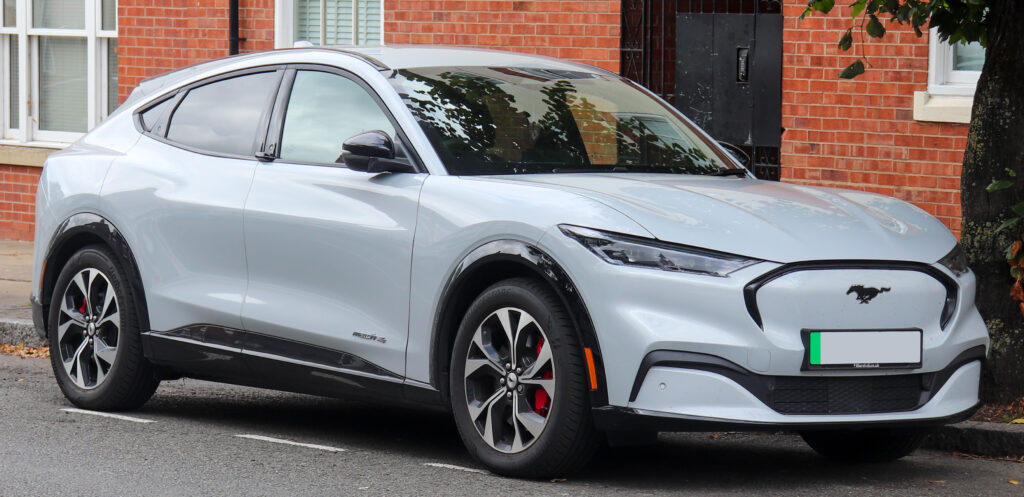
LONDON, September 6 — Against this backdrop of a city bracing for rain and irregular streets, Uber has switched on London’s first AI-powered robotaxis, edging out rival Waymo to become the first company to offer autonomous ride-hailing anywhere in the United Kingdom. The service deploys a fleet of Ford Mustang Mach-E electric vehicles fitted with the AI Driver system built by Wayve, the London-founded self-driving company.
The launch makes the British capital only the second European city where Uber offers autonomous rides. What sets this deployment apart is the technology underneath it. Wayve’s approach is what the industry calls end-to-end learning: rather than relying on high-definition pre-mapped routes and hand-coded rules for every junction, its AI Driver learns directly from real-world driving data and is designed to adapt to new roads, unfamiliar weather and different cities with far less bespoke engineering.
Wayve argues this embodied-AI method scales more cheaply and generalises better than the mapping-heavy systems used by some competitors — an important claim in a city as dense, rainy and irregular as London. Safety remains front and centre in the rollout.
Human safety operators will ride onboard initially, ready to take control, with a fully driverless service planned as a later phase once the system has accumulated more supervised miles and regulatory confidence. Uber says the autonomous trips will carry no extra cost for riders on its UberX, Comfort and Electric tiers — a pricing choice that signals the company wants mainstream adoption rather than a premium novelty. The launch lands amid a broader UK push to accept self-driving vehicles.
The British government has been advancing a legal framework for automated vehicles and has signalled it wants commercial driverless services on the road in the coming years, positioning the country as a competitive market as US operators like Waymo expand and Chinese firms accelerate at home. Beating Waymo to a UK debut is a symbolic win for both Uber and for Wayve, which has raised substantial investment and is one of Britain’s most prominent AI startups.
Questions still hang over the wider shift. Regulators, insurers and unions are weighing how liability is assigned when software is at the wheel, how autonomous fleets affect the livelihoods of professional drivers, and how the vehicles handle rare and dangerous edge cases that human drivers navigate by instinct. Public trust will hinge on the safety record the supervised phase produces.
For now, a small fleet of twenty cars is a pilot rather than a fleet-wide transformation, but it is a concrete milestone: real paying passengers in a major European capital, riding in vehicles guided by a learning-based AI, at ordinary Uber prices. If the supervised phase goes smoothly, the removal of the onboard operator would mark the first genuinely driverless commercial rides on British streets.




