
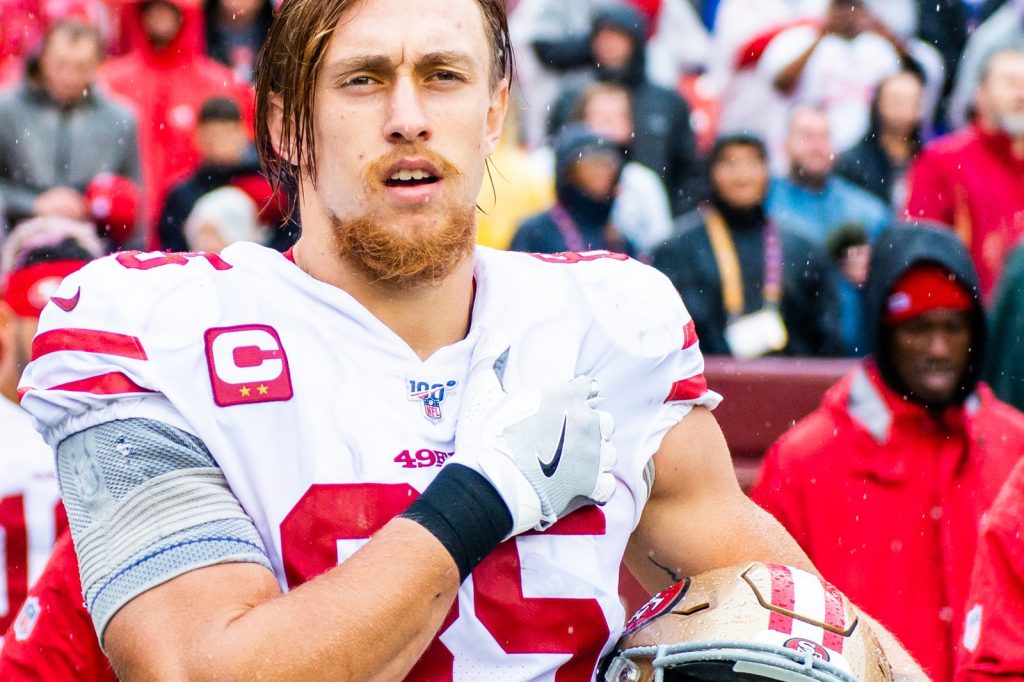
The NFL Players Association posted a video to social media Thursday. In it, George Kittle of the San Francisco 49ers points at a freshly laid grass field and asks a question the league has not fully answered. The field belongs to a stadium that will host a 2026 World Cup match.
FIFA demanded real grass. The stadium got it.
Kittle wants to know why the same standard does not apply to the men who play on those fields 10 months a year. It is a brutal, practical question. The NFLPA’s own survey found that 92 percent of players prefer grass.
Kittle is one of the louder voices on the subject. The union has been pressing for a leaguewide mandate that all 32 teams play on natural surfaces.
For years, owners have pushed back. The World Cup is changing the terms of that argument. FIFA did not negotiate.
It told stadium operators in host cities what the surface had to be. They complied. Temporary grass fields were installed in venues originally designed for artificial turf.
That work is visible now. It is also documented.
The NFLPA used that documentation in its statement Thursday. The message was simple: if it can be done for a month of international soccer, it can be done for a season of American football. The league’s response, according to sources familiar with the thinking of some owners, comes down to money and scheduling.
NFL stadiums do not sit empty. They host concerts, monster trucks, college games, and high school championships.
Tearing out the sod before each home game and laying new sod is expensive. It also takes time. Owners who oppose a switch argue that the cost and labor would be passed along or absorbed in ways that hurt the bottom line.
They do not see the current surfaces as a problem worth fixing. Dallas Cowboys owner Jerry Jones put that ambivalence on record. “No, we have more flexibility with the way we handle our surface at the stadium.
We have no belief th” — the quote in the original report cuts off, but the position is clear. Jones and others see artificial turf as a feature, not a liability.
The players see it differently. They have the data. They have the survey.
Now they have the World Cup as Exhibit A. The grass is there.
It was installed on a deadline. It meets FIFA’s standards. The argument that it cannot be done no longer holds.
What happens next is a matter of leverage. The NFLPA can keep pushing publicly. It can file grievances.
It can make the issue part of collective bargaining when the current labor deal expires. Kittle is not the only player speaking out, but he is one of the most visible.
His statement Thursday was direct. He said players have made clear they prefer grass. He said they know it is better on their bodies.
He said the World Cup proves it is possible. The timeline is moving.
The World Cup is still two years away, but the preparation is happening now. Every stadium that gets a temporary grass field for that tournament becomes a piece of evidence in the players’ case. The league can argue logistics.
It can argue cost. It cannot argue impossibility anymore. That door is shut.
The fallout touches every team. Owners who resist a change will face more questions.
Players on artificial turf will have a shorter, more painful answer for why they are sore on Monday mornings. The union will keep the video posted. It will keep the survey numbers handy.
It will keep pointing at the grass.
{“@context”: “https://schema.org”, “@type”: “NewsArticle”, “headline”: “NFL Players Association Questions League’s Inconsistent Field Standards”, “description”: “The NFL Players Association posted a video to social media Thursday. In it, George Kittle of the San Francisco 49ers points at a freshly laid…”, “datePublished”: “2026-06-28T04:06:39+00:00T09:30:00+00:00”, “author”: {“@type”: “Person”, “name”: “Ava Anderson”}, “publisher”: {“@type”: “Organization”, “name”: “InfoPulse Today”, “url”: “https://newsfeed.infopulsetoday.com/”}}




