
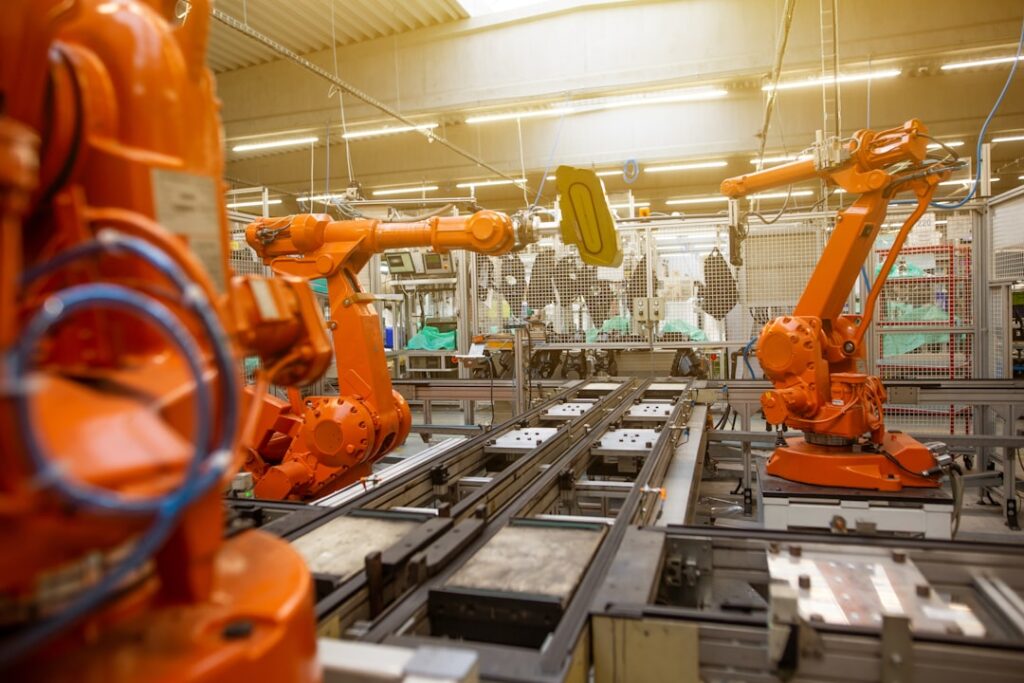
Japanese automakers brace for supply‑chain shock from Hubei lockdown
Hubei province, regarded as the core of China’s automobile manufacturing sector, has remained under lockdown since 10 February. The decision by Beijing sent ripples through Japan’s automotive industry, prompting immediate concern over the flow of parts that Japanese assembly lines rely on. Honda’s Wuhan facility, which normally turns out about 600,000 vehicles each year, has been idle since 23 January. Toyota’s plants in Changchun and Guangzhou remain shut, while Mazda’s Nanjing site reopened after a 17‑day halt but is operating on a single‑shift basis only.
The impact is already visible in Japan. Nissan reduced output of the Serena minivan at its Kyushu plant after shipments of Chinese‑made transmissions ceased.
This interruption illustrates the concrete risk: roughly 30 percent of the components used in Japanese vehicle assembly originate in China, with steering systems, wiring harnesses and engine control units among the most vulnerable items. Should the supply chain break, Japanese production lines could fall silent. Recognising the threat, Japan’s Ministry of Economy, Trade and Industry convened on 24 February with the nation’s leading car manufacturers to form the New Coronavirus Countermeasures Automobile Council.
The council was launched the same day and includes Toyota, Honda, Mazda, Mitsubishi, Nissan and dozens of tier‑one parts suppliers. Described as a rapid‑response body, its first task is to create a shared database that tracks inventory levels at Chinese ports and warehouses.
The information will then be matched against potential alternative sources inside Japan or in third countries to fill any gaps. Hiroshi Tabata, director of the ministry’s Automobile Division, emphasised the value of timely data: “By consolidating real-time information we can spot bottlenecks before they idle an entire line.” The council also serves as a financing mechanism. When private funding falls short, the state‑run Japan Finance Corporation stands ready to provide emergency working‑capital loans.
This initiative matters because the automobile sector forms the backbone of Japan’s manufacturing economy. A prolonged disruption would cascade through thousands of suppliers, many of them small enterprises with limited cash reserves.
The council aims to halt that chain reaction before it gains momentum. The trigger for the government’s action was the continuation of the Hubei lockdown, which Beijing announced would last at least another week beginning 10 February. The virus had already forced plant closures across the region, and Japanese officials saw the warning signs early.
Tabata’s team is now gathering data from every major participant to ascertain exactly what components are sitting in Chinese ports and warehouses. Armed with that knowledge, they intend to reroute supply chains before a shortage escalates into a crisis.
The stakes are high. A single missing part can halt an entire assembly line, leading to lost wages, delayed deliveries and broken contracts. The council represents a bet that improved information flow and state‑backed credit will keep production moving.
Whether the approach succeeds hinges on the duration of the Chinese lockdown—a timeline that remains uncertain. Nevertheless, Japanese carmakers now possess a single coordination point, a shared inventory database, access to loan guarantees, and a government that has acted swiftly.
For the moment, the Serena minivan serves as a canary in the coal mine. If the council’s measures prove effective, additional models will avoid the production cuts that have already begun. Should the effort fall short, Japan’s auto industry could confront a supply‑chain crisis with no quick remedy.
Japanese automakers brace for supply‑chain shock from Hubei lockdown
Words: Japanese(1) automakers2 brace3 for4 supply‑chain5 shock6 from7 Hubei8 lockdown9.
Now paragraphs.
Paragraph1: “Hubei province, regarded as the core of China’s automobile manufacturing sector, has remained under lockdown since 10 February. The decision by Beijing sent ripples through Japan’s automotive industry, prompting immediate concern over the flow of parts that Japanese assembly lines rely on.”
Count: Hubei1 province2, regarded3 as4 the5 core6 of7 China’s8 automobile9 manufacturing10 sector,11 has12 remained13 under14 lockdown15 since16 10 February.17 The18 decision19 by20 Beijing21 sent22 ripples23 through24 Japan’s25 automotive26 industry,




